Book Review – Z Notes by Shawn Lilly

Bill and Ted with Zombies!

(Contains spoilers!)

Reading and reviewing this book has been a genuinely interesting and learning experience for me. It has required me to examine my personal prejudices and biases about writing, as well as reconsider my criteria for what makes a good book.

And this is a good book! I enjoyed it far more than many books I have read by “successful” and established writers.

A huge factor for me, when making a judgement about a book, is what I refer to as the writing quality. Convention dictates that a “good” book should exhibit perfect grammar, spelling and punctuation. This book does not. The text is littered with spelling mistakes, incorrect and missing words, and various typographical errors that, at first, made me think I was not going to be able to read it.

But I persevered and was richly rewarded. Z Notes is a GREAT story!

It is book 2 in a series and picks up linearly from where the previous book ends and finishes at the point where the next will begin.

There is so much to like about Z notes:

  • The fast-moving, imaginative, and exciting plot. The author manages to create some real moments of tension that had me so on edge I found myself reading as fast as I could to find out what happened next.
  • The witty and authentic dialogue.
  • The brilliant characters – Matt and Frank remind me of a mix of Bill and Ted and Ben and Mickey from The Battery.
  • The humour that made me laugh out loud in parts.
  • The ZOMBIES! Oh, my goodness, we have fast ones, slow ones, big ones, small ones, blind ones, super-strong ones – we even have giant zombie crocodiles!
  • The romance – both of our protagonists have romantic interests, but poor Matt seems to have fallen for a girl who … let’s just say … is not really interested in an exclusive relationship.
  • The locations. One of the things I love reading (and writing about) is how familiar locations take on a new and unfamiliar feeling after the world has ended. I also like to entertain myself by imagining how different settings would lend themselves to the purpose of escape and evasion, or survival, in a Zombie Apocalypse. Z notes does this exceptionally well. Matt and Frank find themselves in a variety of different everyday settings and the author plays with how the features of these settings might come into play in a Zombie conflict scenario. We have a farm, a ballpark, a construction site, a multi-story car park, a train yard and many more.
  • The vivid and atmospheric scene setting and images.
  • The hilarious chapter titles – “Farm House e-i-e-i-o.”
  • The use of some excellent metaphors and descriptions:
    • “they could swear they heard the grass squeak under their feet.”
    • “you could hear a mouse peeing on cotton.”
    • “the smell of hot trash in summer.”

As well as all that, it has everything you would expect to find in any good Zombie tale, including gore, violence, heroism, and a wide variety of lethal weapons.

The ending was both intriguing, in terms of what they find on the other side of the fence, and shocking, when Matt finally gives Kimberly her comeuppance and an uncharacteristically brutal act of revenge.

I know it’s not the same, but when someone like Bernardine Evaristo writes without capitalisation and punctuation, she can call it prose poetic patterning and win a Booker Prize. I doubt that writers like Shawn and I could carry this off.

The debate about whether grammar and spelling are “elitist” rages on, and I don’t want to get into that here. Not do I want to make assumptions about the author of Z Notes, other than to say that it would be a sad day if a few issues with grammar, punctuation and spelling were to have prevented this highly entertaining story from being told.

Let me just end by saying that a good story is a good story and leave it at that!

Book Review – Into the Drowning Deep by Mira Grant

Stay in the Shallows!

I love swimming but the sea has always terrified me. I like to be able to see what’s beneath me and touch the bottom with my toes. After reading this, I’ll definitely never be venturing very far from shore again.
Grant has brilliantly and terrifyingly transformed the pretty little mermaids of fairy tales and Disney films into nightmarish, slimy, slithering monsters that will pursue you with unnatural speed and tear you apart with horrible mouths crammed full of pointed, razor-sharp teeth.
The book is well-written and easy to read, although the frequent use of clichés at the end of paragraphs to create added drama is a little irritating. “They didn’t. But then they never did.” “The screaming takes longer to end, but in time, it does. Everything ends.” etc.
The plot is gripping and compelling. It moves quickly and held my interest throughout.
The dialogue is authentic and witty. There were moments of humour that made me smile, if not actually laugh out loud, but I’m very difficult to please where comedy is concerned.
Although it was technically science fiction, the premise felt frighteningly believable.
There were some scenes that felt a little contrived and threatened the overall authenticity, such as when the protagonist falls into a sea boiling with hundreds of murderous sea creatures that have been killing everyone on sight but, for reasons that are not well-explained, choose to leave her unharmed. Really?
I liked the main characters and cared about what happened to them. I enjoyed the little romance between Tori and Olivia. However, it was impossible not to notice that people from every possible diversity group were represented in the cast; age, race, culture, nationality, physical and mental ability, sexual preference etc. etc. Very correct and appropriate of course, but maybe a little bit over the top for authenticity? Almost every character exhibited at least one of the UK 2010 Equal Opportunities Act “protected characteristics”.
For me, it all came to a rather rushed and unsatisfying conclusion. All of a sudden, the boat shutters come down, the mermaids are dying, the rescue boat arrives and all the survivors live happily ever after.

Book Review – The Last Day by Andrew Hunter Murray.

A thriller set in a dystopian future where the earth has stopped turning and one side of the word exists in permanent darkness and the other is perpetually light.

Honestly, this was a disappointing read.
I loved the premise but, for me, the book just didn’t deliver.
I had to force myself to read until the end.

I liked:
The idea.
The beginning – lots of intriguing questions and an introduction to the “big mystery” that was the central theme of the book.
I quite liked Hopper and her ex-husband David, although I never really got under his skin.
Glimpses of a potentially interesting dystopian future.
Some nice writing.

I didn’t like:
The fact that what I thought was going to be a thoughtful and interesting post-apocalyptic story, turned out to be a superficial, formulaic, spy thriller.
The predictability of the plot.
The big surprise reveals were not very big or surprising.
It was confusing that in this post-apocalyptic world, most of the main characters and their friends and families were living fairly normal lives in what looked and felt quite like our lives today, apart from a few exotic plants and animals thrown in for good measure, and some very effective blackout blinds. I found myself forgetting that we were in a world of perpetual light and sometimes it felt like the author did too.
Clunky writing was a distraction at times.
Very unbelievable and convenient plot developments.
A bit of a scatter gun approach was used to pepper the setting with post-apocalyptic window dressing.

Overall, it was dull and I “sped-read” to get it over with. I kept thinking about what I wanted to read next, and that was was what drove me to finish. An unexciting spy thriller dropped into an unconvincing post-apocalyptic world.

Sorry. I had such high hopes for this but I just didn’t enjoy it or believe it!

Book Review – Station Eleven by Emily St. John Mandel.


A thoughtful, gently nostalgic, beautifully written, before and after, journey through a post-apocalyptic world.

I loved this book!

I liked:
The way all the characters were connected and how beautifully it all came together in the end. Even though there were little clues and my suspicions grew as to who was connected to who and how, that was part of the enjoyment.
The writing style was unpretentious and it was an enjoyable and easy read, yet beautifully descriptive.
I liked, or at least felt empathy with, all the characters, even the bad guys, as they were all victims of their circumstances.
The plot held my interest and I wanted to keep reading to see what was going to happen next. I couldn’t put it down.
The more hopeful view of a post-apocalyptical world than we usually see in this genre. Although there had been violence and horror in the past, this seemed to be in the minority now, and people were, generally, kind and loving, and supportive and cooperative.
The positive view on human nature.
The fact that it had a bit of everything – action, romance, drama and science fiction.

I didn’t like:
Very little.
At times, I got slightly irritated when the story jumped back to a different character and their story in a different time and place when I was hooked in to the story unfolding in the previous chapter. However, this was part of what made the book such a good read!
It took me a while to get under the skin of some of the characters because we just got glimpses of them all at the start of the book, and there were so many of them. However, again, this was part of the structure of the book and all was revealed and made perfect sense in the end

An interview with Michael Andrews, author of Children of the Sun

J: We’re here today to celebrate and talk about your latest book, the last in the series of The Alex Hayden Chronicles, Children of the Sun. Let’s start by talking about that.

J: So, how does it feel to have finally, finished the last book in the Alex Hayden Chronicles?

 M: Mixed, to be honest. Relief, sadness, and excitement.

Relief that I’ve finally finished it. At one point three years ago, it looked as if it wasn’t going to happen due to a technical disaster when I was writing Dragonfire and almost lost all my work.

Sadness that a six-year chapter of my writing life is coming to an end.

Excitement about picking up other projects that have been on the back burner for a long time.

J: Are you happy with how it all ended, and do you think your readers will be?

M: Yes and no.

I’m happy with how the plot came together and how all the loose ends were tied in a very natural and un-contrived way. That should please my readers too.  

I was unsure whether I should have had just one more battle at the end, but I have said from the start that I didn’t want the series to become too Twighlightesque, so I am happy with how I left it.

 J: Is this definitely the end? Will we ever hear any more about Alex and his friends?

M: It is definitely the end of the story at that point in history in terms of the fantasy story. But there will always be opportunities for prequels in terms of revisiting Alex’s past life, given that he has lived for over 1000 years! This is something I have been asked about by my readers and is always an option. However, I have no current plans to this as I have already started working on my next project.

 J: The latest book, in my opinion, is the goriest of the series. The books are aimed at a young adult audience. How do you think this level of violence will sit with them, and possibly even their parents?

M: I knew this might come up. Young adults for me are mid-teen and upwards. I believe much of the violence is left to the imagination of the reader and that this is not the same as seeing it on a screen, be that in a movie or a computer game. I don’t think it is any worse that the violence young people would be exposed to in the average 15 rated movie or computer game. It adds vital authenticity to the character of Alex – he is a vampire after all!

Besides, most of my long terms fans that take the trouble to reach out to me tend to be over 18 in fact. You could argue that the series seems to appeal more to a more mature audience than the typical young adult cohort.

J: I noticed a hidden reference to the village that we both live in in the Children of the Sun, and some of the characters are strangely familiar. Is this my imagination, or are you deliberately giving a secret nod to people and places that you know in your books?

M: From when I first started writing, friends who reading my books often asked if they could be represented in them. So, I do give some of my characters the names of people I know, but not necessarily their personalities. Because there are a lot of characters in the series, this technique helps me to keep track of them all.

With regard to the familiar “location”, I have always wanted a character to be placed away from Blackpool in a different type of environment. It was a playful act on my part to decide to locate one in my own village.

 J: Some of your characters have very unusual names. How do you select the names of your characters?

M: There are a few in particular that I think you might be referring to. Y’cart, is a friend’s name spelt backwards and Rivkah Picar is actually my editors name in different languages, I often google names to find ones that are relevant for period and place. For example, Clothar Pfaff is a Germanic name that means priest and Eirwen was a name I just liked that popped up on one of these searches.

J: The Alex Hayden Chronicles is a very complex story with multiple characters and plot-lines that twist and turn throughout the series. Did you always know how it would end and how all the characters would relate to each other (I’m trying to avoid any spoilers here), or did you just let it unfold as it went along?

M: I knew most of the big things.  I wrote the end of the series while I was writing the first book, Under A Blood Moon and I always know the beginning and end of each book. Everything in between is just a journey that unfolds as the characters react to events. I love these journeys with my characters. That is the most enjoyable and fun part of writing for me.  

J: Is that how you write in general? Letting the plot develop rather than having it all planned out at the beginning?

M: Yes. It allows me to introduce minor threads and characters that may not have appeared if I had plotted out every detail. One of the most loved characters form my debut novel, For the Lost Soul, only appears as an afterthought in an early chapter.

J: Clearly, this is a young adult SFF series. Is this the only genre that you work in? Would you ever consider writing for the adult SFF market?

M: Although I have written in other genres, I definitely have a leaning towards fantasy and the paranormal. For the Lost Soul, is actually aimed at a slightly older audience. It wouldn’t be suitable for anyone under the age of 15. Coincidentally, I am currently working on a sequel to For the Lost Soul, with plans for a trilogy. I also have other adult paranormal projects on the back-burner.

J: Now some questions about you.

J: When did you first want to be writer and what inspired you?

M: I was 14 and a GCSE English assignment was to write the start of a novel. A TV series at the time (1985) called V was my inspiration.  My novel was a version of the V story that was set in the UK. I have written ever since and always dreamed of publishing. The Amazon self-publishing platform helped me to turn dream into a reality

J: What do you like to read and who are your favourite authors?

M: I like fantasy and Science Fiction, particularly stories with mythical twists. My favourite authors are Raymond E Feist (Magician), David Eddings (The Belgariad), Matthew Reilly (Jack West Series) and Orson Scott Card (Enders Game).

J: What is the first book that made you cry?

M: Mistress of the Empire by Raymond E Feist and The Unlikely Ones by Mary Brown

J: What’s your favourite under-appreciated novel?

M: Fairie Tale by Raymond E Feist

J: Have you got any themes and messages that you want to get across in your writing?

M: I mostly write for pleasure. Writing for me is simply an enjoyable creative release form my very factual day job as a Business Analyst.

However, bullying, and self-harm and suicide prevention in young people are subjects that are important to me and I have written about them. My poetry collection, The Empty Chair, has an anti-bullying theme.

J: What literary pilgrimages have you gone on?

M: On a trip to London I visited St Paul’s Cathedral and asked to have access to the private chapel where two of my characters in the For the Lost Soul meet for the first time. I was given special access to the room and was so moved and excited that, later that evening, I messaged Raymond E. Feist to ask him if he had ever had a similar experience. He said he had but never one as exciting as mine!

J: What is your writing Kryptonite?

M: The telly.

What other authors are you friends with, and how do they help you become a better writer?

M: I am a member of a small group of fellow writers called JAMS Publishing. As well as working together to support other aspiring writers, we also meet once a month where we read and critique a short piece we have prepared based on a specific prompt. We give each other regular feedback and support with all our projects and have worked on some joint ones.

J: So, what’s next for Michael Andrews? What’s your next book going to be about and when can we expect it?

M: I am currently focusing on completing the Writers Bureau Creative Writing course to help me to hone my skills and further improve the quality of my writing. I am also working on the sequel to For the Lost Soul, A Soul Reclaimed. I don’t want to put myself under pressure to set a deadline to complete this. I just want to allow myself to enjoy the journey.  

However, I will have a special surprise for Alex fans around about Christmas time.

The Children of the Sun is available on Amazon at £2.99 for the Kindle version and £8.99 for the paperback.


Book Review – Children of the Sun by Michael Andrews.

Children of the Sun is the fifth and final book in The Alex Hayden Chronicles, which follow the adventures of Alex, a thousand year-old teenage vampire who is caught between his past as a notorious vampire warrior and his present as a reformed character and adopted nephew of Harry, a modern day police officer in Blackpool.

Children of the Sun is a fitting end to the Alex Hayden Chronicles. The plot ties up all the loose ends in a satisfying way but still manages to introduce some surprising new developments and exciting twists and turns.

Everything that is in the other books in the series is there and more. Children of the Sun is an easy read and a great mix of fantasy and modern-day crime fiction. It contains well-developed and likable characters, an intricate and intriguing plot, fast-pace and excitement, humour and irreverence and a hint of romance.

In Children of the Sun, we are reunited with all our favourite characters and yet more aspects to their personalities and backstories are revealed. We physically meet some characters for the first time and come face to face with some new and terrifying monsters.

For those in the know, there is a nod to some locations that are, shall we say, very familiar to the author and his friends.

While we were introduced to the darker side of Alex in The Cauldron of Fire and Dragonfire, The Children of the Sun takes this to another level and it is by far the most violent and disturbing book in the series. But, if JK Rowling can do it, then why can’t Michael Andrews?

Every time I start one of these reviews by saying this is not my usual reading genre but I loved it, and Children of the Sun is no different. I romped through it in half a day and was left with a contented soul and a smile on my face. I thoroughly enjoyed getting lost in Alex’s world for a few hours and am more than a little sad to be saying a final farewell to him and his cronies!

Bad Moon Rising, Frances di Plino

51+NUe19-iL._SX311_BO1,204,203,200_

I read this book because I had a personal interest in the author and her writing. It is a classic crime thriller, which is not my favourite genre, but I am trying to expand my reading experience to help me with my own writing.

I enjoyed the book largely because it is well-written and, as such, a clear and easy read. It follows the usual formula; flawed detective trying to catch a deranged serial killer at the same time as dealing with his own personal problems. There are multiple (obvious as such for me) red herrings that throw up a lot of potential suspects. The ending is unexpected, imaginative and cleverly crafted. I certainly didn’t see that one coming!

It did grab my attention and did engage me throughout, despite it not being my usual type of read. For me, by its very nature as a classic, formulaic crime thriller, the plot and characters were predictable. If you are a crime fan you will love it. My partner watches endless crime thrillers on TV, whereas I am very easily bored by them.

As a developing writer, I read this with a particular interest in the writing style. In this respect I was not disappointed! It is a lesson in plot and character development and an example of, almost perfect, sentence structure, grammar and punctuation. The writing is clear and easy to understand – I don’t think I had to re-read a single sentence to get complete clarity on its meaning.

All in all, an enjoyable read but, because I’m not a crime fan, I probably won’t read the rest of the books in the series. If I did, it would be because I wanted to find out what happens to some of the characters and the development, or otherwise, of some of the budding romances. If you are a crime fan I would definitely recommend.


For the Lost Soul, Michael Andrews

Sorry, Potential Spoiler Alert!

Published in 2013, this is Michael Andrews’ first novel. A twisting and turning adventure of angels and demons battling for the Soul Key, that will unlock the gates of heaven to the Fallen Ones. The Lost Soul himself, Joe, a bullied, teenage suicide victim, currently in Limbo, has been assigned Protector of the soul of an innocent child, Adam. If he can save Adam from Satan’s’ clutches, he will also save the souls of every other child who has taken their own life as a result of bullying.

The opening of the book immediately grabbed my attention and made me want to read on. It was intriguing and set the context well. I really wanted to settle down find out what had happened to Joe to make him do what he had done.

I wasn’t expecting what would happen next, as I was quickly immersed in a supernatural world of angels and demons, more intricate and complex than I could ever had imagined. We even ended with a bit of a Sci-Fi twist! For me, this is one of the great strengths of Andrews’ writing. His imagination is incredible, as evidenced in his series, The Alex Hayden Chronicles, a teenage fantasy tale, rich with vampires, werewolves, pixies and witches.

I enjoyed the refreshingly irreverent and humorous take on God and his gang of celestial creatures. Some of the characters are extremely well-crafted. I loved the little demon, Durchial, and hated Gill, Joe’s evil sister, in equal measure. I’ll be honest, I was really looking forward to meeting the Big Man himself and was a little disappointed when we met everyone else but him.

The book touches on some difficult subjects which the author handled sensitively. Bullying and child abuse were central themes of the novel. The thoughtful exploration of youthful sexuality was particularly well handled.

This is Andrews’ first novel and it did show in places. At times it was overwritten and clunky, with a tad too much tell and not enough show, leaving the reader feeling a little bit patronized. I also found the middle third of the book a bit slow and had to force myself to push on through.

However, I’m glad I did. The closing chapters were fast-moving and exciting. Poor little Adam encountered some horrible people and got into some truly awful situations. I greedily consumed the last few chapters, as it built to a spectacular climax with a plethora of unexpected plot twists.

So, did Joe save Adam’s soul? Did Satan win the Soul Key? Was Joe damned to hell?
You’ll have to read the book to find out!

For the Lost Soul is available on Amazon at £10.99 for the paperback edition and £2.99 on Kindle.

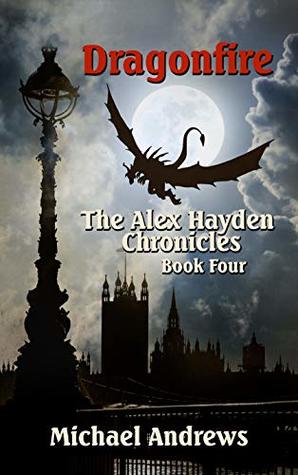
Dragonfire, Michael Andrews

dragonfireDragonfire, the fourth and latest book in The Alex Haydon Chronicles, was published in October 2018. It continues the tale of Alex, a thousand-year-old, teenage vampire who is caught between his past as a notorious warrior, and his present as a reformed character and “adopted” nephew of a Blackpool police officer.

The novel is a fast-paced, easy read, that exudes imaginative supernatural fantasy, but is set in modern-day Blackpool.

Alex is an authentic and likeable character. In this book, the darkest in the series so far, we are shown, for the first time, glimpses of his violent nature, but because we know him so well, we are somehow able to forgive him.

Unlike many Science Fiction and Fantasy books, Dragonfire does not take itself to seriously making it an enjoyable read for the less avid fan of the genre. It is peppered with gentle sarcasm and tongue in cheek humour. I particularly enjoy the way that Alex sardonically dispels long-accepted human myths about vampires, and corrects ill-informed versions of history, as someone who was actually there as events unfolded.

Dragonfire is available on Amazon at £3.99 for the Kindle edition and £9.99 for the paperback.

The Cauldron of Fire, Michael Andrews

Cauldron** spoiler alert **

This was the best so far for me in The Alex Hayden Chronicles. The quality of the writing has improved with each book, making the characters even more engaging and the story flow more naturally. However, part of the enjoyment came from having read the first two books in the series and getting caught up in the story.

I love how the supernatural world is expanding exponentially! In book one we just had Vampires and Witches. Book two, introduced werewolves, and now we have even more powerful witches, bramble pixies and ogres!

I enjoyed the way the flashbacks are integrated into the story, gradually revealing Alexander’s past and, indeed, the past of all of the supernatural characters and how they are linked. This book brings a lot of plot lines together in a very satisfying way and there is a sense that events are reaching their conclusion.

There were some real moments of tension in this book and I found myself afraid for Alex and wondering how on earth he was going to get himself out of a situation. Of course, he always does. A tiny criticism is that the relatively easy way he always extricates himself, is not always worthy of the build up and feeling of extreme danger that is created.

In this book we see Alex feed on a living human for the first time and this adds some realism to the story – he is a vampire after all!

Looking forward to reading book 4 now