Some of my Favourite Authors – Emily St. John Mandel

Emily St. John Mandel’s novels explore connections and human nature.

List of Publications

Last Night in Montreal, 2009

The Singers Gun, 2010

The Lola Quartet, 2012

Station Eleven, 2014

The Glass Hotel, 2020

Sea of Tranquility, 2022

Introduction

I discovered Emily St. John Mandel in 2020 during Covid when I read her breakthrough novel, Station Eleven, and completely and utterly fell in love with it. By the time I read Sea of Tranquility and The Glass Hotel (in the ‘wrong’ order, I later realised), I was also completely and utterly in love with Ms Mandel and her writing.

The Author

Ms Mandel is a Canadian who now lives in New York. She was born in 1979. She lived with her family in a remote part of Canada, where she was homeschooled. During her home-schooling period, she got into the habit of writing in a journal every day, which may have signalled been the start of her writing career. However, at 18 she went on to study dance in Toronto and did not publish her first novel until she was 30.

The Books.

Ms Mandel has written six novels which, for me, fall into two distinct groupings. The first three are described as crime fiction, which, after romance, is my least favourite genre. As a result, I haven’t read these but probably should! Maybe as a result of writing this chapter and feeling like a fraud for saying I’m a fan and only having read 50% of her work, I now will!

I have, of course, read her latter three novels, Station Eleven, The Glass Hotel and Sea of Tranquility. All of which are compelling and beautiful and are up there among the best books I have ever read. It’s hard to assign them a genre and while they might sit in the dystopian science fiction category, that surely does them a disservice as they are so much more than that. They are fundamentally about people and their nuances and relationships, liberally doused with elements of mystery, time travel, science fiction and dystopia.

One thing that is important to note is that while these three books are all standalone novels, they are also connected to each other through characters, time, place, events, and material objects. It is clear that Ms Mandel is interested in the idea of alternative realities and in many ways, this is reflected in her novels, which, it could be argued, are all alterative versions of each other. You can read them in order or however you fancy without reducing your enjoyment or encountering spoilers. I will review them in the order that I read them.

Station Eleven.

God, I love this book. A thoughtful, gently nostalgic, beautifully written, before and after, journey through a post-pandemic apocalyptic world. The main character is child when a lethal flu virus destroys 99.9% of the world’s population. The story jumps back and forth between the past, when the virus first hit, and the future, where she is a young woman making her was as part of a travelling theatre company, in a world that is forever changed.

The book has been nominated for and won several awards and was adapted into a TV series but for me, as is so often the case, lacked the depth and elegance of the book.

The plot is meticulous and intricate and unfolds slowly, bit by bit, as the jigsaw pieces fall into place, and we learn how all the characters are connected and everything satisfyingly and elegantly comes together. All the characters are vivid on the page and the book is deeply empathic towards them, even the bad guys who are, like all the characters, victims of their own tragedy, trauma and circumstance.

The book and the author hold a refreshingly positive view of human nature. The general feel of Station Eleven is one of peace and hope and not the violent and frightening post-apocalyptical worlds that we are so used to seeing in this genre. Although there had been violence and horror in the early days after the pandemic, this is rare in the new world, where most people are kind, loving, supportive and cooperative.

The author’s crystal clear and unpretentious writing style makes for an enjoyable and easy read which is, at the same time, beautifully and evocatively descriptive. The story contains a bit of something for everyone – action, romance, drama and science fiction – and as such, has a wide appeal and will likely be enjoyed by people who might at first think it is not for them. Please read it. You will not be disappointed. In fact, I can guarantee that you will be compelled to read her other books in quick succession.

Sea of Tranquility

I bought this as soon as it was released in 2022. After enjoying Station Eleven so much, I hoped that it would be as good. It exceeded my expectations. Another incredible book. Satisfying and delighting in every possible way. I devoured it in two days while on holiday in Devon and one morning, desperate to finish the last few pages, kept my friends waiting on our way out to the beach and found myself lovingly stroking the cover long after I had finished reading.

A beautifully written tale of time travel, mind-boggling meta-physics, wonderful characters, elegant connections and coincidences, love, kindness and humanity that spans a period of 500 years, Sea of Tranquillity takes us to the moon and back (literally). Sea of Tranquility was one of Barak Obama’s best books of 2022.

Ms Mandel is a rare thing. A truly gifted writer. Her plots are clever. Her writing is pure. Her settings and characters sing on the page and yet she is skilfully economical with her words and descriptions. I felt every emotion her characters experienced. I worried for them. I exalted with them. I smiled. I laughed out loud. I cried a little. I had some enormous “Ah!” moments as connections and plot twists gradually revealed themselves.

There were some themes that echoed those of Station Eleven, namely pandemics and people connected by past encounters and relationships, and material objects. Like Station Eleven, these connections gradually reveal themselves in heart-warmingly startling ways. I love the way how Ms Mandel crafts subject matter that is technically pure sci-fi into something totally “ungeeky” and utterly believable and every-day. She makes living in a dome on the moon and flying about in supersonic hovercraft and airships seem entirely natural and normal.

A character in the book, a writer called Olive Llewellyn, receives some feedback from a reader to the effect that her own book was a confusing collection of narrative strands that never came together. This is not true of Emily St. John Mandel. What begins as an apparently disparate collection of narrative strands, flow comfortably through the book and weave naturally together at the end of the story. There is no confusion. There are no unanswered questions. Just glorious resolution and clarity.

Maybe that’s not entirely true? There is one enormous question that runs under the surface of the book and lingers on at the end, not for the characters who know the answer, but for the reader themselves. But I’ll leave you to discover and ponder that one for yourself.

The Glass Hotel

Needless to say as soon as I finished Sea of Tranquility and realised that Ms Mandel was in definitely not a ‘one-hit-wonder’ with Station Eleven I bought and started reading The Glass Hotel. Another wonderful book, it tells the tale of a woman who disappears from the deck of a container ship, the collapse of a Ponzi scheme, and how both events impact on all the peoples they touch and beyond. The Glass Hotel was listed as one of Barak Obama’s favourite books of 2020 (it’s fair to say that he is a fan of Ms Mandel) and a TV adaptation is currently in development. Much of this book and the ‘Glass Hotel’ itself are set on a remote part of Vancouver Island. The vivid descriptions of the wild and natural location resonated with me for a long time. I can still see it in my mind’s eye. I don’t know if it is based on a real place or not, but it made me long to go there, even if only in my dreams.

Although I have said that it doesn’t really matter what order you read the books in, I found myself wishing I had read this before I read The Sea of Tranquility because of all the connections between the two books. Connections are a recurring theme in all of Ms. Mandel’s books. Connections between people, objects, events and experiences. Connections that are known and unknown. Connections that are revealed and some that remain concealed. Connections that cross decades, generations, and continents. Connections within and between books, characters and their stories. All these connections are skilfully woven together in a way that is both natural and startling at the same time. The Glass Hotel is sad and subtly beautiful. It left me feeling completely satisfied with a soft, contented smile on my face.

Summary

There are many reasons why I love Emily St. John’s work. To list a few of the main ones; it is the imaginative and intricate plots, the complex and fascinating characters, the way she makes sci-fi feel so normal, the beautiful simplicity of the writing, the atmospheric settings, the compelling storytelling, the mysteries, the surprises, the connections. As a writer, I’d love to know and understand how she does it. Is it a gift? An effortless process that comes naturally to her? I doubt it. More likely the result of a lot of hard work and painstaking planning and editing. However, she does it, her books are all wonderful reads and ones that I would through recommend. As for me, I’m off to read The Singers Gun.
The Wall

Writer finishes novel draft and wins writing competition.

It’s been a wee while since I posted on here! Life, Christmas and some family health matters have been keeping me busy and, if I’m honest, somewhat distracted. I’ve also had my head down trying to finish the first draft of my current novel, Amenti Rising. I’m pleased to say that I completed this in December. I’ve just finished a first read through and have started the first round of editing. I feel good about this one and am eager to get it published later this year.

But today, in keeping with my habit of documenting my writing successes on here, I am delighted to have something new to share with you. Last week I won first place in the Solihull Writers 2024/25 Fiction Competition. The theme was symmetry and had to be no more than 1000 words.

The Wall

The rhythmic thwump of a ball striking concrete echoed across the barren landscape. Avi was lost in his game, throwing a worn yellow tennis ball against a wall. Throwing. Bouncing. Catching. Each thwump reverberating off the concrete like a heartbeat. Again and again and again. Pleasingly distracted by its repetitiveness and soothed by its normality. Comforted. Oblivious to the diggers behind him clearing the rubble of the latest air strike. Oblivious to the daily symphony of rumbling, crunching, and grinding. Oblivious to the cries of grief-struck mothers and the shouts of angry fathers.

The day was hot and dry and each bounce of the ball raised a small cloud of sand that was carried off and scattered by the Autumn sharav. Rivulets of sweat created dark tracks through the pale dust that coated the boy’s face. His clothes and shoes, that had once had colour, were the same dirty shade of beige as the razed land and devastated buildings around him. His throat was raw and scratchy and his lips dry and cracked. He needed a drink.

He stopped throwing to walk over to where his plastic water bottle nestled in a cool patch of shade between the wall and a broken lump of masonry. He had only taken a couple of steps when he heard the thwump of a ball against concrete. With a small frown, he looked down at the ball in his hand and then up at the tall grey wall in front of him. He laughed at himself and took another step towards his water. Thwump! The sound was real, and it was coming from the other side of the wall.

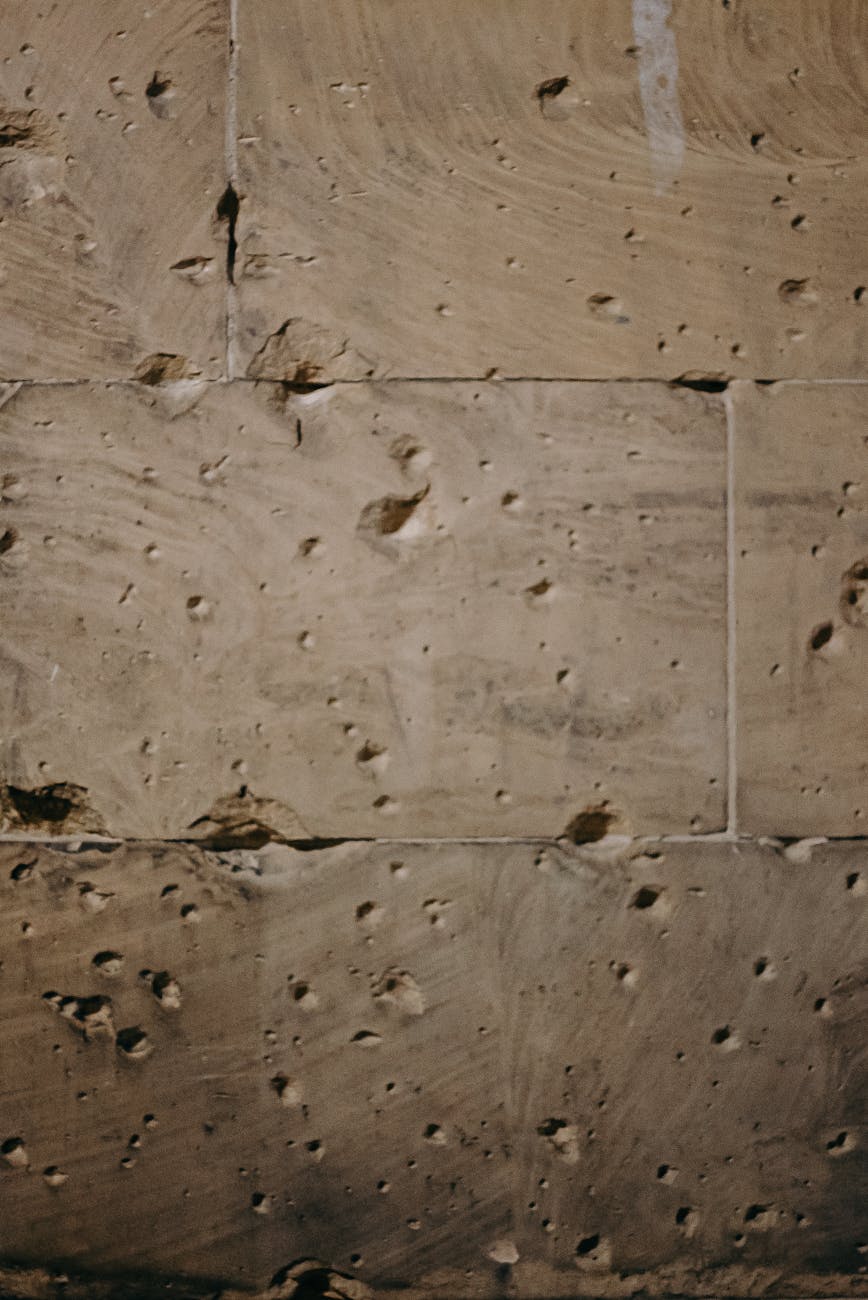
Avi picked up his bottle and drank long and deep. The ball on the other side continued to bounce. He examined the wall. Its top was lined with vicious coils of razor wire and its surface decorated with shrapnel pock marks and swathes of graffiti. A few feet away to his left, a large projectile had penetrated deep, and he could see a small circle of daylight from the other side. He walked over to the hole and peered through.

The other side looked very much like his own. Broken buildings. Broken people. Rubble. Twisted metal. Dust. Burnt-out cars. Stray dogs. Dirty children. Weeping women. Armed men. He twisted his head towards the sound of the ball. A small skinny boy was throwing it against the wall. A worn yellow tennis ball, just like his. Throwing. Bouncing. Catching. Again and again and again.

“Hey!” Avi called.

The boy stopped throwing and looked towards Avi’s position with a blank expression. He glanced over his shoulder towards the buildings behind him but, seeing no-one, he recommenced his ball throwing.

“Hey!” Avi called again. “I’m over here.”

The boy stopped again and walked slowly towards the hole in the wall, clutching his tennis ball in a small, dirty fist. When he reached the hole in the wall and caught sight of Avi, he stopped and looked nervously back towards the buildings again.

“Hi. I’m Avi. I have a ball like yours!” Avi held up his ball.

The boy held up his own ball and grinned. His brown eyes were round and bright and his small teeth white and even in his dusty face.

“I’m Tariq. I’m nine,” he said.

“I’m nine!” Avi exclaimed

“I have a dog,” Tariq said.

“I have a dog! His name’s Tzippy.”

“Mine’s a girl. She’s called Khalil.”

Avi pondered this for a moment.

Tariq studied his face.

“Do you wanna play ball?” Avi asked.

Tariq looked up at the wall between them.

“Yes,” he said hesitantly.

“OK! Throw. Bounce. Catch. First one to drop it is out.”

“OK!” Tariq nodded enthusiastically.

“Start when I say! On the count of three,” Avi yelled, backing away from the wall.

Tariq moved back as well, and they both got into position.

“Ready?” Avi called.

“Ready!”

“On three! One…two…three…go!”

The boys started throwing and catching. Their balls thwumped in perfect rhythm. The sun beat down. The hot winds blew. The boys panted and sweated. Dust swirled. Diggers rumbled. Rubble crashed. Dogs barked. Gunfire rattled. Drones buzzed overhead. Babies cried. Women wept.

The game stopped when the air raid sirens wailed and both boys ran grinning to the hole in the wall.

“Tie!” Avi gasped.

“Play later?” Tariq asked.

“Sure!” Avi agreed.

“Here again after?”

“Here again. After.”

“Later!”

“Later!”

The boys turned and ran to their shelters, whooping all the way.

Avi emerged three hours later in a haze of dust and smoke. The noise of the diggers had stopped, replaced by the crackle of fire, the creaks and groans of damaged buildings, and the wails of the trapped and injured. Men screamed. Women shouted. But all Avi could think about was getting back to the wall to meet Tariq and resume their unfinished game.

He ignored his mother’s cries as he ran to the wall, leaping over new piles of debris and weaving through crowds of bleeding, tattered people. He reached the tall concrete barrier and peered through the hole. Tariq’s side was as bad as his own. Worse.

There was no sign of Tariq, but a solitary worn yellow tennis ball lay on the ground at the edge of a huge crater where a building had once stood.

Avi turned silently away from the wall. He took his ball from his pocket and resumed the game alone. Throwing. Bouncing. Catching. Each thwump reverberating off the concrete like a heartbeat. Again and again and again. Pleasingly distracted by its repetitiveness and soothed by its normality. Throwing. Bouncing… Avi dropped the ball. The air was hot and suffocating. He raised his small face to the sky. This time the rivulets of sweat that coursed down his cheeks were mixed with his tears.

Reflections on My NYC Midnight 2024 100 Word Challenge Experience

Writing competition ended; focusing on finishing my novel now.

Oh well, my run of success in the 2024 100 Word Challenge has ended. I didn’t win any prizes. Nevertheless, I am proud of how far I got in this one. I didn’t love my last submission so it’s not a huge surprise or disappointment.

For completeness I’ll share it with you here. As ever, it’s been a fun competition and next week the 250 Word Challenge begins. But, I’m thinking I should really spend less time on competitions like this and focus on finishing my current novel. I’m so close to finishing the end of the first draft. Yet, I seem to manage to fill my time doing anything else but this!

I’m now in three different writing groups. Each one generates at least one piece of homework each month. It seems to eat up my time. Last month, I tried to ‘kill several birds with one stone’. I wrote one long piece that fitted the criteria for all three assignments. I put in a lot of time and effort and I’m pleased with the outcome. I’ll post it next week after the final meeting this week.

Maybe I’m just making excuses? I seem to always manage to find other things to do when I should be finishing my book. Grrrr! So annoying! Reading, writing assignments, doing book reviews, writing blog posts, reading other people’s manuscripts (!), cleaning, shopping, cooking, watching rubbish on the TV, staring into space … and on and on and on. I must do better!

Anyway, enough self-flagellation for now. Here is Journey to Love. 100 words on Falling in Love including the word enough.

A Journey to Love

You started as a thought seed that took root in my mind.

Should we? Could we?

Weeping each month when the bleeding came.

But you sprung and clung to life.

A dot of humanity wreaking hormonal havoc.

Growing and swelling into a hot and heavy burden.

The hard work began, only when you were ready.

A long and slow journey to a final rage of pain and trauma.

You burst into the world in a slippery rush.

Velvety skin. Dark eyes blinking. The scent of stardust. Tiny fingers curled around mine.

All is forgotten, forgiven. You are love. You are enough.

My Journey in NYC Midnight: From 5452 to the Final 192

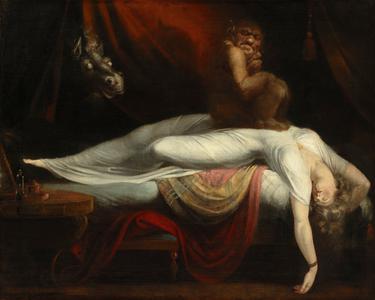
After three years, the writer reached the final round in NYC Midnight Challenges, earning recognition for their horror story on sleep paralysis.

Yay!

After 3 years I’ve finally got through to the final round of one of the NYC Midnight Challenges!

My 100 word story about Sleep Paralysis in my favourite genre (Horror!) came in at number 6 in my category. I didn’t even scrape through with an honourable mention! I got a legitimate winning place! I’m delighted that I’m now in a position able to share it with you now. They stipulate that you wait for 10 days after the results area announced before publicly sharing your work.

It’s fair to say I’m feeling very pleased with myself.

Round 1 started out back in April with 5,452 writers in 92 groups. My genre was Romantic Comedy (vile) and had to involve ‘waiting for a number to be called’ and include the word ‘worst’. My entry was called I Found Love in the Same Day Emergency Care Department and it came in 3rd in my group!

One of the judges said “I was bowled over by the impressive, even utilitarian simplicity of style in this submission, that nevertheless managed to relate a warm, even adorable love story between two people close to their worst.” 

Round 2 kicked off in June when we were down to 1,380 writers in 24 groups. As I said above, I was ecstatic to get the ‘horror’ genre and my story had to involve the action ‘swerving’ and include the word ‘except’. I went a for a long title again as this works well when words are limited to 100! They allow for a title up to 15 words long. The story was called, Sleep Paralysis: Unexplained phenomenon associated with total immobility and the sense of an evil presence.

My favourite bit of feedback on this one was “I really enjoyed the line ‘she scuttles…’ The sounds that are associated with each of these verbs give such an unpleasant, spine tingling feel to the moment. It’s a wonderful use of language to capture the feeling of approaching horror.”

The final round contained only 192 writers. Everyone got the same assignment:

Genre: Open
Action: Falling in love
Word: enough

I’m reasonably happy with my story but I can’t help feeling that it’s not one of my best. I wrote it during a a long weekend away in a camper van with a good friend. She liked it!

To be honest, just getting through to the last 192 of 5452 writers and receiving such encouraging feedback on my other submission feels like I’ve won already. I’m happy whatever happens next. Writing can be such a mentally torturous activity. You lurch between highs and lows and waves of love and hate for yourself and your work on a daily basis. A negative review on one day can send you spiralling into a storm of self-doubt and impostor syndrome. A single new fan or a tiny positive comment can set you spinning like a top with excitement and pride on another.

But, whatever the outcome of the challenge, there’s not long to wait. The results are in TOMORROW!

In the meantime, here is Sleep Paralysis. I hope you enjoy it:

Sleep Paralysis: Unexplained phenomenon associated with total immobility and the sense of an evil presence.

The hag is here.

My eyes spring wide open. But I am lead. Molten and heavy.

The room is black except for the two glowing red coals staring at me from the form crouched low in the corner.

I swerve my eyes to the flickering orange lettering of the digital clock. 3 am. The hour of Christ’s death. The hour of the devil.

She scuttles. She scurries. She climbs. She pounces.

Heavy on my chest. Hot breath on my face. Pressing air from my lungs. Life from my body.

My eyes bulge. I scream silently.

The hag is here. Again.

NYC Midnight Update – July 2024

The author is out of the Short Story Challenge but still in the 100 Word Challenge, with varied feedback.

Halfway through the year and I’m now out of the Short Story Challenge but still in the 100 Word Challenge.

My 2nd round entry to the Short Story Challenge, The Cave, which I submitted back in April did not get me through to the 3rd round. Honestly, I’m not surprised. I’m not making excuses (well I am really). That whole weekend we had visitors who didn’t leave till Sunday afternoon. Much food and drink was consumed and I wasn’t at my best on Sunday afternoon when I sat down to write my story. As a result, my effort was not one of my best and the feedback from the judges confirmed this. General consensus was that, while there were moments of true suspense and tension, the story lacked structure and was error ridden to the point of distraction. Oopsie!

I’m not sure I want to share The Cave with you, but I will do, if only for completeness. You can read it at the end of this post. Apologies in advance. Just a reminder that the requirements were as follows:

Genre: Suspense (one of my favourites which is even more annoying)

Action: Petrified

Character: Milkman

Better news on the 100 Word Challenge. I Found Love in the Same Day Emergency Care Department was well-received, which was good because I was pleased with this one. It was inspired by my own experience of spending a day in this department at our local hospital and my observations of my fellow patients. One of the judges said, “I was bowled over by the impressive, even utilitarian simplicity of style in this submission, that nevertheless managed to relate a warm, even adorable love story between two people close to their worst.” You can read this below. Just a reminder of the requirements:

Genre: Romantic Comedy (Urghh!)

Action: Waiting for a number to be called

Word: Worst

My next entry was submitted on the 14th of June and the results are due on the 7th of August. I enjoyed writing this one. The requirements were:

Genre: Horror (YAY!)

Action: Swerving

Word: Except

I chose to write about one of my favourite subjects. Sleep paralysis! I went a for a long title again as this works well when words are limited to 100! They allow for a title up to 15 words long. The story is called, Sleep Paralysis: Unexplained phenomenon associated with total immobility and the sense of an evil presence.

Anyway, fingers crossed…

In the meantime, here are I Found Love in the Same Day Emergency Care Department and The Cave.

I found love in the NHS Same Day Emergency Care Department.

Male, 27, Appendicitis

Female, 25, Viral Meningitis

Hours staring wordlessly over grey cardboard vomit bowls at our pale up-all-night faces, waiting for the numbers on our plastic wristbands to be called.

You: “Fancy a drink?”

Me: “Go on then.”

You: Shuffling to the cooler, with your dangling IV stand, hospital gown gaping at the back.

Me: Smudged mascara eyes ogling your cheeky little bum crack peeking over the top of your faded boxers.

An exchange of wan, stale-breathed smiles over flimsy plastic cups of lukewarm water.

You: “Should’ve worn clean underpants.”

Me “Should’ve washed my hair.”

Worst first date ever.

The Cave

Friends, Trudy and Chris, are heading to Milkman’s Cave and Petrifying Well to petrify their baby’s first shoes. The remote location is said to be named after the legendary Milkman.

Trudy stands beside the car, staring out over the grey, windswept moorland. The sky hangs heavy with unspent rainclouds. Theirs is the only vehicle in the tiny car park and there is nothing but moor grass and heather in all directions for as far as the eye can see. Her hair whips against her face and she tugs her beanie down over her ears to keep the loose strands in place. The moors have always made her feel uneasy and today is no different. As if they are in a place where they are not meant to be. Trespassing on primeval lands, where ancient echoes whisper through the heather, and long-kept secrets lurk beneath the peat.

“Come on, Trud. We need to get going. It’s a forty-minute walk to the cave,” Chris yells from the back of the car, where she perches on the edge of the open boot putting on her hiking shoes. Trudy walks round to join her. Her friend is grinning. Her eyes are sparkling. She loves this place almost as much as I hate it, Trudy thinks, as she slips out of her trainers and starts putting her own boots on.

Once they are fully booted and jacketed, with rucksacks fitted snugly to their backs and walking poles dangling from each wrist, Chris hurries back round to fetch a small carrier bag from the floor of the passenger seat.

“Mustn’t forget these!” she says, waving the bag that holds the sole purpose of their expedition.

“God no!” Trudy agrees as Chris removes a small pair of blue baby-shoes from the bag and thrusts them at her. Trudy takes them and puts them in the inside pocket of her jacket as Chris does the same with a pink pair. They walk over to where a weathered sign marks the start of the footpath. Trudy studies it for a moment.

Milkman’s Cave

and

Petrifying Well

2.3 miles

It had seemed like a good idea when Chris had suggested it. Now, Trudy isn’t so sure. Trudging across the moors to some creepy, wet cave to hang their babies first shoes in the Petrifying Well and return for them years later, by which time they would be preserved in stone for eternity. What had she been thinking? The first spots of rain were beginning to fall. She glances back to the warm, dry car then back to the path ahead. Chris is already striding up the path. Trudy hurries after her.

He is aroused by the sense of someone approaching. No, not one. Two. Two souls. On their way to him. He rises from his chamber and slithers across smooth boulders to the cave with the crack between the rocks. He crouches. He listens. He waits.

The entrance to the cave sits at the bottom of a dip, out of sight from the main path until it’s directly below them. It looks like a gaping black mouth with lacy lips of creeping ivy. Another small sign identifies it as their destination.

“Who was this Milkman anyway?” Trudy mutters, reading the peeling lettering. “And what was he doing delivering milk out here in the middle of nowhere?” she gestures across the barren landscape.

“He wasn’t an actual milkman,” Chris scoffs. “He was just called Milkman because his skin was the colour of milk. Story goes, he’d lived in the dark depths of the cave for so long that his skin turned completely white. And his hair. And his eyes. All white.”

“Jesus!” Trudy shudders. “Why? Why did he stay down there? That’s horrible!”

“It’s only a story, Trud. A myth.”

“No! I don’t like it! I’m not going in there.” Trudy closes her eyes, presses her lips together and vigorously shakes her head.

“Don’t be daft. He’s not real. There’s no one in there. Nothing in there, except a mouldering collection of petrified toys and teddy bears. Come on!”

“I don’t know…”

“Trud, we’ve come all this way. Let’s just do what we came to do. It’ll only take a minute.”

Trudy watches in horror as Chris scrambles down the slope and ducks beneath the ivy before she disappears inside the cave. Now Trudy is alone on the path. The car park long out of sight behind them. The wind moans around her and a crow caws in the distance, its call raw and harsh. Suddenly, the thought of standing here on her own is more terrifying than going inside. She picks her way down to the mouth of the cave and slips through.

His senses are under assault. He covers his ears against the thud of their footsteps. Their breathing. Covers his nose and mouth against the smell of their bodies. Their sweat. Their perfume. Cowers and folds in on himself as the air they disturb sends ripples over his tender skin.

As her eyes adjust to the darkness, it is the smell that hits Trudy first. Earthy and damp and metallic. But beneath that there is something else. Something organic and rotting. First the smell, and then the cold. Although she is just a couple of steps inside the entrance, the temperature has dropped by several degrees. Her eyes gradually adjust until she can see Chris, a dark shape just ahead of her. There is a soft electronic click and a circle of light from Chris’s phone torch illuminates the wall in front of them. Trudy gasps.

The wall is wet and glistening. At its foot is a small pool surrounded by rocks and vegetation. Around the pool on the rocks and hanging from strings that crisscross the surface of the wall, are hundreds of items in various stages of petrification. Dolls, teddy bears, toy cars, figurines, keys, hats, jewellery, hats, handbags, and shoes, all turned or turning to stone. The bottom of the pool is littered with petrified coins.

Trudy is mesmerised. She walks past Chris to the edge of the pool. All fear forgotten. It is magical. Beautiful. Like stepping into a fairy story.

“Wow,” she breathes.

“See? Isn’t it amazing?” Chris says.

“Amazing,” Trudy echoes.

They spend a few moments taking in the scene. Trudy lights her own phone torch and examines the details of some of the objects.

His senses have settled slightly. Grown accustomed to the onslaught of new stimulation. He watches and listens to them through the crack. His vision is dim. He can only make out their blurry shapes. But he can feel them. Hear them. Taste them.

“We better make a move,” Chris says, after a while. “Don’t want to run our phone batteries down.”

She takes Ella’s baby shoes out of her pocket and ties the laces together to hang them over an empty spot on a loop of string. The string itself is thick and solid. Trudy takes out Jake’s shoes. His have tiny straps and buckles and she interlocks them to hook them over the string beside Ella’s. They stand back to silently admire their handiwork. The shoes are bright and clean amid the other grey-brown objects.

“Right, let’s go.” Chris switches off her torch and heads back to the entrance. “Shit!” she exclaims, making Trudy jump and spin around.

“What?” Trudy asks. “What is it?” She follows Chris’s gaze to the opposite wall of the cave.

“I…I saw something. Something…white.”

“Stop it!”

“I’m not kidding. I did. I saw something.”

“Chris! You’re freaking me out. Please”

Trudy hurries towards the entrance. But Chris walks slowly towards the wall ahead, her eyes fixed on a specific spot that is darker than the rest of the grey green surface.

It happens quickly. A gasp. A soft rustle of fabric on stone, then silence.

Trudy feels an absence.

She turns around.

Chris is gone.

All her senses are screaming at her to run, but Trudy forces herself to walk deeper into the darkness. Tears well in her eyes and roll down her cheeks. Her breath is shallow. Her heart racing. Her whole body is trembling.

“Chris?” she whispers. “Chris, are you there? Chris?”

She is almost at the wall. She can see the long crack now. The dark crease.

Something white flashes behind it!

Trudy shrieks. Stumbles. Loses her footing. Steps to the side. Into empty air. And then she is falling. Sliding. Into blackness.

The Milkman lets out a long high-pitched keen. He scuttles from his hiding place back to his chamber. He is confused. Violated. He is panicked. Agitated. He is terrified of what is to come.

When Trudy hits the bottom, it knocks the breath out of her. She is gasping and crying. It is black. So black. Something is moving beside her. Touching her. Pawing at her. She screams and bats it off.

“It’s me!” Chris hisses. “Are you alright? Are you hurt?”

Trudy can’t speak. She takes a couple of deep, painful breaths.  

“Trud?”

“I’m OK,” she croaks. “Just winded.”

“Thank, god!” Chris sighs.

Trudy can feel her crawling around beside her. Grunting and huffing.

“Are you OK? What are you doing?”

“Dropped…my…phone,” Chris mumbles. “Ah,” she sighs with relief and, a moment later, the comforting light from her torch lights up the space.

The two women look around in silence. It is another cave. Bigger than the one above but still small. Chris directs the light above their heads revealing the wide crevasse and almost vertical rockface that they have slipped down.

“We’re not getting back up there,” Chris grumbles. “We’re going to have to find another way out. Can you stand?” She helps Trudy to her feet.

Trudy’s teeth are chattering. She thinks she might throw up.

“What was that…thing?” she croaks.

Chris pointedly ignores her. Walks across the cave towards an opening on the other side.

Trudy starts to follow her but something on the ground catches her eye. A small cluster of objects tucked neatly in a corner. She bends to examine them.

“Chris. Look. Shine the light back here a minute.”

Chris directs the light at the group of objects.

“Oh,” Trudy’s voice is small. Something tugs at her heart.

The objects are a petrified hairbrush and a baby rattle. They are resting on a photograph. Trudy moves them aside. The photograph is creased and faded but she can see that it is of a man and a woman, and a baby. The man and woman are smiling. They hold the baby between them. She feels the love radiating from the image. But when she looks again at the stone comb and baby rattle, a wave of sorrow rushes through her.

“Leave that. We have to get out of here.” Chris’s tone is terse. It tells Trudy that her ever-stoical friend is just as afraid as she is. She wordlessly falls into step behind her as they follow the bobbing circle of light out of the cave and into the next.

Both women gasp at the sight that greets them.

Another wet, glistening wall. Another rockpool. Another well. But this one is not surrounded by petrifying toys and trinkets. The pair of petrified objects dangling in this well are something else entirely. One small. One larger. Although their features are smoothed by layers of hardened sediment, they are immediately recognisable for what they are. The shape of the human form is unmistakable. A woman and child. A mother and her baby. Immortalised in stone.

Close by in a dark corner of the cave, the Milkman crouches. His skin so pale it is translucent. His long hair and beard, white as cream. His nails yellowed and thick. His eyes are cloudy. He is weeping.

Fireman Tom

The writer won the 2024 Non-Fiction Competition with a heartfelt piece about storytelling, highlighting its profound impact on human behavior.

I know I only posted yesterday, but last night I found out that I had won the Solihull Writers Workshop 2024 Non-Fiction Competition. It’s a rare occasion that I win anything and like all writers, I’m going to enjoy the hell and blow my own trumpet till my puff runs out and before the next onslaught of failure and rejection.

The brief was to write up to 1000 words on ‘why we tell stories’. I chose to use the piece to write a little memoir to my Dad who died last year…….

Fireman Tom (Why we tell stories.)

My father was a firefighter. A strong, kind, and handsome hero to us, his three little doting daughters, as well as to countless other souls he came into contact with in the course of his work. Every night, before we went to sleep, he would switch off the big light, sit on the edge of the bed and tell us a story. The hero of these stories was an imaginary figure called Fireman Tom. Every night we were enthralled by Tom’s latest exciting adventure. It was one of my favourite parts of the day. We would listen intently, silent and wide eyed as Fireman Tom rescued cats from tall trees and dogs from fast-flowing rivers, removed saucepans from small heads and freed skinny limbs from park railings, and regularly carried small children, just like us, to safety from fire and flood.

The parallels between my dad and Fireman Tom were not lost on me, and when he slowly told the story of the day in his low bed-time voice, it was him I saw in my mind’s eye. The way he looked when he got home in the evening, took off his uniform and tie and loosened his collar. His cobalt blue eyes. His thick dark Brylcreemed quiff. The hair on his strong tanned forearms, dark against the crisp white of his rolled-up shirt sleeves. His familiar scent of tobacco and Old Spice. Fireman Tom was my dad, and my dad was Fireman Tom.

Fireman Tom’s stories were always relatable and relevant to us. They were carefully suited to our ages and experiences. When we were very young, they were mostly about dogs and cats and playground mishaps. As we got older, so did the victims, and the accidents that befell them, portents about what might happen if we didn’t take care crossing the road, climbed or crawled into dangerous places, or played with matches. When Dad took a job as the Chief Fire Officer in a small town in Southern Rhodesia and we emigrated to Africa, Fireman Tom was rescuing small African boys from deep wells and saving families from raging bush fires.

But, like all things, we grew up and grew out of bedtime stories. More and more often our parents were in bed before us, especially at weekends. Now our bedtimes stories were reading teen magazines in bed, late-night horror movies or chatting on the phone for hours to our girlfriends. Fireman Tom and his adventures seemed childish and irrelevant and far behind us. But were they…?

Humans have told stories since the beginning of time. Indeed, Will Storr in The Science of Storytelling[1] states that storytelling is an essential part of what makes us human. He says that the stories we hear can shape who we are. That they can drive us to act out our dreams and ambitions and mould our beliefs. So, what exactly is it about stories and storytellers that can influence us in such a way?

Over the past couple of decades there has been a glut of research into why humans tell stories to each other and how these stories affect us and alter our thoughts and behaviours. Jeremy Adam Smith, in an online article for Greater Good Magazine in 2016[2], says that “Stories are told in the body.” Essentially, the research tells us that we feel stories – that a good story, well-told, can make the listener (or the reader) feel that they are inside the story. That they are living the experience with the character in the story, triggering a real physical and emotional reaction and several neurochemical reactions in their brains and bodies. If we feel stressed or excited by the situation in the story, this can trigger the fight or flight mechanism and the release of adrenaline in our bodies. If we are emotionally invested in, and empathise with, the character, this can cause the release of oxytocin, the so-called “caring” hormone that is present in nursing mothers.

Because we feel these things more when we experience them in the context of a story than we would if we were just presented with the facts, the memories of them stay with us and change our thoughts and behaviours. If my dad had just told us that many children are killed or injured crossing the road every day, and many more are killed or injured in house fires, I wonder if I would be holding my granddaughter’s hand quite as tightly when we cross the road together, or be warning her quite as seriously about the dangers of playing with or near an open flame. I wonder if I would be telling her quite as vehemently not to get too close to the riverbank. I wonder if I would always be seeking out the fire exits on a trip to the cinema or a concert. I wonder if I would hold the same high levels of trust and respect for members of the emergency services.

But of course, storytelling is about much more than influencing other’s thoughts and behaviours in a significant and lasting way. It is also about amusement and entertainment, establishing connections, forming and strengthening relationships and human bonds. Those moments spent with my father before we went to sleep each night were among the most precious of my life. Warm and cosy. Calm and loving. All his attention focused on us and ours on him. Yes, we were learning valuable life lessons through Fireman Tom’s adventures, but we were also learning about our father. About what he did at work all day. About who he was and what was important to him. About how much he loved and cared for us and how he would always keep us safe.

My strong, loving father finally succumbed to dementia last year with his three daughters at his bedside.

I wonder what Fireman Tom is doing now.


[1] Will Storr, The Science of Storytelling, Harry N. Abrams, 2020

[2] Jeremy Adam Smith, The Science of the Story, Greater Good Magazine, 2016

Processing…
Success! You're on the list.

NYC Midnight Competitions 2024: Recent Entries and Results

The 2024 NYC Midnight Competitions are in full swing. The writer participated in the 100-Word Challenge with a Romantic Comedy entry, and the 250-Word Challenge where they received an Honourable Mention. Their Short Story Challenge entry, “Stop the Boats,” made it to the next round. The next rounds are scheduled for June and July.

It’s halfway through May already and we’re well into the 2024 NYC Midnight Competitions. Since my last post, I have also entered the 100 Word Challenge as it’s always good fun and not too time consuming. I submitted my first round entry on the 20th April. My genre was Romantic Comedy (again!) and had to involve ‘waiting for a number to be called’ and include the word ‘worst’. My entry was called I Found Love in the Same Day Emergency Care Department. I quite like it but we will see…

I got the results of the 250 Word Challenge on the 4th of April and, although I didn’t get through to the final round, I did get an Honourable Mention for There’s Something I Haven’t Told You, which I am delighted to share with you below. My estimates of the numbers tell me that I got through to the last 250 from 4000 participants and I’m happy with that!

In the Short Story Challenge, much to my surprise, Stop the Boats did get me through to the next round. Again, I have shared this with you at the end of this post. My genre for the next round was Suspense and had to be about being ‘petrified’ and include a character who is a ‘milkman’. I submitted my entry called The Cave on the 14th of April.

So, to summarise, I’m out of the 250 Word Challenge, the next round of the 100 Word Challenge is in the week commencing June 10th, and the next round of the Short Story Challenge in the week commencing July 22.

In the meantime, here are There’s Something I Haven’t Told You and Stop the Boats.

There’s Something I Haven’t Told You.

(Action Adventure/Warming Hands/Hitch)

“There’s something I haven’t told you,” I begin, looking at you over the small campfire where I squat, warming my hands against the night chill.

The forest around us is dark and still. My heightened senses alert to any sudden crack or creeping shadow. My body primed and ready to move. To grab your hand, to run, again, deeper, further.

The red and gold flames flicker in your wide blue eyes as they rise to meet mine. Your smile is soft. Patient. You nod your encouragement.

“I am not who you think I am,” I continue. A slight hitch in my voice. I am about to break your heart. “I know things. There are people who wish me dead.” You wait for more. I owe you more. An explanation for why you have been torn from your bed in the middle of the night. For why we have fled to the depths of the forest. For why I have betrayed your love. Your loyalty.

“There’s something I haven’t told you,” You begin, rising and walking around the fire towards me.

The dark forest closes around us.

“I am not who you think I am,” you continue. There is no hitch in your voice. Your eyes are blue steel.

“You know things. There are people who wish you dead.” Your voice is ice, as you draw the stiletto from your sleeve. It glints in the moonlight and my heart breaks as the blade slides in.

Stop the Boats

(Political Satire/Free Spirit/A Check-Up)

“So, Prime Minister, its time for your annual check-up.” Henry looked down at the top of his boss’s head. Not a strand of his dark, glossy hair was out of place. The aide inadvertently rubbed the top of his own bald pate.

“OK, Henry, just book me into The Cromwell as usual,” Suni muttered as he continued to read the open file in front of him. “I’m up to my neck in this tiresome business of how to ‘stop the boats.’ Damned immigrants. Will they never give up?”

On the other side of the large oak desk, Henry paused and shuffled from foot to foot before he spoke again. “Erm…that’s the thing, Prime Minister. We were thinking…”

Suni’s head shot up. His eyes narrowed as they met Henry’s behind his wire-rimmed glasses.

“Thinking? Why does it always worry me when you say that you’ve been thinking, Henry?”

“I don’t know, sir.”

Suni held Henry’s gaze. Henry rubbed his long thin fingers together with a rasping sound that set Suni’s teeth on edge.

“Well,” Suni snapped. “I’m waiting.”

“Waiting? I really don’t know, Prime Minister.”

“You don’t know what you’ve been thinking about! Jesus, am I completely surrounded by idiots?”

“No…I meant I don’t know why you worry when I say that we’ve been thinking, sir. I know what we’ve been thinking about…”

“Oh, for Christ’s sake! It was a rhetorical question, Henry. Rhetorical! Do you know what that means?”

“Yes, sir. It means…”

“I KNOW what it means, Henry. You don’t need to tell me!”

“Sorry, sir.”

“So, just tell me. Please.”

“Tell you what, sir. You just said don’t tell you…”

“Good grief, man! What you’ve been thinking! About my check-up. Come on, man. JUST TELL ME!”

“Oh. Sorry. Well, sir, we’ve been thinking that it might be prudent not to go to The Cromwell for it this year.” Henry paused.

Suni folded his arms and leant back in his green leather armchair. “Continue,” he said, now giving Henry his full attention.

“Well, we were thinking that it might be best to go somewhere less…you know…ostentatious. What with the current cost of living crisis and public opinion and all that.”

“OK, I can see that.” Suni nodded. “Where are you thinking? The Cleveland or Blackheath?”

“Erm, no, sir. We were actually thinking you should go over the bridge, to St Thomas’s or maybe down to Chelsea and Westminster.”

Suni paled. “Are you saying go…NHS?” His voice lowered and he glanced around the oak panelled room.

“Yes, Prime Minister. We think it would be…”

“I know,” Suni interrupted him. “Prudent. Hmmm.” He stroked his chin.

Henry watched the wheels of cognition turning in his boss’s mind. Watched him processing the pros and cons. Deducing what was in it for him. Calculating the political opportunity. He jumped when Suni suddenly stood up and banged his hands, palm down, on the desk.

“Great idea, Henry! Let’s do it! Let’s show our support for the NHS. Bump the Shadow Home Secretary and book me in for Friday afternoon.”

“Erm, I’ve already taken the liberty of checking availability, sir. The first date they can fit you in is on the 24th of June.”

“June!” Suni spluttered.

“Yes, I’m afraid so, sir.”

“But that’s weeks away!”

“Yes. Six weeks, sir. Waiting lists, you see. They actually put you to the top of the list. Special dispensation. Given your…you know…status.”

“For Christ’s sake. The things I do for this country. Go on then. Book me in for the 24th of June. And, Henry, make sure the press knows. I’m not putting myself through all this for nothing.”

“Yes, sir. Will do, sir. Thank you, sir.” Henry backed away a couple of paces before turning to leave the room.

Suni shook his head slowly as he resumed his reading.

“Damned immigrants,” he said again.

Meena examined herself in the scratched mirror of the staff toilet. She pulled her dark brown curls into a scrunchy and unfastened her gold nose ring. Apparently, a nose ring didn’t create the right impression. Meena frowned. What was she doing? She wasn’t here to make impressions. She was here to treat patients. Sick patients. Patients who needed her. And now she was being taken away from these patients to conduct a routine health check on a perfectly healthy individual. An individual with more wealth than a small country. An individual who was only having it performed here for the sole purpose of raising his opinion poll ratings. She refastened her nose ring and strode out of the room. The jingle of the tiny silver bells in the hem of her skirt echoed in the empty space as the door slowly closed behind her.

The Prime Minister was standing by the window talking on his phone. Big Ben and the parliament buildings were visible on the other side of the river. A dark suited security man loitered just inside the room. There was another in the corridor outside.

“He’ll be perfectly safe in here with me, if you’d like to wait with your colleague outside?” Meena gestured to the door.

The man opened his mouth to speak but Meena stopped him with a raised palm.

“Outside. Thank you.” She said with a smile, closing the door behind him as he left without further protest.

“You’ll have to turn that off in here I’m afraid, Prime Minister. No phones allowed.”

Suni shushed her with his finger and continued talking.

Meena approached him and held out her hand.

“I said, no phones.”

His eyes widened and he covered the mouthpiece to address her.

“I’m on an important call,” he hissed.

“I’m sure you are but, as I said, no phones. It affects the equipment,” she lied.

He looked at her for a long moment before he spoke through gritted teeth, “Do you know who I am?”

“Of course, I do. But in here you’re just a patient like everyone else. Now, either put away your phone or give it to me please.”

“I’ve got to go. I’ll call you back,” Suni snapped at the person on the other end of the call. Slowly and deliberately, he put his phone in his pocket, never taking his eyes from Meena’s face.

“That’s better,” said Meena. “I’m Meena Malik. I’ll be doing your examination today.”

“I thought I was seeing Professor Eadie?”

“I’m afraid Professor Eadie has been delayed at his private practice this morning. They brought me in to cover for him. He’s very sorry.”

“I’m sure he is! Are you even a doctor?” The brown-skinned woman looked like a gypsy with her wild hair, nose ring and flamboyant clothes.

“A locum consultant, yes. As I said, I’m covering for him today.”

Suni huffed.

 “Anyway, let’s get started shall we. Strip off down to your underpants and pop onto the couch for me please.”

She pulled the papery curtain around him as he removed is Saville Row suit jacket. His silent irritation seeped into the room and a small smirk tickled at the corners of Meena’s mouth as she opened his file.

“I see you are Suni Rasheek,” she said. Do you prefer Mr Rasheek or Suni?”

“Actually, convention dictates that you address me as, sir or Prime Minister.” His voice was muffled from behind the curtain.

“I’m not big on convention. I’ll stick with Suni if that’s OK? I like to keep things informal. Relaxed. Better for the blood pressure. Are you ready in there?”

“Yes.”

Meena flung the curtain back to reveal Suni lying on the couch. He’d covered himself with a thin blanket. She whipped it off with a flourish.

“No need for that! Let’s have a good look at you.”

“It’s bloody freezing in here,” Suni grumbled with a shiver.

“It is, isn’t it. Cuts. Can’t afford to heat the place. But I suppose you know all about that.”

“It’s filthy too,” Suni said, looking around at the peeling paint and scuffed woodwork.

“No, not filthy.” Meena shot him a glance. “Just in need of an upgrade. A lick of paint. But again you…”

“Alright. You’ve made your point,” he interrupted her.

They were silenced by the loud hum of the blood pressure machine.

“Hmmm. BP’s a bit high, Suni,” said Meena.

“Really, you do surprise me!”

“I’m just going to do your heart tracing now. I need to shave off some of your chest hair to make sure the leads stick, if that’s OK?”

“Whatever,” Suni sighed. “Let’s just get this over with. I’ve got things to do.”

He winced as the cheap razor scraped across his skin. She stuck disposable electrodes on the bare patches in his thick dark chest hair.

“Any chance of a hot drink?” he asked, wistfully recalling the warm, plush examination rooms at The Cromwell. The soft blankets. The sparkling cleanliness. The smell of the coffee machine. The delicious canapes.

“Of course, when we’re finished. What would you like?”

“I’ll have a Chai Latte, soya milk, no sugar.”

Meena suppressed a snort.

“It’s just tea or instant coffee on offer. With milk and sugar of course. We have that.”

“I’ll leave it.”

“No problem. Let me know if you change your mind. I’m sure we could rustle up a Rich Tea biscuit, or two, if you fancy.” She emphasised the word ‘rich’ but her provocative play on words elicited no reaction.

 She shrugged and started attaching the ECG leads.

“Where are you from, Dr Malik?” Suni changed the subject.

“East London. Dulwich. Call me Meena, please.”

“No, I mean where are you from? You have a slight accent.”

“Oh, I see.” Meena stopped what she was doing and looked at him. “My parents came here as refugees from Iran in 2001. I was seventeen at the time.”

“Ah, I see.” Suni nodded sagely. “So, you did your medical training here then. That’s good.”

“So where are you from, Suni?”

“Me? I’m British of course. I was born and raised just down the road in Surrey in fact.”

“No, I mean where are you from? Your name? Your heritage?”

“Well, its not really relevant but, if you must know, my grandparents immigrated here in the 1960’s from Kenya.”

“Oh, also refugees then?”

“Well, not really. Not in the true sense of the word. They made a choice. An economic choice.”

 Meena didn’t answer. She was frowning as the ECG machine whirred and the paper started to curl out of the machine.

“Something wrong?” Suni asked.

“Possibly…” Meena examined the tracing.

Suni felt his heart thumping in his chest as the medic pored over the recording. She looked up at him with a serious expression.

“Mr Rasheek, I’m afraid there are some…anomalies…on the heart tracing. I think we should do an urgent exercise stress test before you leave. Record the ECG again while you are walking on the treadmill. Is that OK?”

“Really? Today? Are you sure that’s absolutely necessary?”

“I would definitely recommend it, Mr Rasheek. Just to be on the safe side.”

Thirty minutes later, a bare-footed and bare-chested Suni was fully wired up and walking on a treadmill that was gradually increasing in speed. They had permitted him the small dignity of putting his trousers back on. Meena was sitting on a swivel chair watching a monitor with a white-coated technician. Their expressions were grim.

“Are you alright, Mr Rasheek?” Meena asked.

“Yes,” Suni panted, but he wasn’t sure he was. His chest was tight. He couldn’t catch his breath. He’d let himself get so unfit. But he couldn’t show these people that. After this was sorted out, he’d have to get back into the gym. Start jogging again.

 “Just a little faster for a few minutes and then we’re done.” Meena called.

Suni was sweating now. It was pouring from him. Black spots were floating around the edges of his vision. The tightness in his chest had become more of an ache. A cramp.

“Are you alright? Are you sure?” Meena was walking towards him. “Stop the treadmill, Gary!”

The deep heavy ache was spreading down his arm. He felt sick. Dizzy.

“Shit!” he heard Meena say, just before the world went dark.

Henry observed his boss from behind the bullet proof glass of his suite at The Cromwell. His security detail stood on either side of the door. The Prime Minister was propped up in bed surrounded by newspapers. He was reading the front page of The Times. Wires snaked from beneath the sheets to a beeping cardiac monitor on the wall. A breakfast tray on the bedtable was laden with fresh fruit and croissants. Vases of flowers and cards from well-wishers covered all the other surfaces.

Henry knocked once and entered the room. The Prime Minister looked up from his paper.

“Good morning, sir. How are you feeling?” Henry asked.

“Much better today thanks, Henry.”

“Good. I see you’ve got the papers.” Henry nodded at the array of newspapers on the bed. They all focused on the same main story. The Prime Ministers cardiac arrest and resuscitation at St. Thomas’ Hospital the previous day. Many of them focused specifically on the female doctor who had saved his life. Henry looked at the tabloid closest to him. The headline read:

GRANDAUGHTER OF IRANIAN REFUGEE SAVES PM’S LIFE.

Underneath the headline, a large photograph of a smiling Meena Malik filled the top half of the page. She was looking over her shoulder as she got into a coral pink Fiat 500, surrounded by photographers.

“Certainly got the attention of the press, sir.” Henry said, picking up the paper for a closer look.

“Yes, but maybe not in the way I was expecting,” Suni gazed out of the large picture window at the familiar London skyline.

Henry cleared his throat.

“I know you’re going to be out of action for a bit, and of course the Deputy PM will take over in your absence, sir, but the ‘stop the boats’ bill goes to the commons today and I know this is a big priority for you…”

“Yes, well, I’ve been thinking about that, Henry.”

Henry supressed the urge to say that it worried him when the Prime Minister said he’d been thinking.

Instead, he said, “Oh.”

Yes, Henry. I’ve been thinking that maybe it would be prudent to have another look at the NHS funding bill before we progress with ‘stopping the boats’. Just for now at least.”

“Good idea, sir.”

“Yes, Henry. I rather think it is.”

Processing…
Success! You're on the list.

A Shovelful of Serendipity.

The 2024 NYC Midnight competition offers multiple categories this year. The author participated in the 250-word Microfiction and Short Story challenges. The results of the 1st Round for the Short Story Challenge will be disclosed on April 9th. They have advanced to the 2nd Round in the Microfiction Challenge. The story “A Shovelful of Serendipity” portrays a romantic encounter.

So, the 2024 NYC Midnight competitions have started. This year there seem to be more categories than ever to enter. I’ve opted for two; The 250-word Microfiction Challenge and the Short Story Challenge.

The 1st Round of the Short Story Challenge took place in January. On the 19th I received my category and had to submit my 2000 word (max) story by the 27th. My Genre was Political Satire (yuk!). My Subject was A Check Up. My Character was A Free Spirit. I struggled with the genre but managed to get something submitted by the deadline called Stop the Boats – you can guess what it’s about. There are over 6000 entries this year and I’m not feeling very hopeful about getting through to the next round. But, we will see. The results of the 1st Round will be published on the 9th of April.

I’m feeling more positive abut the 250-word Microfiction Challenge. The 1st Round actually took place between the 8th and 10th of December 2023. My Genre was Romantic Comedy (yuk again!). My Action was Shoveling Snow. My Word was Measure. Again, I struggled with the genre but managed to get my story A Shovelful of Serendipity submitted by the deadline. This time there were over 4000 participants and I was delighted to learn, on the 7th of February, that I had made it through to the 2nd Round with abut 1000 other writers.

For the 2nd Round, my Genre was Action/Adventure, my Action was Warming Hands and my Word was Hitch. It took me a while to come up with an idea that I was happy with, but I submitted There’s Something I Haven’t Told You on the 11th of February and will get the results on the 3rd of April.

In the meantime I am able to share my 1st Round 250-word Romantic Comedy, A Shovelful of Serendipity, with you. I hope you like it!

A Shovelful of Serendipity

Ezra was sweating inside his parka, despite the cold. It was going to be worth it, he thought, shovelling snow from around the car tyres. He’d already cleared the vehicle itself. This was the final measure of the grand gesture that would finally capture the attention of the new girl at No. 26.

He looked at his watch. She’d be out soon. He rehearsed his line. I was doing mine, so it just made sense to do yours too.

The door to No. 26 opened. His heart quickened. She emerged, aloof and beautiful as ever even swaddled in her winter clothes. Dark curls escaping her beanie. Cheeks rosy, Sapphire eyes looking … straight past him?

The door to No. 28 opened and old Mrs. Barker shuffled down her path, hunched and frowning against the chill. She looked at Ezra standing by the snow-free car and her wizened, whiskery face broke into a grin.

“Ezra! You are a good boy!” she cackled.

“That’s alright, Mrs Barker.” Ezra’s smile was tight. “I was doing mine, so it just made sense to do yours too.” He almost choked on the words, shrivelling with frustration and disappointment.

As Mrs Barker drove off, he turned to see the girl from No. 26 intent on clearing snow from her own windscreen. He was still invisible to her.

He started the miserable trudge to his own car when she lifted her head and looked at him. Saw him.

“That was really kind,” she said.

And then she smiled.

Processing…
Success! You're on the list.

Shakespeare in Solihull

Shakespeare’s Lost Years

This summer celebrates the 400 year anniversary of the first publication of the plays of William Shakespeare in 1623. The First Folio, as it has come to be known, was published seven years after his death. During the anniversary celebrations, The First Folio will visit Solihull as part of a tour of Birmingham, courtesy of The Everything to Everybody Project at The Library of Birmingham.

https://www.bbc.com/news/uk-england-birmingham-65064648.amp

In anticipation of the visit, Solihull Writers Group chose Shakespeare in Solihull as the theme of their 2023 Creative Fiction Writing Competition. My offering, was awarded third place. You can read it below:

Shakespeare in Solihull – The Lost Years

Scholars often refer to the years between 1585 and 1592 as Shakespeare’s “lost years”. All historical records pertaining to him cease after the birth of his twins in Stratford-on-Avon in 1585, and only resume in 1592 when he reappears in the London theatre community.

There has been much speculation as to where he was and what he was doing during these “lost” years, alongside just as much speculation about his sexuality and the mysterious “Fair Youth” that is the subject of his first 126 sonnets …

Shafts of morning sunlight streamed through the leaded window bathing the naked youth in warm shades of pink and gold. The light down of golden hair that covered his soft, smooth skin sparkled with a cherubic glow. He was stretched out across the bed in the deep, worry-free sleep of youth so envied by the old. He was indeed a beauty. Long athletic limbs, flat belly, rounded buttocks, muscled back and shoulders. But, if his body was a study in perfection, his face was a triumph of grace and beauty. Porcelain, unmarked skin, a strong jaw supporting otherwise fine and delicate features framed by a tangle of yellow curls, long dark lashes that in sleep concealed laughing eyes of the brightest blue.

William stood by the side of the bed. He reached down to touch him then sighed and withdrew his hand. He must learn to deny himself. Last night had been their final one together. By the days end he would be riding south to London, where he could lay low until interest in his transgressions had waned, where he could walk the streets unnoticed and merge into the sea of afflicted and troubled souls seeking to do the same.  

Outside, the solid clang of metal on metal signified the start of the working day for the famed blacksmiths of Solihull. Soon it would be joined by the hiss of steam and the air would be thick with the scent of molten iron and burning charcoal. Within the hour, le Smythstreet would be bustling with people bringing plough blades and weapons to be sharpened and horses to be shod. He moved to the window and looked down at the street below the tavern where he had taken rooms for the summer.

The events of the previous evening weighed heavy on his mind and heavier still on his heart. The youth knew nothing, and so it must remain. He had already retired for the night when William had stepped out to take some air and, as much ale had been consumed over the course of the afternoon, to relieve himself before bed.

If truth be told, he had feared that he was about to be robbed, or worse, when the hooded figure stepped from the shadows and silently approached him.

“Who is thither? What doeth thou want?” He had called with as much bravado as he could muster, all the while regretfully picturing his casually discarded dagger lying on the bedroom mantel.

The figure continued to move towards him, and as it drew closer, he realised it was slight. Almost certainly female. A whore. Why else would a member of the fairer sex be wandering the streets alone at this hour. He raised his hand to dismiss her. She was not to know that his passions lay elsewhere and that a fair youth awaited him in his bedchamber directly above the place where they stood.

But before he could speak, she dropped her hood and he gasped with shocked recognition as her long auburn curls cascaded over her shoulders and her wronged green eyes locked with his.

“Anne! Mine lady wife. What brings thou to the town at this hour. Is something amiss? Are the children well?

Her eyes shimmered with tears.

“The children are well, husband. It is I who am in distress.”

“What ails thee, wife? Are thou ill?”

“Mine heart is in pain, husband, and it is thee who hath delivered the blow.”

“How? What hast I done?”

“Doeth not taketh me for a fool, husband. We both know thou hast betrayed me.” She cast her eyes up to the window above.

“Anne. Anne. What can I say? I am undone. But, wife, doeth not make too much of it. She is but a whore.”

“William, I wilt say again. Doeth not taketh me for a fool. I know it is a youth that thou hast ensconced in thy rooms above the tavern. The rooms thou took for the summer to pursue thy writing ambitions unfettered by the responsibilities of a wife and children.”

“Anne! Dear wife …”

“Nay! William, dear husband! The timeth for sorry is long past. I can ne’r taketh thee back to mine bed. Now it is timeth for the price to art paid. Thou art a sodomite, husband, and by the Queens law must art put to death for thy crimes. By the morrow the Sherriff of Birmingham wilt hast heard tidings of thy foul acts and wilt art on his way to arrest thou.”

A sob escaped her lips as she pulled her hood up, turned and walked away. Before she disappeared into the night, William saw her head bow and her shoulders sag and shake.

Now, he looked again at the sleeping youth on the bed, and it was he who allowed a sob to escape his lips. He must go before he awoke. But before that he must write one last verse for the fair youth who had captured his heart.

William sat down at his desk and lifted his quill from the ink pot.

He began to write …

Shall I compare thee to a summer’s day?

Thou art more lovely and more temperate …

Processing…
Success! You're on the list.