Some of my Favourite Authors – Emily St. John Mandel

Emily St. John Mandel’s novels explore connections and human nature.

List of Publications

Last Night in Montreal, 2009

The Singers Gun, 2010

The Lola Quartet, 2012

Station Eleven, 2014

The Glass Hotel, 2020

Sea of Tranquility, 2022

Introduction

I discovered Emily St. John Mandel in 2020 during Covid when I read her breakthrough novel, Station Eleven, and completely and utterly fell in love with it. By the time I read Sea of Tranquility and The Glass Hotel (in the ‘wrong’ order, I later realised), I was also completely and utterly in love with Ms Mandel and her writing.

The Author

Ms Mandel is a Canadian who now lives in New York. She was born in 1979. She lived with her family in a remote part of Canada, where she was homeschooled. During her home-schooling period, she got into the habit of writing in a journal every day, which may have signalled been the start of her writing career. However, at 18 she went on to study dance in Toronto and did not publish her first novel until she was 30.

The Books.

Ms Mandel has written six novels which, for me, fall into two distinct groupings. The first three are described as crime fiction, which, after romance, is my least favourite genre. As a result, I haven’t read these but probably should! Maybe as a result of writing this chapter and feeling like a fraud for saying I’m a fan and only having read 50% of her work, I now will!

I have, of course, read her latter three novels, Station Eleven, The Glass Hotel and Sea of Tranquility. All of which are compelling and beautiful and are up there among the best books I have ever read. It’s hard to assign them a genre and while they might sit in the dystopian science fiction category, that surely does them a disservice as they are so much more than that. They are fundamentally about people and their nuances and relationships, liberally doused with elements of mystery, time travel, science fiction and dystopia.

One thing that is important to note is that while these three books are all standalone novels, they are also connected to each other through characters, time, place, events, and material objects. It is clear that Ms Mandel is interested in the idea of alternative realities and in many ways, this is reflected in her novels, which, it could be argued, are all alterative versions of each other. You can read them in order or however you fancy without reducing your enjoyment or encountering spoilers. I will review them in the order that I read them.

Station Eleven.

God, I love this book. A thoughtful, gently nostalgic, beautifully written, before and after, journey through a post-pandemic apocalyptic world. The main character is child when a lethal flu virus destroys 99.9% of the world’s population. The story jumps back and forth between the past, when the virus first hit, and the future, where she is a young woman making her was as part of a travelling theatre company, in a world that is forever changed.

The book has been nominated for and won several awards and was adapted into a TV series but for me, as is so often the case, lacked the depth and elegance of the book.

The plot is meticulous and intricate and unfolds slowly, bit by bit, as the jigsaw pieces fall into place, and we learn how all the characters are connected and everything satisfyingly and elegantly comes together. All the characters are vivid on the page and the book is deeply empathic towards them, even the bad guys who are, like all the characters, victims of their own tragedy, trauma and circumstance.

The book and the author hold a refreshingly positive view of human nature. The general feel of Station Eleven is one of peace and hope and not the violent and frightening post-apocalyptical worlds that we are so used to seeing in this genre. Although there had been violence and horror in the early days after the pandemic, this is rare in the new world, where most people are kind, loving, supportive and cooperative.

The author’s crystal clear and unpretentious writing style makes for an enjoyable and easy read which is, at the same time, beautifully and evocatively descriptive. The story contains a bit of something for everyone – action, romance, drama and science fiction – and as such, has a wide appeal and will likely be enjoyed by people who might at first think it is not for them. Please read it. You will not be disappointed. In fact, I can guarantee that you will be compelled to read her other books in quick succession.

Sea of Tranquility

I bought this as soon as it was released in 2022. After enjoying Station Eleven so much, I hoped that it would be as good. It exceeded my expectations. Another incredible book. Satisfying and delighting in every possible way. I devoured it in two days while on holiday in Devon and one morning, desperate to finish the last few pages, kept my friends waiting on our way out to the beach and found myself lovingly stroking the cover long after I had finished reading.

A beautifully written tale of time travel, mind-boggling meta-physics, wonderful characters, elegant connections and coincidences, love, kindness and humanity that spans a period of 500 years, Sea of Tranquillity takes us to the moon and back (literally). Sea of Tranquility was one of Barak Obama’s best books of 2022.

Ms Mandel is a rare thing. A truly gifted writer. Her plots are clever. Her writing is pure. Her settings and characters sing on the page and yet she is skilfully economical with her words and descriptions. I felt every emotion her characters experienced. I worried for them. I exalted with them. I smiled. I laughed out loud. I cried a little. I had some enormous “Ah!” moments as connections and plot twists gradually revealed themselves.

There were some themes that echoed those of Station Eleven, namely pandemics and people connected by past encounters and relationships, and material objects. Like Station Eleven, these connections gradually reveal themselves in heart-warmingly startling ways. I love the way how Ms Mandel crafts subject matter that is technically pure sci-fi into something totally “ungeeky” and utterly believable and every-day. She makes living in a dome on the moon and flying about in supersonic hovercraft and airships seem entirely natural and normal.

A character in the book, a writer called Olive Llewellyn, receives some feedback from a reader to the effect that her own book was a confusing collection of narrative strands that never came together. This is not true of Emily St. John Mandel. What begins as an apparently disparate collection of narrative strands, flow comfortably through the book and weave naturally together at the end of the story. There is no confusion. There are no unanswered questions. Just glorious resolution and clarity.

Maybe that’s not entirely true? There is one enormous question that runs under the surface of the book and lingers on at the end, not for the characters who know the answer, but for the reader themselves. But I’ll leave you to discover and ponder that one for yourself.

The Glass Hotel

Needless to say as soon as I finished Sea of Tranquility and realised that Ms Mandel was in definitely not a ‘one-hit-wonder’ with Station Eleven I bought and started reading The Glass Hotel. Another wonderful book, it tells the tale of a woman who disappears from the deck of a container ship, the collapse of a Ponzi scheme, and how both events impact on all the peoples they touch and beyond. The Glass Hotel was listed as one of Barak Obama’s favourite books of 2020 (it’s fair to say that he is a fan of Ms Mandel) and a TV adaptation is currently in development. Much of this book and the ‘Glass Hotel’ itself are set on a remote part of Vancouver Island. The vivid descriptions of the wild and natural location resonated with me for a long time. I can still see it in my mind’s eye. I don’t know if it is based on a real place or not, but it made me long to go there, even if only in my dreams.

Although I have said that it doesn’t really matter what order you read the books in, I found myself wishing I had read this before I read The Sea of Tranquility because of all the connections between the two books. Connections are a recurring theme in all of Ms. Mandel’s books. Connections between people, objects, events and experiences. Connections that are known and unknown. Connections that are revealed and some that remain concealed. Connections that cross decades, generations, and continents. Connections within and between books, characters and their stories. All these connections are skilfully woven together in a way that is both natural and startling at the same time. The Glass Hotel is sad and subtly beautiful. It left me feeling completely satisfied with a soft, contented smile on my face.

Summary

There are many reasons why I love Emily St. John’s work. To list a few of the main ones; it is the imaginative and intricate plots, the complex and fascinating characters, the way she makes sci-fi feel so normal, the beautiful simplicity of the writing, the atmospheric settings, the compelling storytelling, the mysteries, the surprises, the connections. As a writer, I’d love to know and understand how she does it. Is it a gift? An effortless process that comes naturally to her? I doubt it. More likely the result of a lot of hard work and painstaking planning and editing. However, she does it, her books are all wonderful reads and ones that I would through recommend. As for me, I’m off to read The Singers Gun.

Book Review – 101 Horror Books to Read Before You Are Murdered by Sadie Hartmann (Mother Horror)

This book features a curated collection of underrated horror books, categorized by type, with additional author recommendations.

Oh my! I am sooo happy to have stumbled across this book. Its contents have created a mouthwatering new TBR list that will potentially keep me going for years (OK, maybe a year or several months)!

The book is a lovingly curated collection of the best underrated horror books to have been written in the last few decades. The book itself is a thing of beauty in the way it is laid out and illustrated. Written by Sadie Hartmann (aka Mother Horror on social media), of Night Worms Publishing and Dark Heart, it categorises and sub-categorises the books by horror type and provides publication details, a synopsis, and some notes on themes, tone and style. There are Author Spotlights in each section which lists their own books and some of their personal reading recommendations.

I’ve only read a handful of the 101 titles listed between its covers and have been wanting to read several more, but largely these are all books that I have not read. To unashamedly steal the Goodreads categories:

Currently Reading: Zone One by Colson Whitehead

Read: Mexican Gothic by Silvia Moreno-Garcia, The Silence by Tim Lebbon and The Loop by Jeremy Robert Johnson,

Want to read: The Bone Weaver’s Orchard by Sarah Read, Bird Box by Josh Malerman, Tender is the Flesh by Augustina Bazterrica and I’m Thinking of Ending Things by Iain Reid.

That leaves 93 new books for me to add to my list and start getting my teeth into.

But the featured Author Spotlights list their own books and their personal horror recommendations, adding even more to the list as these are not counted in the 101 main titles.

Of them, I have read (and loved) all of Paul Tremblay’s novels; A Head Full of Ghosts, The Pallbearers Club, Disappearance at Devil’s Rock, The Cabin at the End of the World and Survivor Song. I haven’t read any of his recommendations, but The Haunting of Hill House by Shirley Jackson has long been a Want to Read. Another featured author, Christopher Buehlman (who I have not read), also includes this in his recommendations. I’m going to have to prioritise this one.

I’ve read several of Stephen Graham Jones books, The Only Good Indians, My Heart is a Chainsaw and Don’t Fear the Ripper and one of his recommendations, It by Stephen King.

Josh Malerman is someone I definitely need to get into. Bird Box is already on my list and I have already read and loved two of his recommendations, The Exorcist by Willima Peter Blatty and Perfume by Patrick Suskind

I loved The Hunger by Alma Katsu and The Only Good Indians is one of her recommendations.

Tananarive Due, is an author I have never read but I have read two of her recommendations, Beloved by Toni Morrison and again, The Only Good Indians by Stephen Graham Jones.

Similarly, I have not read Ania Ahlborn but have read all three of her recommendations, Misery by Stephen king, Rosemary’s Baby by Ira Levin and Lord of the Flies by William Golding.

Finally, I have never read any V Castro, Adam Nevill or Grady Hendrix or any of their recommendations with the exception of Interview with the Vampire by Anne Rice

All in all, the Author Spotlights add another 81 books to the list!

Oh, how I love a list. It feeds the OCD part of me (that you might have observed within my ramblings above) in a disturbingly satisfying way. But I also love a reason to push me out of my reading comfort zone and explore new authors and genres. Horror per se is not a new genre for me, but some types of horror are. The books I have read mostly fall into Hartmann’s Human Monsters and Natural Order categories, and there are some categories that I haven’t even dipped my toe into such as Paranormal and Supernatural. So many books to read. So little time! I’d better get started!

But, before I go, a parting word on Short Story Collections. There is whole section of the book devoted to these. In fact, Hartmann states that she believes short fiction is one of the best formats for horror. I’m ashamed to say then that I tend to shy away from these as I prefer to get my teeth stuck into a full-length novel. For me, the longer the better! But maybe I’ll give some of these a go. After I’ve read the 174 new books on my TBR list that is ……….

Processing…
Success! You're on the list.

Some of My Favourite Authors- Paul Tremblay

Paul Tremblay is a versatile and award-winning horror writer with a diverse range of works, including novels and short story collections. His books, such as “Survivor Song,” “A Head Full of Ghosts,” and “The Cabin at the End of the World,” skillfully blend horror, atmosphere, and originality, making them relatable and deeply disturbing. Tremblay’s captivating storytelling ensures a desire for more.

List of Publications

Horror Movie, June 2024

The Beast You Are, Short Story Collection, 2023

The Pallbearers Club, 2022

The Little Sleep, (Mark Genevich 1) 2021

Survivor Song, 2020

Growing Things, Short Story Collection, 2019

The Cabin at the End of the World, 2018

Disappearance at Devil’s Rock, 2017

A Head Full of Ghosts, 2015

Floating Boy and the Girl Who Couldn’t Fly, 2014

Swallowing a Donkey’s Eye, 2012

No Sleep Till Wonderland, (Mark Genevich 2) 2021

Introduction

I first discovered Paul Tremblay in 2022, when I was searching for ‘good’ ZA or apocalyptic stories (which, it has to be said, can be hard to find) and Survivor Song popped up. It sat on my TBR pile for six months before I got around to reading it. When I eventually did, it rocked me to my core. Since then, Mr Tremblay has become one of my favourite horror writers.

The Author

Tremblay is a 52-year-old American who worked as a maths teacher before becoming a published author. He got off to a faltering start (if the reviews are anything to go by) aged 39 with his first novel, a crime story, No Sleep Till Wonderland, followed by a dystopian satire, Swallowing a Donkey’s Eye. A collaboration with Stephen Graham Jones (another favourite of mine), produced Floating Boy and the Girl Who Couldn’t Fly, a young adult sci-fi adventure published under the penname P.T. Jones. I haven’t read any of these. I’m not a crime fan and the other two sound a bit weird!

Things really seem to have got going for him with the publication of A Head Full of Ghosts in 2015 which won the Bram Stoker award that year. In 2017, Disappearance at Devil’s Rock won the British Fantasy Award for best horror novel. The Cabin at the End of the World won the 2019 Bram Stoker award and the Locus Award for best horror novel, as well as being adapted into a M. Night Shyamalan film called Knock at the Cabin.  His other two novels, Survivor Song and The Pallbearers Club have also been received with high critical acclaim.

He has also revitalised his Mark Genevich crime series with The Little Sleep and No Sleep Till Wonderland, published a couple of short story collections, Growing Things and The Beast You Are, and featured in various other anthologies. 2024 will see the publication of his latest novel, Horror Story. I can’t wait.

The Books.

So far, I have only read his horror novels and I didn’t read them in chronological order. As I said, I started with Survivor Song in 2022 and loved it. I quickly went on to consume A Head Full of Ghosts, followed by The Cabin at the End of the World, that same year. I didn’t get around to Disappearance at Devil’s Rock and The Pallbearers Club until 2023.

I loved them all, but my favourite is still Survivor Song closely followed by Disappearance at Devil’s Rock which really freaked me out! I have reviewed them in the order that I read them.

Survivor Song.

Survivor Song follows two women over a period of just a few hours during an outbreak of a lethal, rapidly spreading rabies-type virus. Natalie, who is eight months pregnant, has been bitten and Ramola, her best friend who is a doctor, is trying to save the lives of Natalie and her unborn child. Survivor Song is not a ZA novel but, in many ways, it feels and reads as one. Although it was written pre-Covid, it echoes our own recent experiences of PPE shortages, overwhelmed healthcare services and unprotected workers.

It is not deep or pretentious, just a damned good story.

The book is a high-speed roller coaster of trials and disasters in the context of a shockingly violent societal breakdown. The pace is frantic. The race to save Natalie and her baby never slows or stops. An almost unbearable level of fear, tension and desperation is present throughout, but the book is really about pain and loss and the love and loyalty we see in the friendship between the two women. I adored Ramola for her unfailing loyalty to her friend that pushed her past terrible limits she could never have imagined.

But in the middle of all the horror there are also lashings of comedy. I laughed out loud at Natalie’s scathing sarcasm and dark humour in spite of the terrifying situation she found herself in. I loved the ‘Bill and Ted’ duo they met on their journey with their creatively quirky hydrophobia test. It was only later that I discovered the two boys were actually Josh and Luis from Disappearance at Devil’s Rock.

For me, one of the most memorable parts of the book was when the style and structure of the writing ‘broke with convention’ in a way that created a vivid picture of the extreme shock, fear and confusion the character was experiencing. The contents of these pages stayed with me for a long time, and I have even contemplated stealing the technique in my own writing. You’ll know exactly what I’m referring to if you have read the book or if, after reading this, you go on to do so.

I loved this book and would definitely recommend it if you are into dystopian survival horror – and even if you’re not! Like all Tremblay’s books though, be warned, it is not for the faint-hearted!

A Head Full of Ghosts

A Head Full of Ghosts tells the story of a family going through a period of financial and emotional stress. In the middle of it all the teenage daughter, Marjorie, has what seems at first to be a mental health breakdown, but which they come to believe is in fact a demonic possession. Their situation is picked up by the media and becomes the subject of a reality TV show. The story is told fifteen years later through the perspective of Merry, the younger sister.

I read this after reading, and absolutely loving Survivor Song. A Head Full of Ghosts was different, and it didn’t blow me away like Survivor Song did, but I still really enjoyed it. With elements reminiscent of The Exorcist, The Blair Witch Project, Feed by Mira Grant, and many more books and movies it was a brilliant nod to all of these but still retained its own originality and identity. It has an undercurrent that touches on some serious issues such as sexism, patriarchy, religious mania and media exploitation.

It is beautifully written. Atmospheric. Descriptive. Creepy. Sad. Disturbing. And, at times, darkly funny. Mr Tremblay keeps us guessing throughout the course of the narrative and beyond.

The Cabin at the End of The World.

The Cabin at the End of the World is a violent home invasion story with supernatural apocalyptic overtones. It is possibly my least favourite of Tremblay’s books. I still really enjoyed it though and have recently watched the movie version by M. Night Shyamalan, Knock at the Cabin, which was largely true to the book and just as frightening.

Andrew and Eric, a same sex couple are on holiday with their eight-year-old adopted daughter, Wen, in a remote cabin in the woods. They are visited by a truly creepy foursome who try to force them to make an unimaginable decision that, they claim, will prevent the end of the world.

The book is dark and creepy and, at the start at least, a fast paced and easy read. As with Mr Tremblay’s other books, there are moments of extreme tension, horror and shock. However, while it started well and contained some intriguing ideas and plot threads, for me, this one just didn’t come together in a satisfying way. In fact, towards the end, it felt as if it fizzled out in terms of the plot. A strange story that left me with so many unanswered questions I was left baffled and dissatisfied. (The movie provides a slightly more satisfactory conclusion).

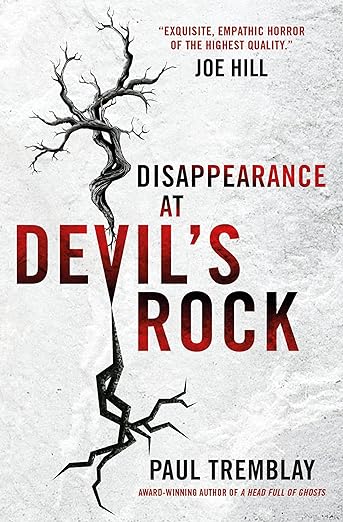
Disappearance at Devil’s Rock.

After the relative disappointment (I stress the word relative) of The Cabin at the End of the World, it took me a year to get around to my next foray into the work of Mr Tremblay. But this time I was not disappointed. Not in the slightest. Disappearance at Devil’s Rock absolutely blew me away!

It’s a long time since a book has made my skin crawl and my eyes well with tears of terror, but this one did just that. I consumed it in two spine-tingling nocturnal sessions. It totally creeped me out, especially as I couldn’t put it down and ended up reading it in the middle of the night when the house was dark and everyone else was asleep. I found myself peering over my Kindle into the darkness looking for unnatural or unfamiliar shadows and edging closer and closer to the comforting warmth of my husband’s sleeping form beside me.

Tommy, a thirteen-year-old boy, disappears in mysterious circumstances that become increasingly disturbing as the story progresses and his mother discovers more and more about her son and the events leading up to his disappearance. The book hints at a number of possible explanations ranging from a tragic accident or suicide to the possible involvement of evil monsters and demons, or other sinister and paranormal forces.

For me, the power of the book lies in the economic subtlety of the writing, the wonderfully authentic characterisation, the widely varying and different perspectives, the mix of vehicles the author uses to provide us with insight and information, the disquieting visual images, the slow and terrifying reveal, the shocking climax, and the ambiguity that haunts the reader long after the book is finished.

The Pallbearers Club

And so, after the sheer delight of Disappearance at Devil’s Rock, I moved quickly on to the last of Tremblay’s horror novels available at the time, The Pallbearers Club.

The Pallbearers Club is established by Art Barbara (not his real name) to qualify as a hobby that he can add to his CV for college applications. Mercy soon joins the club, and this marks the start of a long relationship between the rather ‘unattractive’ Art and the cool and mysterious Mercy. As the book progresses the relationship develops from a seemingly innocuous friendship into something weird and scary and ultimately supernatural and dangerous.

The book takes the form of a memoir written by Art that has been found and subsequently edited and commented on by Mercy, who deems it a novel because in her view it is more fiction than fact. The format of the book was slightly problematic for me, as it took me a long time to work out what was going on. Once I did, I settled into it but never fully liked or engaged with either Art or Mercy.

The book was clever but maybe, for me at least, just a bit too clever for its own good. Its cleverness became a slight irritation and at times a distraction from the plot. As a result, I never really felt as scared, shocked or disturbed as I did when I read Survivor Song and Disappearance at Devils Rock. I have to be honest that this was a teeny weeny disappointment.

The story was a good one though and even prompted me to purchase and read the non-fiction book that Tremblay acknowledges as his inspiration, Food for the Dead: On the trail of New England’s Vampires by Michael E. Bell.

Summary

The reasons why Paul Tremblay has become one of my favourite authors are all about the quality of his writing and the way it makes me feel. Horror is a peculiar genre that does throw up some truly awful books that get by on gore and bloodlust and ridiculously violent, fantastical and far-fetched plots. Tremblay’s books, on the other hand, skillfully take the ordinary to another, much darker place, and this is what makes them relatable, disturbing and often terrifying. He is a versatile writer. All his books are refreshingly different. Different ideas. Different stories. Different themes. Different characters. I will never grow tired of his storytelling. After each book I read, I am always left wanting more.

PostscriptHorror Movie

As a greedy consumer of Mr Tremblay’s work, I couldn’t wait to get my teeth into this one. I was not disappointed. Spectacularly creepy and deeply disturbing. Like his other books the book is unique and unusual and the terror subtle but insidious.

Again, like most of his books, it was written in an unusual form which, at first, was slightly distracting but in the end truly enhanced the reading experience.

The story jumps back and forth between various time periods and centres around a cult horror movie that was filmed in the past (but never released) by some amateur filmmakers and is about to be remade. The central character ‘The Thin Kid’ was in the original version of the film and is involved in the remake.  

It’s hard to unravel exactly what it is about this book that ‘messes with your head’ in such an unsettling way. A big part is the blurring of past and present, fact and fiction and fantasy and reality. For example, in the original film all the characters appear to be based on younger versions of the film makers real selves. Another is the drip-feed of titbits of information that gradually reveal what happened to afford the movie its notoriety and help to create to the slow build-up of dread as we move towards the horrifying climax.

I can’t, and actually don’t even want to try, to say more about what makes this such a brilliant book. If you want a reading experience that makes your skin prickle with anxiety, your skin prickle with fear, your jaw drop with shock and thoughts and images that bubble inside your head for weeks after you’ve finished, just read it!

Processing…
Success! You're on the list.

Book Review – Disappearance at Devil’s Rock: A Novel by Paul Tremblay

Brilliantly Creepy

It’s a long time since a book has made my skin crawl and my eyes well with tears of terror, but this one did just that. It totally creeped me out, especially as I couldn’t put it down and ended up reading it in the middle of the night when the house was dark and everyone else was asleep. I found myself peering over my kindle into the darkness looking for unnatural or unfamiliar shadows and edging closer and closer to the comforting warmth of my husband’s sleeping form beside me.

Tommy, a thirteen-year-old boy, disappears in mysterious circumstances that become increasingly disturbing as the story progresses and his mother discovers more and more about her son and the events leading up to his disappearance. The book hints at a number of possible explanations ranging from a tragic accident or suicide to the possible involvement of evil monsters and demons or other sinister and paranormal forces.

For me, the power of the book lies in the economic subtlety of the writing, the wonderfully authentic characterisation, the widely varying and different perspectives, the mix of vehicles the author uses to provide us with insight and information, the disquieting visual images, the slow and terrifying reveal, the shocking climax, and the ambiguity that haunts the reader long after the book is finished.

A brilliant read! I read it in two spine-tingling late-night sessions. I couldn’t recommend it more – unless of course you are of a nervous disposition!

Processing…
Success! You're on the list.

October 2023 and The City Series by Sarah Lyons Fleming

It’s been a strange year and a bit of a “write-off” (pardon the pun) writing wise – blogs, books or anything else for that matter.

My Dad finally passed away in August. In many ways a relief for the whole family but also sad to witness the end of a long and rich life. He was 95 when he passed away peacefully with his family by his bedside.

I’ve also been recovering from my shoulder replacement in May and in September we went on a long driving holiday thorough France, Italy and Belgium. We have the scattering of the ashes and memorial for my Dad still to come in November and we are trying to support my Mum as best as we can albeit from a distance and involving fairly frequent trips up north. Then, before we know it Christmas will be upon us!

As a result of all of that, my head has not been in a great place for writing and I’ve done almost no marketing at all. I had hoped to finish Amenti Rising this year but its looking like this will now become my main writing goal for 2024!

But, I honestly feel as though I have turned a metaphorical corner since we got back from holiday and am ready to get going again. I’ve still been reading of course, and have recently finished The City Series by Sarah Lyons Fleming among other things. You can read my review below.

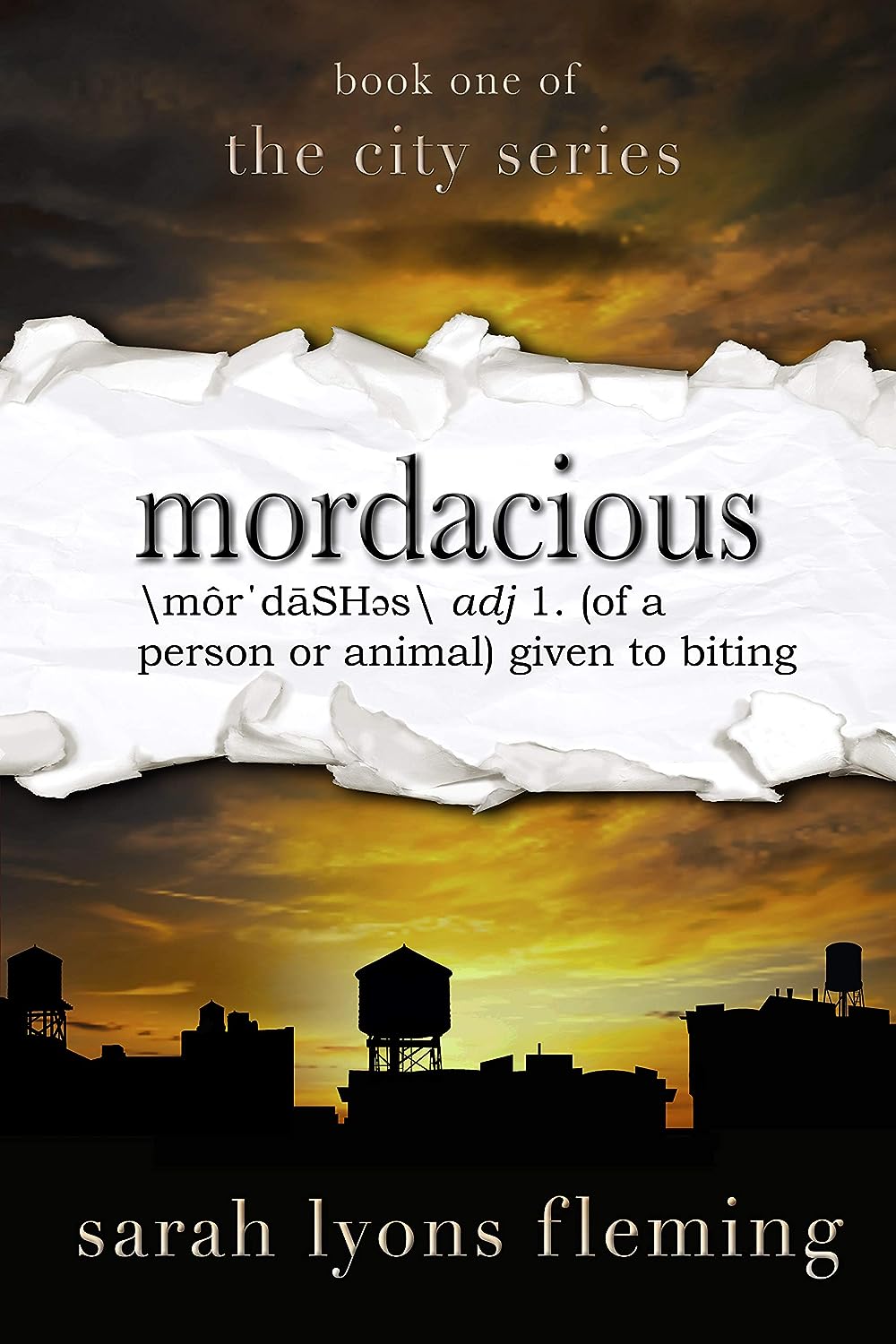
Book Review – The City Series by Sarah Lyons Fleming.

I read The City series after I had read The End of The World Series and the first 2 books in The Cascadia series. So, I suppose you could say that I’m officially a fan of Ms Lyons Fleming. Here, I’ve reviewed Mordacious, Peripeteia and Instauration as a series as it is essentially one long continuation of the same story and a parallel story to The End of the World Series.

The series tell the story from the perspective of Sylvie, a complicated young woman from a difficult background and Eric, the brother of Cassie from The End of the World series. Rather than escaping Brooklyn and New York like Cassie and her friends did, Sylvie remains trapped there and is living in Cassie’s old apartment. Eric, on the other hand, battles his way in to Brooklyn looking for Cassie and this is how the two main characters meet. The rest is history, as they say.

What I like about the books:

I love the ‘epic-ness’ of the story. These are very long books. Ms Lyons Fleming gives us almost 2000 pages of survival horror romance in this series.

I love the connections between the different books and series and the characters and places within them.

I love the use of real locations and how they are transformed in the apocalypse. I even found myself checking them out and tracking journeys on Google Maps.

The characters are what really drives my continued engagement with these books. They are authentic, imperfect and very, very likeable. It’s impossible not to care about what happens to them.

I like the way that the books provide a stream of useful knowledge and information about how to survive in an apocalypse, how to make masonry heaters, where to find water in a city, how to make a solar oven and so on. Very useful both for my own survival when the apocalypse comes and for fact checking my own writing on the subject.

I really like the fact that these books do not focus solely on violence and horror. Of course, this is there. It has to be, by the very nature of the theme. But it is not the main focus, and this is refreshing within the genre.

On top of all the above, the books are well-written and easy to read.

There is not much I don’t like about these books. They are engaging, simple stories that are well told.

If I had single teeny, tiny criticism it might be that sometimes I got a bit bored with some of the mundane conversations and seemingly pointless to the plot, everyday activities, and interactions. However, I suspect that is more about me and my impatience to find out what happens next than a serious criticism of the books. These sections are actually what make the readers care so much about the characters and their fates.

I’m looking forward to reading World Without, the third book in The Cascadia Series.

Processing…
Success! You're on the list.

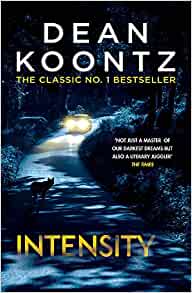
Book Review – Intensity by Dean Koontz

Intense!

It’s been a while since I’ve read a book that I felt merited a full review on my blog, despite the fact that I’ve read a lot since my last blog reviews of The Living Dead by George A Romero and Daniel Krauss and Sea of Tranquility by Emily St. John Mandel.

It’s a fairly long list:

Coldbrook and The Silence by Tim Lebbon

The Cabin at the End of the World by Paul Tremblay

Fairy Tale by Stephen King

All 3 of the Lockey vs the Apocalypse series by Carl Meadows

I who have never known men by Jacqueline Harpman

The Stopping Place by Helen Slavin

Apocalypse by Hayeley Anderton

While I really enjoyed some of them, notably the Lockey vs the Apocalypse series and The Silence, I just didn’t feel moved to write a long review on any. Of course, I always pop a little review on Amazon, Goodreads and Book Bub for everything I read. As an author I’d feel guilty if I didn’t. But to merit a longer review on my blog a book has to resonate with me in a way that will leave me thinking about it for a long time after I have finished, for one reason or another.

I didn’t think I was going to feel like writing one on Intensity by Dean Koontz either. I wasn’t blown away by it at the start, but by the time I finished I was buzzing!

It’s an unusual book in many ways. It seems a bit naff to describe it as intense, given that that is the title, but that’s the best way to describe it. It is a very intense experience that leaves you exhausted and breathless.

The story follows two main characters over a 48-hour period in a way that is so detailed that it is almost played out “live”. We live through every single second of Chyna’s ordeal at the hands of the evil Vess, apart from a scant few blessed hours when she is either asleep or unconscious.

At first, I found the book irritating. Overly descriptive with long flashbacks and digressions into Chyna’s traumatic childhood memories, and long and detailed accounts of both characters inner thoughts. Some of Chyna’s actions in the face of extreme danger seemed unbelievable and, at times, downright stupid.

However, I soon reached the conclusion that Mr Koontz was playing with the concept of ‘intensity’. The detailed descriptions and digressions contributed to the intensity of the reading experience. Just as Vess craves an intensity of sensation and experience, this is what we are served by Mr Koontz. The book progresses incredibly slowly, creating such an atmosphere of heightened tension and anxiety that at times it was almost unbearable. I didn’t think it was going to work for me but in the end it did – by the bucketload.

Shocking, graphic, violent, terrifying, and agonisingly tense.

Well worth a read but give it time and play along!

Processing…
Success! You're on the list.

The End of the Apocalypse

How do you end the apocalypse?

*SPOILER ALERT* This article discusses the endings of several zombie apocalypse books, movies, TV series, and games.

Stories and Sequels

It struck me today, on my daily walk when I was listening to the second in the Lockey vs. The Apocalypse series, We Will Rise (An Adrian’s Undead Diary Novel) by Carl Meadows, that in many post-apocalyptic series the first book in the series is often the best. Don’t get me wrong, this is not to say that the other books in the series are any less well constructed or well-written, just that there is something about the early days of an apocalypse that is particularly interesting and engaging.

How, where and when the apocalypse begins; why it happens in the first place; where people are and what they are doing when it starts; how they react; where they go and what they do; what happens to their family and friends; whether they are reunited with them or not;  how the world and society breaks down and changes and the impact of all that; and just the sheer shock and horror of it all, is morbidly fascinating to many people, including me!

As such, the first books in an apocalyptic series, when all that initial stuff usually happens, often resonate with ordinary people more than subsequent books which take place further down the apocalyptic road. People find themselves wondering what they would do when the apocalypse comes to their town; what their world would look like after the fall; whether they would have what it took to survive or not. This can mean that readers are more captivated and engaged by the first books in an apocalyptic series than they are with subsequent books about life when the extraordinary has become the ordinary and a devastated and dangerous world has become the new normal.

This has proved to be true for my own books. My first zompoc book, Wait for Me, far exceeded my expectations in terms of sales, reviews and ratings, and feedback from friends, family and complete strangers. The sequel, Trident Edge, (which I only wrote because I had so many requests to do so) has, by comparison, been a bit of a flop. Yet, I think the second book is far better in terms of plot and writing quality than the first. I did have some reservations and regrets about the cover of Trident Edge, which for me doesn’t have the same impact as the cover of Wait for Me, but I think it’s about more than that.

I asked my best friend, and loyal fan, about what she thought of Trident Edge compared to Wait for Me, and she said that she loved them both but that she enjoyed Wait for Me more. When I dug a bit deeper to try and understand the reasons for this, she said that she enjoyed reading about the early days of the apocalypse and the zombie outbreak and how two ordinary women, Lisa and Anita, managed to survive day by day in a new and terrifying world, more than she did about their lives six months later when they had become hardened and experienced survivors and zombie killers. My case in point.

I loved the Adrian’s Undead Diaries series and I’m loving Lockey vs. The Apocalypse too. They’re great stories. But today I found myself musing, as I wandered down the leafy lanes of Solihull with Lockey, Nate and Particles fighting their way out of yet another zombie encounter and loading wood burners into trucks to prepare for the coming winter, exactly where it was all going and how it was all going to end how. In fact – I asked myself – how and when exactly does an apocalypse end?

A Satisfying Ending?

When I did my Creative Writing Course with the Writers Bureau back in 2018, I submitted a synopsis for Wait for Me for one of my assignments. One of the criticisms I received from my tutor was about the ending.

She said, “This doesn’t provide a satisfying ending to the story. What happens next? How to do the non-zombies eventually get rid of the zombie threat?”

Good question! At the time, I thought that as Lisa’s main objective was to get home and find out whether her husband Neil was ‘waiting for her’ (or not, as the case may be – no spoilers here!), that the outcome of this objective would constitute a satisfactory end to the story. Apparently, I was wrong as so many people requested a sequel.  

Defining an Apocalypse

So how do you end an apocalypse? Can you? Different definitions of an apocalypse exist that vary in their classification depending on how devastating the event has been.

The online Cambridge Dictionary talks about “total destruction and the end of the world” and uses the synonym “annihilation” but also, less pessimistically, about “great destruction and change”. Merriam Webster defines it as “the end or destruction of the world”. The Oxford Learner’s Dictionary differentiates between an apocalypse which would cause “very serious damage and destruction”, and the apocalypse which causes the “destruction of the world”.

Most zompoc books and movies talk about the zombie apocalypse and rarely a zombie apocalypse, so – please bear with me here, I’m just having a little fun with the idea – my point is how do you end the end? Of course, you can have new beginnings and people adapting and changing, and maybe even incapacitating or escaping the zombie threat, or destroying the virus that caused it and so on and so on. But which of these would these qualify as the satisfying ending that my course tutor required?

Discuss!

*SPOILER ALERT*

This all got me to thinking – when I should actually have been listening to We Will Rise and had to rewind for about 15 minutes’ worth – about the endings of many of the books I have read, as well as movies and TV series I have watched and games I have played, and whether or not they had satisfying endings to their apocalypses.

Movies

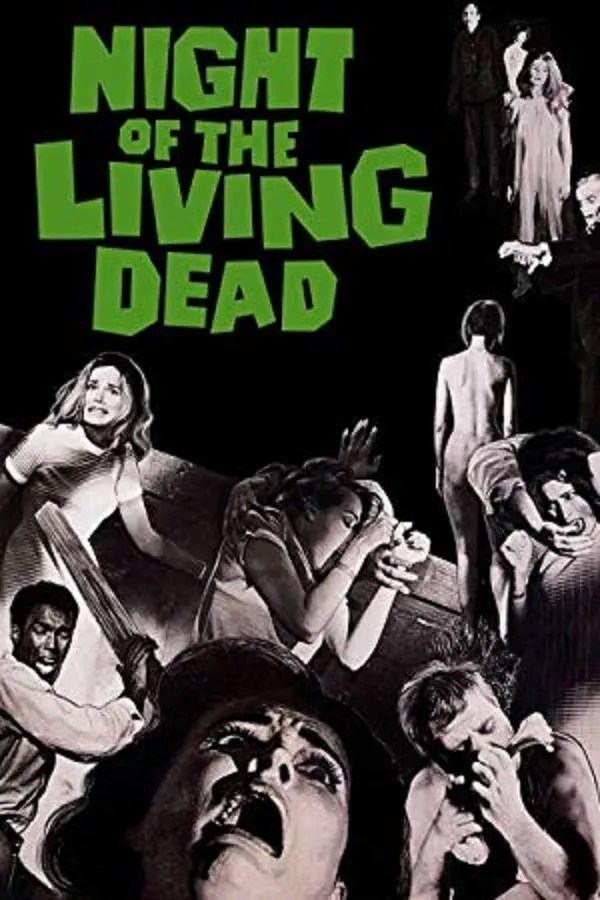
Let’s start with the grandfather of the zombie apocalypse, George A Romero. His first movie, The Night of the Living Dead ends when the main character, Ben, an African American, is mistaken for a zombie and shot and killed. While many people have interpreted this as reflection of socio-political issues at the time, it doesn’t represent the end of the apocalypse. Indeed, Romero went on two make his other two classic movies, Dawn of the Dead and Day of the Dead. The original cut of Dawn of the Dead ends badly for all the survivors who are seen to perish in some harrowing found-footage material. Subsequent cuts see Fran and Peter survive but we never find out what happens to them after their escape. Similarly, in Day of the Dead, three characters escape by helicopter to a desert island, but we never find out what happens to them in the long term either.

Another couple of my favourite movies are 28 Days Later and the sequel, 28 Weeks Later. In 28 Days Later, Jim, Selena and Hannah are spotted by a fighter jet but we never know whether anyone comes back to rescue them. The zombie threat clearly continues as in 28 Weeks Later things are as bad as ever. This movie ends with the revelation that the virus has spread to mainland Europe but again, who knows what happens next? I’m still waiting for the making of 28 Months Later to find out.

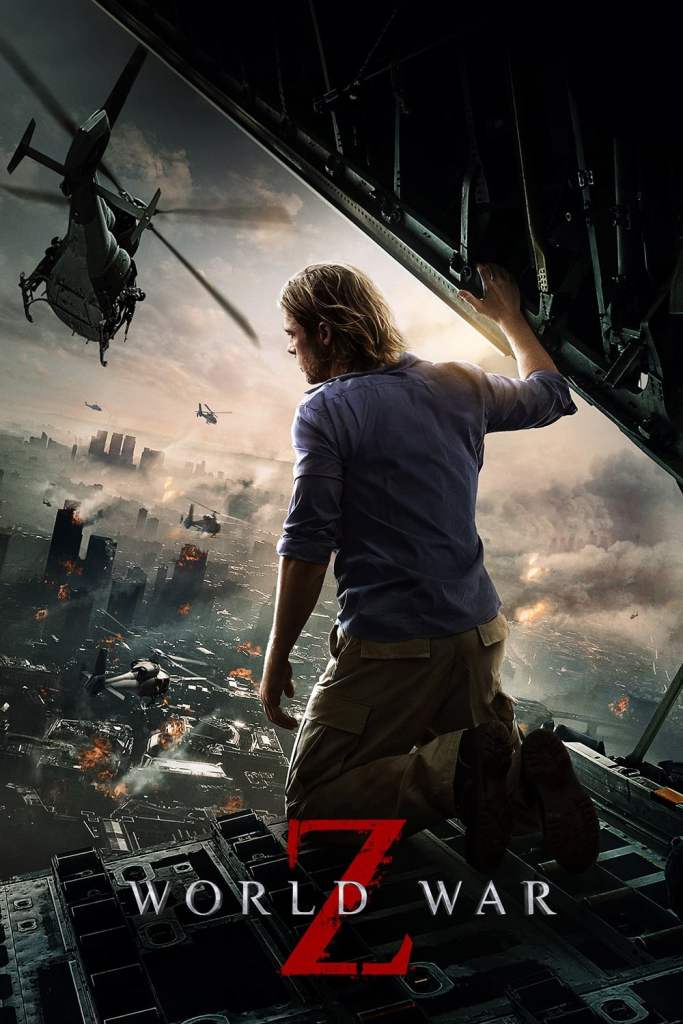
Finally, World War Z the movie. Now this does have a slightly more satisfying ending that might meet with my tutor’s approval. At the end of this blockbuster, not only has Brad Pitt’s character discovered a vaccine to shield people from rampaging zombies but he and his family are all reunited in a safe zone well out of harm’s way. Aww! Nevertheless, the war against the hordes of undead that have taken over the world continues, but we are led to believe that things are looking good for the living survivors.

TV Shows

Moving on to some of the more popular zompoc TV series, The Walking Dead is apparently close to reaching its conclusion with the second half of Season 11 due on our screens any day now. I’m waiting with bated breath to see what that looks like but it’s already evident from all the spin-offs from that show (Fear the Walking Dead, Tales of the Walking Dead and World Beyond are all out already with yet more to follow), that this apocalypse is far from over.

As for Z Nation and the prequel Black Summer. (I have to admit I never finished Z Nation – it started to get on my nerves.) I believe the end involved Murphy eating Sun Mei’s brain to get the cure to the virus but honestly, I don’t really care. I did enjoy Black Summer on the other hand, but we never really reached a satisfying conclusion to this series as everything went to hell in a handbasket at the end of the Season 2 and so far, it doesn’t look as if there will be a Season 3.

Games

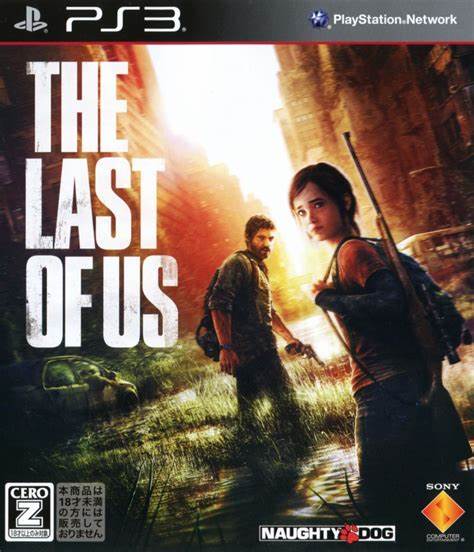
I’ve played a lot of zompoc games, but my favourites are Resident Evil, Dying Light, Days Gone and – my all-time favourite by a country mile – The Last of Us. (Can’t wait for that TV show to come out next year!) Most games end in a kind of satisfying way usually involving defeating the baddie, or “boss” to use gaming terminology. I might be wrong, but I don’t think many “end” as such as the manufacturers always like to leave things open for another day (and another dollar of course).

In The Last of Us Joel chooses to save Ellie over saving the world and the stage is set for The Last of Us 2. The end of The Last of Us 2 is all about the people and their relationships and less about the apocalypse itself. Can Ellie forgive Joel and move on? Can she even forgive Abby? Will she and Dina be reunited? I’m assuming we will get some answers to all of these questions and more in The Last of Us 3. I hope so anyway!

Books

And so, to books. My absolute favourite media! While it is acceptable and almost expected that TV Series and Games, by their very nature, will be unlikely to have a final completely satisfying ending, books, like movies, always should.

World War Z, one of the first zompoc books I ever read, has an ending that I think my tutor would approve of. Ten years after the fall, humanity is winning the war, but the costs have been high. The world has taken a big step back in terms of living standards, life expectancy and quality of life and the planet itself has been forever changed, but there is hope for the future.

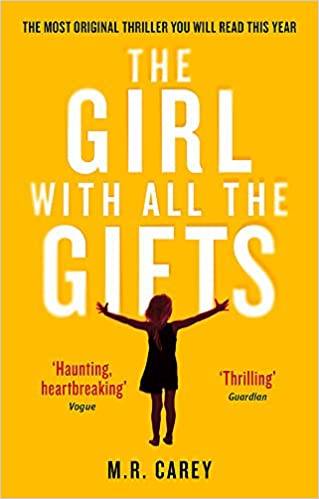
The Girl with all the Gifts by M.R. Carey is another favourite of mine. At the end of this book, we are left with the thought that the second generation “hungries” are the future and that it is only a matter of time until all humans are infected, and they are able to take over and rebuild. I kind of like that ending. Especially as Justineau appears to be going to help them prepare for this day.

Warm Bodies by Isaac Marion is essentially a love story. Now this story does a have a proper ending! Basically, love is the cure for the zombie virus and it is highly likely that everyone will live happily ever after! It might be a “proper” ending but honestly, for me, it’s all just a bit naff!

I enjoyed The Forest of Hands and Teeth by Carrie Ryan. Mary has left the safety of her village to find the ocean and so she does at the end of the book. However, it is not quite what she was expecting and there is no attempt to bring about any sort of conclusion or resolution to the zombie problem. In fact, there are two books which follow The Forest of Hands and Teeth, The Dead Tossed Waves and The Dark and Hollow Places. Neither of them live up to the promise of The Forest of Hands and Teeth in my view, and The Dead Tossed Waves ends in a place that compels the reader to go and buy The Dark and Hollow Places to find out what happens next, as it leaves us after Gabry and Catcher escape from the Recruiters and set off on their journey to the Dark City. I suppose the trilogy has a semi-decent ending in terms of it being more about the characters and their relationships than trying to overcome the zombie threat and it all works out for everyone in the end (well more or less).

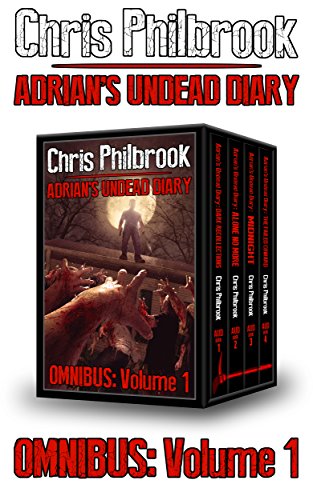
And so, to Adrian’s Undead Diaries by Chris Philbrook. What a great series! In terms of zompoc series it has to be up there as one of the best. And it does have an ending where the zombies are destroyed! Yay! My tutor would be delighted. After an epic battle between good and evil the “good” living human beings survive. There is still a lot of work to be done to eke out a survival in a devastated world, and there are still conflicts with other groups of survivors to be resolved, but Adrian and his friends are free to get on with that without the threat of being chomped by a zombie as they do so. Great ending!

I could go on but I’m going to stop here. I’m getting a bit bored with the potentially endless list of examples that could be discussed and so I’m sure you are too.

If you have managed to read to the end of this essay, well done and thank you for indulging my ramblings! I’m currently writing my 3rd zompoc novel, Amenti Rising, and this time I think I have come up with a solid and satisfying ending. Well, I hope I have! Only time will tell …

I’d love to hear your thoughts on the best way to end an apocalyptic tale in your opinion and about the some of the best endings to zombie apocalypse stories that you have come across.

Drop me a line or, better still, sign up for my newsletter and keep the conversation going?

THE END …

OR IS IT …?

Processing…
Success! You're on the list.

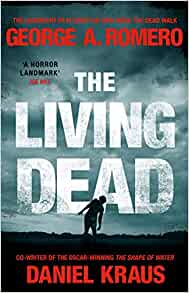
Book Review – The Living Dead by George A Romero and Daniel Krauss

Dreadfully Disappointing

George A Romero is the father of the zombie movie. The godfather of the dead. An icon of modern American media, a pioneer of the horror film genre, an outstanding filmmaker, writer and editor and the creator of the image of the zombie in modern culture.

The zombie horror genre is my genre. It has been a personal fascination, bordering on obsession, since I first watched Night of the Living Dead and Dawn of the Dead back in the 70’s, followed by Day of the Dead in the 80’s. Since then, I have watched pretty much every zombie movie or TV show that has been made, read every book, and played every game.  I’ve played a zombie in a scare event and was a participant in the reality TV show, I Survived a Zombie Apocalypse. I now write zompoc novels myself. (Wait for Me. Trident Edge).

I don’t fully understand my unusual interest in zombies and the concept of the zombie apocalypse (neither do my friends and family) but I think it’s something to do with humans being the real threat to humans, not just in terms of being flesh-eating monsters, but also in the way that the survivors react and behave towards each other when the world as they know it ends. All illusions of civilisation and humanity rapidly melt away leaving people who are barely distinguishable from animals. It’s shocking how quickly society disintegrates and falls apart.

I’m also intrigued by how strange and unfamiliar familiar places become in an apocalypse of any kind. Busy streets, deserted and quiet. Bustling shopping malls and city centres, empty and silent. Survivors free to explore and scavenge wherever and whatever they want – barring zombie threats of course. Nature reclaiming the land. The end of all the services we rely on and and take for granted like water, power, mobile phones and the internet. An upside down, inside out world that is still the same place as before, but at the same time different and changed for ever.

I don’t have the same affinity for other sci-fi and fantasy monsters like vampires, werewolves and aliens. They just don’t do it for me in the same way as zombies do. Maybe it’s because the living dead seem more realistic to me than these other fantastical beasts and creatures. I know that sounds crazy!

I’ve established that I am a massive fan of Romero and all his work. So, imagine my excitement when I heard that he’d written a book, albeit posthumously completed by Daniel Krauss. Not just a book but a humungous 700-page epic that promised to chart the zombie plague “from the first rising to the fall of humanity … and beyond.” It was showered with amazing reviews from the start: “a horror landmark”; a work of gory genius”; the last word of the living dead”; everything you could have hoped for” …

Imagine my disappointment when it just didn’t live up to my expectations.

The first part of the book told a lot of individual stories from the very start of the apocalypse. It was interesting and I did enjoy the start of the book. But even here, there were some stories I enjoyed and some I didn’t. I liked some characters and absolutely hated others. Some stories particularly grabbed and held my attention, and I was irritated when the narrative jumped to another story. I had to stop myself flicking through the pages to get back to the story that had engaged me.

At some point, some of the stories started to get weird. Very weird in a way that just wasn’t believable. I know, for many people, the zombie apocalypse itself isn’t believable but the behaviours and reactions of the characters usually are. At this stage of the book, I started to lose interest and wonder where the whole thing was going, but I soldiered on. In some ways, it reminded me of Stephen King’s The Stand, and I was expecting the various characters all to come together at some point in a satisfying way. And (SPOILER ALERT), they did, but much, much further down the line in, for me, a very dissatisfying way.

It felt as if we missed out on decades of the lives and experiences of the different characters until we meet them in the final section, battle scarred and changed forever. We are told the stories of these missing years in the form of interviews, but this inevitably resulted in a lot of “tell” rather than “show” and as a result they lacked depth and were completely unengaging. It was almost as of the fast forward button had been pressed and we had skimmed rapidly through a huge chunk of a movie. Sadly, with a few exceptions, by the end of the book I just didn’t care what happened to most of the characters and I just wanted to get the book finished and move on to something more enjoyable. (Sea of Tranquility by Emily St. John Mandel was calling me from my to-be-read pile.) Some of these fast-forwarded stories of the missing years were frankly absurd. Stories of warring zombies with prosthetic limbs. Fantastical tales of unlikely survival. It just didn’t ring true for me.

The main problem with the book was that it was just far too long. It wasn’t a terrible book; it just wasn’t as good as I hoped and expected it would be. The trouble was that when it did drag on it dragged on for so, so long. God, it felt like a slog at times, and I have never been so happy to finish a book.

All that said, I would recommend it. It was a good read in parts, and it took the zombie apocalypse to a place far away down the line where some sort of ending had finally materialised and there was hope for those survivors that had made it that far. It touched on some interesting and currently very relevant socio-political concepts as “causes” of the apocalypse. It just wasn’t brilliant! Just be warned it’s a long hard read and you’ll need some stamina to make it to the end!

Processing…
Success! You're on the list.

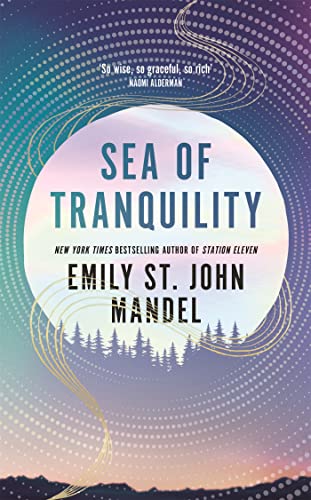
Book Review – Sea of Tranquility by Emily St. John Mandel

Gloriously satisfying.

I bloody loved this book. I picked it up a few months ago as soon as I knew it had been released and added it to my, very long, post-Christmas to-be-read pile. I’d read Station 11 in 2020 and adored it, so have been waiting excitedly for Sea of Tranquility to arrive. After battling through a very disappointing The Living Dead by George A Romero and Danial Krauss, I was in serious need of a reading treat so surreptitiously moved it to the top of the pile. I’m so glad I did. What an amazing book. Satisfying and delighting in every possible way. I devoured it in two days while on holiday in Devon and found myself lovingly stroking the cover long after I had finished reading.

A beautifully written tale of time travel, mind-boggling meta-physics, wonderful characters, elegant connections and coincidences, love, kindness and humanity, Sea of Tranquillity takes us to the moon and back (literally) and spans a period of 500 years. Emily St. John Mandel is a gifted writer. Her plots are clever. Her writing is pure. Settings and characters sing on the page and yet she is skilfully economical with her words and descriptions. I felt every emotion her characters experienced. I worried for them. I exalted with them. I smiled. I laughed out loud. I cried a little. I had some enormous “Ah!” moments as connections and plot twists gradually revealed themselves.

There were some themes that echoed those of Station 11, namely pandemics and people connected by past encounters and relationships, and material objects. Like Station 11, these connections gradually revealed themselves in heart-warmingly startling ways.

I love the way the subject matter is technically pure sci-fi and yet in reality is totally “ungeeky” and utterly believable and every day. She makes living in a dome on the moon and flying about in supersonic hovercraft and airships seem entirely normal.

One character, a writer called Olive Llewellyn, receives some feedback from a reader to the effect that her book was a confusing collection of narrative strands that never came together. This is not true of Emily St. John Mandel. What begin as an apparently disparate collection of narrative strands, flow comfortably through the book and weave naturally together at the end of the story. There is no confusion. There are no unanswered questions. Just glorious resolution and clarity.

Maybe that’s not entirely true? There is one enormous question that runs under the surface of the book and lingers on at the end, not for the characters who know the answer, but for the reader themselves. But, I’ll leave you to discover and ponder that one for yourself.

Needless to say, I’ve just bought and started reading The Glass Hotel.

Processing…
Success! You're on the list.

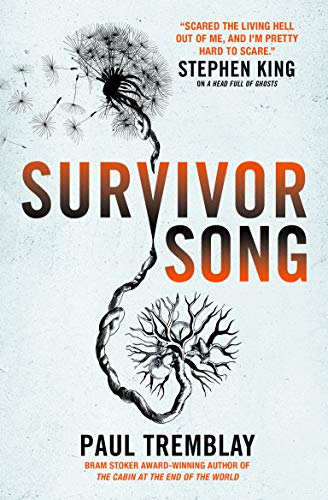
Book Review – Survivor Song by Paul Tremblay

Breathless and Shocking.

This book has been on my ‘to be read’ pile since Christmas. I wish I’d got to it sooner. I devoured it in two sittings.

The story follows two women over a period of just a few hours during an outbreak of a lethal, rapidly spreading rabies-type virus. Natalie, who is eight months pregnant, has been bitten and Ramola, her best friend who is a doctor, is trying to save the lives of Natalie and her unborn child.

Survivor Song is a high-speed roller coaster of trials and disasters, fear and tension, shocking violence, societal breakdown, love and loyalty, pain and loss, desperation and heart wrenching decisions. It’s not a ZA novel but in many ways, it feels and reads as one. It’s not deep or pretentious, just a damned good story.

What I liked.

The pace. The race to save Natalie and her baby never slowed or stopped and neither did I.

The characters. I laughed out loud at Natalie’s scathing sarcasm and dark humour in spite of the terrifying situation she found herself in. I adored Ramola for her unfailing loyalty to her friend that pushed her past terrible limits she could never have imagined.

I really liked the “Bill and Ted” duo they met on their journey with their creatively quirky hydrophobia test.

The book was a well-written easy read.

In certain scenes the style and structure of the book ‘broke with convention’ but this served to create a vivid picture of the extreme shock, fear and confusion the character was experience.

Something I might steal in my own writing!

The echoes of or own recent experience during the pandemic including PPE shortages, overwhelmed healthcare services and unprotected workers were very relatable.

What I didn’t like

… nothing …

I absolutely loved this book and would definitely recommend it if you are into dystopian survival horror – and even if you’re not! I have just bought Tremblay’s A Head Full of Ghosts and can’t wait to get started.

Processing…
Success! You're on the list.