Grandma’s Cabin

A couple of months ago a member of my writing group submitted a piece for our monthly creative writing exercise by a mystery author. He would not say who they were. He asked us to read and critique it in the usual way and to share our thoughts at the meeting.

The task was to write a short story of between 500 and 5000 words that began with the line ‘The snow was falling heavily, making it nearly impossible to see out of the window.’ I wrote a darkly comic tale of a woman alone in a remote cabin in a snowstorm, while her husband goes out for pizza. Let’s just say her imagination runs riot. We had a scary story about an apparently innocent child who turns out to be the spawn of Satan, and a disturbing ghost story about a woman on a lonely writer’s retreat.

We then discussed Grandma’s Cabin, the mystery submission. It was a strange tale about Amanda who is travelling by train to visit her grandmother in her remote mountain cabin. A terrible storm forces the train to stop. After this the story rapidly develops into a crazy nightmare involving an encounter with a creepy man and a random gunfight. Amanda leaves the train to fight her way through the snow to her grandmother’s cabin, which is conveniently located close to where the train has stopped, only to discover that Grandma has had her throat slit. Grandma has left a note revealing that she was murdered by the creepy man who has followed Amanda to the cottage, but a pre-warned Amanda shoots him with Grandma’s shotgun.

We all looked at each other quizzically, unsure what to say about the truly dreadful story. Who had written it? Was it someone we knew? Was the member who submitted it going to be hurt or offended by our comments. We needed to know something about the author. Perhaps they were child or someone with a learning disability, in which case we would be inclined to mitigate our criticisms accordingly.

We started tentatively, but when it was clear that we all felt the same we let rip. Badly written. Unbelievable. Naïve. Childlike. Cliched. Ridiculous plot. Lacked depth. Poor characterisation. No atmosphere. No elegance to the prose. Utter nonsense. And on and on.

When we had vented, we asked our colleague to reveal the identity of the mystery author. With a wide grin he announced that it was an AI engine called ChatGPT. We were stunned initially and then delighted. Writers across the world are currently freaking about the threat of AI. If this was the best that it could do, what was all the fuss about?

But, our colleague insisted, to be fair to AI and, in the context of a bad worker always blames his tools, all the AI had been given was the first line and an average word count. Most examples of AI involve the computer working with more information and alongside a human writer. His words got me thinking. What if, with more information and human support, AI could write a story as good as, or even better than ours? What if we were unknowingly competing with AI in the many writing competitions we regularly entered. ChatGPT had taken only a couple of minutes to write Grandma’s Cabin, while we had spent hours and days perfecting our stories. The NYC Midnight competitions typically allow 24 hours for participants to generate short stories based on a random prompt. It can be a tough challenge. How could we possibly compete with an AI writer that could produce multiple stories in the 24-hour period? What might it mean for the future of writing and people who write for a living?

After the meeting, I did a bit of research on the subject. I came across an article about the author Stephen Marche who co-authored a novella, Death of an Author, with three different AI programmes (ChatGPT, Sudowrite and Cohere) under the penname Aidan Marchine. Marche created the plot and the characters, and the machines wrote the text. It was a trial-and-error process involving a lot of work on his part. His conclusion was that AI could be a useful tool for authors but not something that would ever replace them. The book has only just been released. It will be interesting to see what the reviews are like.

The idea of a human and AI working together then got me reflecting abut a novel I read recently, In the Blink of An Eye, by Jo Callaghan. In this crime novel, as an experiment, a human detective works alongside an AI detective to solve a series of murders. The conclusion here was that both detectives had an important role to play but that one would not have succeeded without the other. While the AI detective is logical and objective, and able to process huge volumes of information in just a few minutes, the human detective picks up on subtle human behaviours and emotions that are pivotal to the case.

Similarly, I can see a place in the future for AI as a support tool for writers, helping with grammar, sentence structure and word choices, as many writing support programmes already do. It could also be useful in terms of creating concise and impactful blurbs and social media posts. More worryingly, it isn’t hard to imagine scenarios where it is the main content creator of business reports, academic papers, marketing copy and even some non-fiction books and articles.

Some of my favourite books contain subtle nuances and observations of the human condition, dry humour, elegant sections of prose that stir the senses and emotions, moving stories of the unfathomable depths of love, loyalty, and friendship. Good writing is art. Yahoo Dictionary defines art as ‘the expression or application of human creative skill and imagination … producing works to be appreciated primarily for their beauty or emotional power.’ Surely an AI writer couldn’t produce art?

Could they?

Processing…
Success! You're on the list.

Shakespeare in Solihull

Shakespeare’s Lost Years

This summer celebrates the 400 year anniversary of the first publication of the plays of William Shakespeare in 1623. The First Folio, as it has come to be known, was published seven years after his death. During the anniversary celebrations, The First Folio will visit Solihull as part of a tour of Birmingham, courtesy of The Everything to Everybody Project at The Library of Birmingham.

https://www.bbc.com/news/uk-england-birmingham-65064648.amp

In anticipation of the visit, Solihull Writers Group chose Shakespeare in Solihull as the theme of their 2023 Creative Fiction Writing Competition. My offering, was awarded third place. You can read it below:

Shakespeare in Solihull – The Lost Years

Scholars often refer to the years between 1585 and 1592 as Shakespeare’s “lost years”. All historical records pertaining to him cease after the birth of his twins in Stratford-on-Avon in 1585, and only resume in 1592 when he reappears in the London theatre community.

There has been much speculation as to where he was and what he was doing during these “lost” years, alongside just as much speculation about his sexuality and the mysterious “Fair Youth” that is the subject of his first 126 sonnets …

Shafts of morning sunlight streamed through the leaded window bathing the naked youth in warm shades of pink and gold. The light down of golden hair that covered his soft, smooth skin sparkled with a cherubic glow. He was stretched out across the bed in the deep, worry-free sleep of youth so envied by the old. He was indeed a beauty. Long athletic limbs, flat belly, rounded buttocks, muscled back and shoulders. But, if his body was a study in perfection, his face was a triumph of grace and beauty. Porcelain, unmarked skin, a strong jaw supporting otherwise fine and delicate features framed by a tangle of yellow curls, long dark lashes that in sleep concealed laughing eyes of the brightest blue.

William stood by the side of the bed. He reached down to touch him then sighed and withdrew his hand. He must learn to deny himself. Last night had been their final one together. By the days end he would be riding south to London, where he could lay low until interest in his transgressions had waned, where he could walk the streets unnoticed and merge into the sea of afflicted and troubled souls seeking to do the same.  

Outside, the solid clang of metal on metal signified the start of the working day for the famed blacksmiths of Solihull. Soon it would be joined by the hiss of steam and the air would be thick with the scent of molten iron and burning charcoal. Within the hour, le Smythstreet would be bustling with people bringing plough blades and weapons to be sharpened and horses to be shod. He moved to the window and looked down at the street below the tavern where he had taken rooms for the summer.

The events of the previous evening weighed heavy on his mind and heavier still on his heart. The youth knew nothing, and so it must remain. He had already retired for the night when William had stepped out to take some air and, as much ale had been consumed over the course of the afternoon, to relieve himself before bed.

If truth be told, he had feared that he was about to be robbed, or worse, when the hooded figure stepped from the shadows and silently approached him.

“Who is thither? What doeth thou want?” He had called with as much bravado as he could muster, all the while regretfully picturing his casually discarded dagger lying on the bedroom mantel.

The figure continued to move towards him, and as it drew closer, he realised it was slight. Almost certainly female. A whore. Why else would a member of the fairer sex be wandering the streets alone at this hour. He raised his hand to dismiss her. She was not to know that his passions lay elsewhere and that a fair youth awaited him in his bedchamber directly above the place where they stood.

But before he could speak, she dropped her hood and he gasped with shocked recognition as her long auburn curls cascaded over her shoulders and her wronged green eyes locked with his.

“Anne! Mine lady wife. What brings thou to the town at this hour. Is something amiss? Are the children well?

Her eyes shimmered with tears.

“The children are well, husband. It is I who am in distress.”

“What ails thee, wife? Are thou ill?”

“Mine heart is in pain, husband, and it is thee who hath delivered the blow.”

“How? What hast I done?”

“Doeth not taketh me for a fool, husband. We both know thou hast betrayed me.” She cast her eyes up to the window above.

“Anne. Anne. What can I say? I am undone. But, wife, doeth not make too much of it. She is but a whore.”

“William, I wilt say again. Doeth not taketh me for a fool. I know it is a youth that thou hast ensconced in thy rooms above the tavern. The rooms thou took for the summer to pursue thy writing ambitions unfettered by the responsibilities of a wife and children.”

“Anne! Dear wife …”

“Nay! William, dear husband! The timeth for sorry is long past. I can ne’r taketh thee back to mine bed. Now it is timeth for the price to art paid. Thou art a sodomite, husband, and by the Queens law must art put to death for thy crimes. By the morrow the Sherriff of Birmingham wilt hast heard tidings of thy foul acts and wilt art on his way to arrest thou.”

A sob escaped her lips as she pulled her hood up, turned and walked away. Before she disappeared into the night, William saw her head bow and her shoulders sag and shake.

Now, he looked again at the sleeping youth on the bed, and it was he who allowed a sob to escape his lips. He must go before he awoke. But before that he must write one last verse for the fair youth who had captured his heart.

William sat down at his desk and lifted his quill from the ink pot.

He began to write …

Shall I compare thee to a summer’s day?

Thou art more lovely and more temperate …

Processing…
Success! You're on the list.

NYC 250 Microfiction Challenge – The Loving Dead

Image by Bertrand Fines from Pixabay

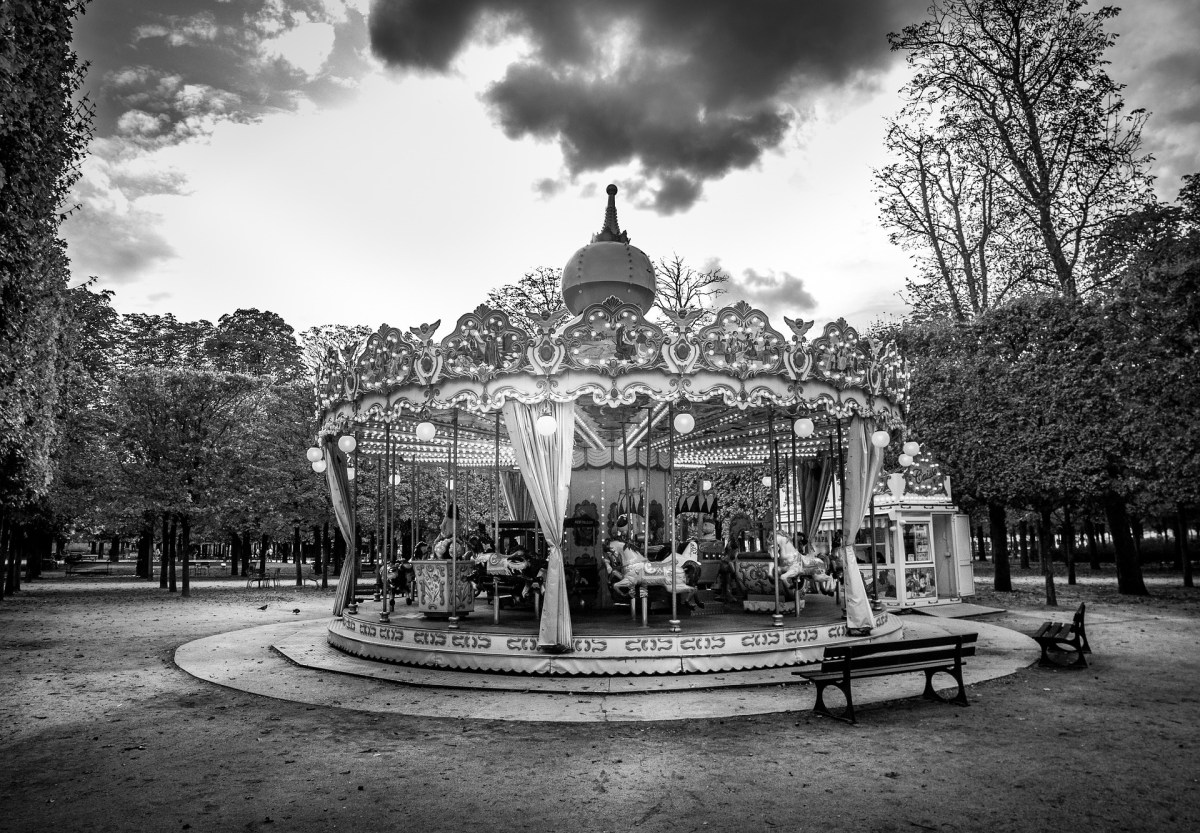
So my attempt at a romantic comedy, involving ‘riding a merry-go-round’ and featuring the word ‘decent’, didn’t get me through to the final round of the 2023 NYC Microfiction Challenge but it did get me an honourable mention in the penultimate round. This is the best I have done to date and I’m very happy with that.

I’m especially happy as, for the first time in the three years I have been participating in this competition, I nearly gave up. I was on holiday with some friends at the time the piece had to be written and the temptation to lie in the sun and drink rum was almost too strong to resist. In fact, I didn’t write anything until the evening and only submitted with an hour left to go.

One of my friends jokingly suggested I write a zombie romance and while I initially dismissed the idea as a silly one that was beyond my writing abilities, I suddenly thought why not? I scurried inside and spent the next hour tapping away on my lap-top. When I emerged later that evening and read it to them and my husband and they all laughed out loud at the end, I did a final edit and went ahead and submitted. Honestly, I was just pleased to have actually produced something.

Image my surprise and delight then when I received an honourable mention for The Loving Dead. Here it is for you pleasure and (I hope) amusement.

The Loving Dead

Eliza was riding the merry-go-round the day Jacob caught her eye. As she had for the seven years since the world died. Doomed to wander forever between the prancing carousel horses, hands brushing over faded, peeling manes and rusting carriages.

Her looks had been decent once. But now, soft curves were long withered and leathered. Summer frock, tattered strips of yellow gingham. Once-blue eyes, dirty grey and clouded. Plump, pink cheeks, sunken and brown. But she still had hair! A few surviving auburn wisps clinging precariously to an otherwise bare skull. And teeth too! Albeit a couple of tombstones jutting crookedly from her lower jaw.

Jacob was a carnie. For the same seven years he had circled the carousel, clothes gone to rags, coins rattling in the leather money belt that dangled from his wizened frame. Shuffling around and around, hour after hour, day after day, week after week. If she had been able to recall, Eliza would have remembered his twinkling green eyes, his jaunty smile, the tanned smooth skin of his muscled forearms below the rolled up cuffs of his blue plaid shirt.

The chances of Jacob passing at the exact moment that Eliza stumbled over a broken foot plate causing her right eye to pop from its socket, were next to nothing. But it hit his chest and bounced into the hand he raised reflexively to catch it.  Jacob paused. Looked up. His eyes met her remaining one and the rest, as they say, was history.

Processing…
Success! You're on the list.

NYC 250 Microfiction Challenge – Corn

This year, the only NYC Midnight competition I entered was the 250-word Microfiction Challenge. It kicked off in November 2022, when 5,439 writers submitted their Round 1 assignments in 125 groups containing approximately 44 writers per group.

My challenge was to write a story in the Suspense genre that involved ‘getting lost’ and featured the word ‘sound’.

I wrote a story called Corn (which you can read below) and am delighted to say that it got me through to the next round by the skin of my teeth, coming in at 9th in the top 10 places.

So, my Round 2 challenge, which came through last week, was to write a Romantic Comedy, that involves ‘riding a merry go round’ and features the word ‘decent’. This round places the 1,250 remaining writers in 25 groups of around 50.

Romantic Comedy is possibly my least favourite genre ever. Funnily enough though, I recently had a go at a Romance short story for a JAMS homework prompt, but it’s very much out of my comfort zone.

I spent most of the day getting absolutely nowhere and had almost given up when the seed of an idea formed in my head, and I decided just to have a go. I banged it out in a couple of hours in the evening. I’m not feeling very confident, but we will see … Better to have tried and failed and all that.

Anyway, here is Corn. I Hope you enjoy it.

Corn

The impenetrable forest of corn, taller than a man, loomed all around her. Watching with a thousand unseen eyes. Taunting. Waiting with malevolent patience to draw her into its depths. Envelop her. Suffocate her. Erase her.

Fear and panic jostled for control. Her mouth was dry. Her heart thudded in her chest. Fast, shallow breaths dizzied her. Which way?

The afternoon was hot and still. The cloudless blue sky a relentless dome of heat that raised a film of sweat on her skin. Salt and dust combining to sting her eyes and the bloodied scratches that criss-crossed her bare limbs. She had to keep moving.

Ahead, the narrow uneven path forked in two. Left or right? Right or left? Her mind a confusion of indecision. A dried-out husk of corn and a couple of withered stalks lay on the ground at the entrance to the left fork. Was there something familiar about the irregular shape they formed? Had she passed that way before?

The corn whispered.

Emma went right …

The corn is angry. Tendrils reach for her. Graze her skin. Snag her hair.

And then a voice! The thrill of recognition.

“Emma! Over here.”

She rushes towards the sound. Sobbing and gasping with relief. Throws herself into his arms.

He laughs.

She cries.

As they walk to the car she turns back and reads the sign at the entrance to the cornfield.

A smiling head of corn. Yellow and green and grotesquely cheery.

“Can YOU beat the Maize Maze?”

Processing…
Success! You're on the list.

The Lost Virtue

NYC Midnight 100 Word Microfiction Challenge 2022.

You might recall that, in June, I got through to the second round of the NYC Midnight 100 Word Microfiction Challenge 2022. This time, I was in the mix with the remaining 1,770 writers of the original 6793. My challenge for the round was:

Genre: Fairy Tale/Fantasy

Action: Popping a Bubble

Word: Bitter

Completely and utterly out of my comfort zone, I managed to come up with a piece that I was relatively pleased with in The Lost Virtue.

Sadly, I didn’t get through to the next round but I did get some positive and encouraging feedback.

I’d love to know what you think of my effort.

The Lost Virtue

Seven years since Dozumoth had captured the virtues of the realm of Ebruven and Sarander had begun her quest to free them.

Seven bitter years of fear and chaos.

At last, Sarander stood in the high clearing and plucked a thorn from the bush where they dangled in fluid, shimmering bubbles.

Time was short. The sky darkened.

Sarander pierced the first. Prudence. A soft, blue mist blossomed and swirled.

The next. Justice. Green.

Fortitude. Red.

Temperance. Yellow.

Thunder cracked. Lightning flashed. Dozumoth rose.

Sarander reached for the last. Tolerance.

Dozumoth struck. The thorn fell.

Sarander wept dead tears for Ebruven.

Processing…
Success! You're on the list.

Wet Paint

NYC Midnight 100 Word Microfiction Challenge 2022

It’s that time of year again. The NYC Midnight challenges for 2022 have begun. This year I’ve only been able to enter one – the 100 word microfiction challenge – as I have too many other things going on when the others take place.

Telling a story in 100 words is harder than you might think and is even harder when you have to write to a set brief under a tight timescale of just 24 hours.

In April, 6,973 writers were divided into 118 groups of around 59 per group and set their first challenge. Mine was:

Genre: Comedy

Action: Waiting for a Train

Word: legal

I was on holiday in Nice at the time and didn’t want to spend too much time sitting indoors on my laptop so I felt a lot of additional pressure with this one, especially as my partner was waiting for me to finish before we could get out and enjoy the French sunshine.

After many more “empty head” minutes than I care to remember, I came up with a little ditty called Wet Paint. I wasn’t particularly happy with it but when I read it to my partner and he laughed out loud at the end I decided just to submit it and hope for the best.

I’m happy to say that Wet Paint squeezed through to Round 2 at number 14 of the top 15 qualifiers in my group! This morning I have been writing my entry for the next stage of the competition. This time 1,770 writers were assigned to 27 groups with approximately 66 writers per group. My challenge for this round was:

Genre: Fairy Tale/Fantasy

Action: Popping a Bubble

Word: Bitter

It’s a little little encouraging that I wrote my first ever fantasy piece last month and it got great feedback from my peers! I’ll let you know how I get on at the end of July.

In the meantime here is Wet Paint for (I hope) your amusement and entertainment.

Wet Paint

The station was a riot of football noise and colour. Edgar’s brand-new England shirt was a white beacon in a sea of blue and white stripes.

He regarded the Greek sign on the empty blue bench. He couldn’t read Greek. His train was in fifteen minutes. He needed to rest.

Edgar removed the sign and sat down. It couldn’t be legal, not to sit on a bench. What was the worst that could happen?

The station was a riot of football noise and colour. Edgar’s brand-new, Greek shirt melted into the sea of blue and white stripes.

Processing…
Success! You're on the list.

The Dragon Slayer

A High Fantasy Challenge

For each of our JAMS monthly creative writing meetings we all prepare a piece based on a a randomly selected prompt. We take turns to read each others work and, after the meeting, provide each other with a full written critique. It’s the main method that we use to develop and improve our writing skills.

Sometimes the prompt can really test our abilities. This was the case last month when the challenge was to write a High Fantasy story that featured a Dragon Slayer and contained the word “gracious” somewhere in the text.

I was so far out of my comfort zone that I thought, for the first time ever, I was not going to be able to complete the task. However, I persevered and produced a story that I was reasonably happy with. Honestly, I was just delighted that I had managed to come up with something at all.

I was both surprised and delighted when my fellow JAMS members were blown away by my story. If it weren’t for a few typos and sloppy mistakes, I would have been awarded full marks in both of their written critiques.

You can read the story below (with – I hope – all errors and typos corrected). I hope you enjoy my first foray into the realms of High Fantasy as much as my colleagues did!

The Dragon Slayer by J. M. McKenzie

The hamlet of Lemon Arbour has lived under the shadow of the dragon named Qomrirarth for many years. Too many years. The time has come to slay the beast. But what of the fabled dragon slayer? Who is he? Where is he? Why has he left them to fend for themselves for so long?

Engar was two years into his second decade when he first heard talk of seeking the Dragon Slayer. The dragon, who had been the scourge of the small hamlet of Lemon Arbour, in the Vale of Terrador, for as long as Engar could remember, was named Qomrirarth. The name meant, the bright one, on account of the vivid green markings that sparkled like emeralds on his wings, the shimmering of which could be seen from many miles away, forewarning of his next dreadful arrival.

On first sight of green sparkles at the hazy line where land meets sky, the village bells would peal their warning and a flurry of fearful activity would ensue. The frantic gathering of livestock, the anxious recall of children at play, the hurried boarding of cottage doors and windows and the collection of water with which to quench the flames that would inevitably burn in the aftermath of Qomrirarth’s fury.

Engar, had never known a life outwith the shadow of Qomrirarth. Indeed, Jaquard, eldest of elders, had once told him that the dragon had made its first appearance on the very day that Engar celebrated the completion of the first year of his first decade. Back then, the dragon too had been but a young fledgling, probably, Jaquard said, not more than one year since hatching himself. In those early days, he had taken only chickens and newborn lambs or kids, but as he had grown, so had his appetite and his strength and last month he had carried off a fully grown dairy cow from the herd of Daymar Garanthon.

On the day in question, Qomrirarth, had seized his first human prey and thus a line had been crossed for the people of Lemon Arbour. Nerensyth Larendarson, the eldest daughter of Grandal and Heta Larendarson, had been ignoring her mother’s cries to get inside and gathering up a kitten that had wriggled from her grasp as the family hurried for cover. Nerensyth had been trying to coax it from behind a tall, wooden water barrel when Qomrirarth had swooped from the sky in a blur of green and red and carried her away. The kitten survived.

Now the whole village was talking of the Dragon Slayer.

Engar sat at the top of the stairs long after he had been sent to bed and listened to his parents talk. It was a cold night and he had dragged the soft wool comforter from his bed to wrap around his shoulders in an attempt to stop his chattering teeth from revealing his hiding spot. The dying embers of the day’s fire created a slowly decreasing orb of warmth and orange light, which caused his parents to draw their chairs closer and closer to the hearth, making it difficult to hear all their words, but Engar heard enough. They were planning to seek a Dragon Slayer to kill Qomrirarth.

“It is time,” his father was saying. “We have waited too long. We have been foolish. And now it has come to this. None of our children are safe.”

“But we always thought the slayer would come. They always do,” said his mother. “It is their destiny. It is how it is. For every dragon there is a slayer and, when the time is right, they will come together. It is their fate. It has always been this way and it always will.”

“But where is our slayer?” his father cried. “Where is he when we need him? We cannot wait! The time is now. Fate or not. If the slayer will not come to us, we will have to seek him out. We must make haste. Who knows who will be taken next? It could be one of our own! Baby Sarander, little Mesophe or even Engar! No, we must act. We must act now. As is his custom, the beast will be quiet for two score days after his successful excursion. We have time. Tomorrow I will gather a group of good men and we will journey down the vale in search of the slayer.”

Engar couldn’t understand why this conversation disturbed him so. He shivered and pulled his comforter tighter around him as he snuck back up to his room and climbed into his cot. His sisters, Sarander and little Mesophe, slept on the other side of the room, head-to-tail in theirs. He lay awake for a long time after he heard his parents go to bed in the next room and the whole house grew quiet and colder still. Stars twinkled outside in the clear night sky and the waning moon washed the room in a silver light. Engar knew that when sleep eventually claimed him he would dream of Qomrirarth. He always did.

He had always felt a strange connection to the dragon. Of course, he had a healthy fear of the death and destruction the creature wreaked upon them on its monthly visits to the village. Of course, he cowered under the kitchen table with his sisters as its great wings thundered and its fiery breath roared outside. But Engar also saw the beauty in its lithe and powerful form and the brilliant colours and patterns of its scales. Saw the elegance and grace in the rhythmic, rippling of its wings in flight. Heard the melody in its cry and sensed the intelligence in its piercing green eyes.

Engar’s eyes were green too. So green that sometimes the other children in the village teased him about being related to Qomrirarth. That they were brothers. That Engar had not been birthed from his mother’s womb but had hatched from an egg. They called him Qom or Qomo and always made him play the monster in games of tag or hide and seek. They pretended to kill him in their playfights, poking and swiping at him with their stubby wooden swords until he sulked home with his head down and his shoulders slumped, tears welling in his eyes.

But they were right. He did feel a connection with the dragon, and at no time was this stronger than when he closed his eyes each night and entered the world of his dreams.

He first started dreaming of Qomrirarth in the first year of his second decade. He never told anyone about the dreams. Not even his parents. Fearful that by speaking of them that they might fuel the fire of his imagined bond to the beast. Fearful that he would be shunned by his family and rejected by his so-called friends if he revealed any signs that might threaten to transform a childish fantasy into a terrifying reality.

 The dreams had a clear and regular pattern. Each night he would find himself walking out towards Qomrirarth’s lair. In the waking world it was over a day’s walk from Lemon Arbour, at the end of the Vale, beyond the Red Forest, high in the Mountains of Elwyre. But in his dreams, he covered the distance like a wisp, feet skimming over hill and dale like a gazelle, weaving through the forest like a breath of wind, and scaling rocks and boulders as nimbly as a mountain goat.

The strange thing about the dreams was that he never reached the lair, always awakening back in his bed before reaching his goal. But, every year since the dreams had begun, he had got closer and closer before the dream had ended. In the past year he had reached the edge of a deep crater littered with bones and rotting carcasses. From inside a dark cave at the far end of the basin he could hear the deep rumble of Qomrirarth’s breathing, see the wisps of steam and smell the acrid scent of brimstone that drifted from deep within. This night, the night of the eavesdropped conversation about the Dragon Slayer, he got as far as to take his first step down into the hollow before he awakened.

As discussed, the next day, his father and a group of men set out on a journey to seek out a dragon slayer. They returned one score and eighteen days later, dejected, and disappointed. The day after their return Qomrirarth struck again, this time claiming the widow Armthwaite who had been out walking and had taken shelter under the old Sycamore tree at the centre of the high meadow, knowing that she did not have either the speed or succor to make it back to the village in time.

And so, life continued as before. All talk of the Dragon Slayer ceased. Weeks became months and months became years. Qomrirarth came and went as did the seasons. For a time, people and livestock perished in greater numbers than ever, crops and buildings burned, and the entire village lived in a cloud of fear and dread. It was only when they came up with idea of leaving out a sacrificial offering each month that some sort of stalemate was reached. They got into the habit of keeping a single goat, sheep or cow staked to a post at the edge of the village within clear sight of the dragon’s usual approach. After the first few occasions when the beast took both the offering and any additional opportunistic prey he could secure, Qomrirarth gradually began to accept the offering and leave without entering the village. After this, a period of several years passed in state of fragile but seemingly mutually acceptable peace.

In Engar’s dreams he reached the mouth of Qomrirarth’s cave. Secretly he was relieved that for the moment, the need to slay the dragon had been forgotten.

On the first day of Engar’s eighth year of his second decade, Qomrirarth launched an attack on Lemon Arbour the likes of which no one could recall. He appeared without warning, descending with such power and speed from the clouds above that no-one could escape his wrath. Two boys, Frimlar Smeed and Baobub Drax, had been crouched by the edge of the pond skimming stones into the water and didn’t even see him coming. The dragon made it very clear that the unhappy truce was over. Circling overhead with the screaming boys dangling from his talons, he bathed the village in fire, burning the haybarn and the mill keeper’s cottage to the ground and scorching the cornfield to a smoking cinder.

The village was in uproar. Accusations and recriminations flew back and forth. There was much weeping and wailing. Why had they not continued with the quest to find the Dragon Slayer? Why had they been content to accept the false truce? How stupid they had been to think that it would continue? They were not dealing with a reasonable being! They were dealing with a malevolent and evil monster! What were they going to do now? Where was their Dragon Slayer? Where was the one that was fated to slay Qomrirarth? Where was he when they needed him?

Engar, was deeply troubled and plagued with guilt that he had been content that the villagers had not chosen to pursue their goal of destroying the dragon. He sought out the wisdom of Jaquard.

The old man was frail. He eased himself uncomfortably down into the chair by the fire, signaling to Engar to take the other. Engar was nervous. He needed to talk to someone and Jaquard as the only person he could trust. Or so he hoped. He looked at him wondering whether to say what was on his mind. But, above his long white beard, Jaquard’s eyes twinkled with warmth and gracious compassion. Engar relaxed and started to speak.

“Jaquard,” he started. “I need your advice about some dreams and some thoughts I have been having … “

“Yes,” said Jacquard with a knowing smile. “I have been expecting you. I’m surprised it has taken you this long.”

“What do you mean? Do you know … ?”

“About you and Qomrirarth? Of course, I do. You two have been linked from the start.”

“I don’t understand. Linked? Of what do you speak?”

“You know that you and Qomrirarth are one. You know that you dream of him every night. That you admire and respect him. That your destinies are linked. That your fates are bound.”

“No! I don’t! I don’t understand! I don’t know! What does it mean?”

“You will find out in time. When the time is right all will be revealed. But you will not need to wait for much longer, I sense that time is approaching.”

Engar just stared at the ancient man. Afraid to speak and say something he would regret. He was clenching his jaw and his hands were curled into tight fists. He was shaking with anger and frustration. He was furious that Jaquard knew about him and Qomrirarth. Why had he not told him before now? Why had he not helped him? He could have saved him from so much misery and torment. Yet still he did not understand how and why the Dragon and he were bound, and the old man was not going to tell him. He got to his feet and stormed back to the cottage. His parents and sisters were seated at the kitchen table when he burst in through the front door. They looked up at him, startled.

“Engar, what troubles you?” His mother rose and held out a hand to touch him.

He brushed it away and hurried up the stairs.

“Let him be,” said his father. “Today he has become a man and what should have been a day of celebration for him has become a day of great sorrow. He is feeling it. This is all.”

That night, as every night, Engar dreamt of Qomrirarth. But this dream was different. Yes, he moved with the same speed and grace across the vale, through the forest and up the mountain. And yes, he reached the mouth of the cave wherein the dragon lay. But this time, instead of awe and wonder and curiosity, all Engar felt was rage. Rage at what Qomrirarth had done to his village and his people. Rage at the fear and dread he had brought to all their lives for so long. Rage at the pain and suffering the dragon had inflicted on his friends and family. No! However, magnificent, and beautiful Qomrirarth was, it was time for his reign of terror to end. It was time and it was Engar who had to do it.

Engar looked down at his right hand, suddenly aware that in it he held a sword. A heavy Damascan Steel sword. It was a thing of power and beauty with a bright, green, emerald shimmering in the centre of the intricately engraved pommel. It was a sword with which to slay a dragon. The sword with which to slay the bright one. In an instant Engar understood the connection between him and the dragon. They were connected. He did admire and respect the beast. He did appreciate its power and beauty but only because he was the one destined to slay it.

He raised the sword and stepped into the blackness.

The lair was dark and steamy. It smelt of decaying meat and sulfur. It was filled with the sound of the dragon’s breathing. Deep and shuddering and steady. As his eyes adjusted to the darkness, he gradually made out the shape of the creature against the back wall. Its great bulk was lying in a resting pose. Its glittering scales reflected in a shaft of moonlight that shone in from outside. Its sides rising and falling with every rumbling breath. Qomrirarth was asleep.

Engar approached the creature. He stepped slowly and carefully across the carpet of bones that littered the floor of the cave, lest a crunch of something underfoot should wake the beast. He was tense but he was not afraid. He knew that this was his destiny. He had to see through. He had no other option. Did not want any other option. He had to fulfill his destiny.

As Engar grew near, Qomrirarth opened his bright green eyes, but he did not stir, and his breathing did not alter. As Engar stared deep into these eyes, that were so much like his own, he felt rather than heard Qomrirarth speak to him.

It is time Engar. It is time for us to come together at last. From the day of our birth, we were bonded. Destined for each other. We have lived sperate lives but we are forever joined. We are meant for each other. I am tired of killing and burning. It is time for you to end my reign of fire. It is how it should be. How it must be. Time for us to bond in the way of ways.

When Engar raised his sword to strike, green tears spilled from his eyes.

When Engar awoke in his bed the next morning he felt different. Still in his hand was the Damascan Steel sword, streaked with Qomrirarth’s blood. His feet and hands were caked with mud, his shirt and breeches tattered and torn, and pine needles clung to his hair. Before his sisters stirred, he rose, wiped off the sword, concealed it under his mattress and went to the bathroom to bathe. When he was clean, he looked at himself in the looking glass. His eyes seemed greener than ever. He stretched and yawned and as he opened his mouth a tiny wisp of smoke curled from between his lips. But Engar was not startled. He closed his mouth, smiled, and went back to his cot.

Qomrirarth never visited Lemon Arbour again, as far as they knew.

Processing…
Success! You're on the list.

My Green Jumper

My Winning Poem

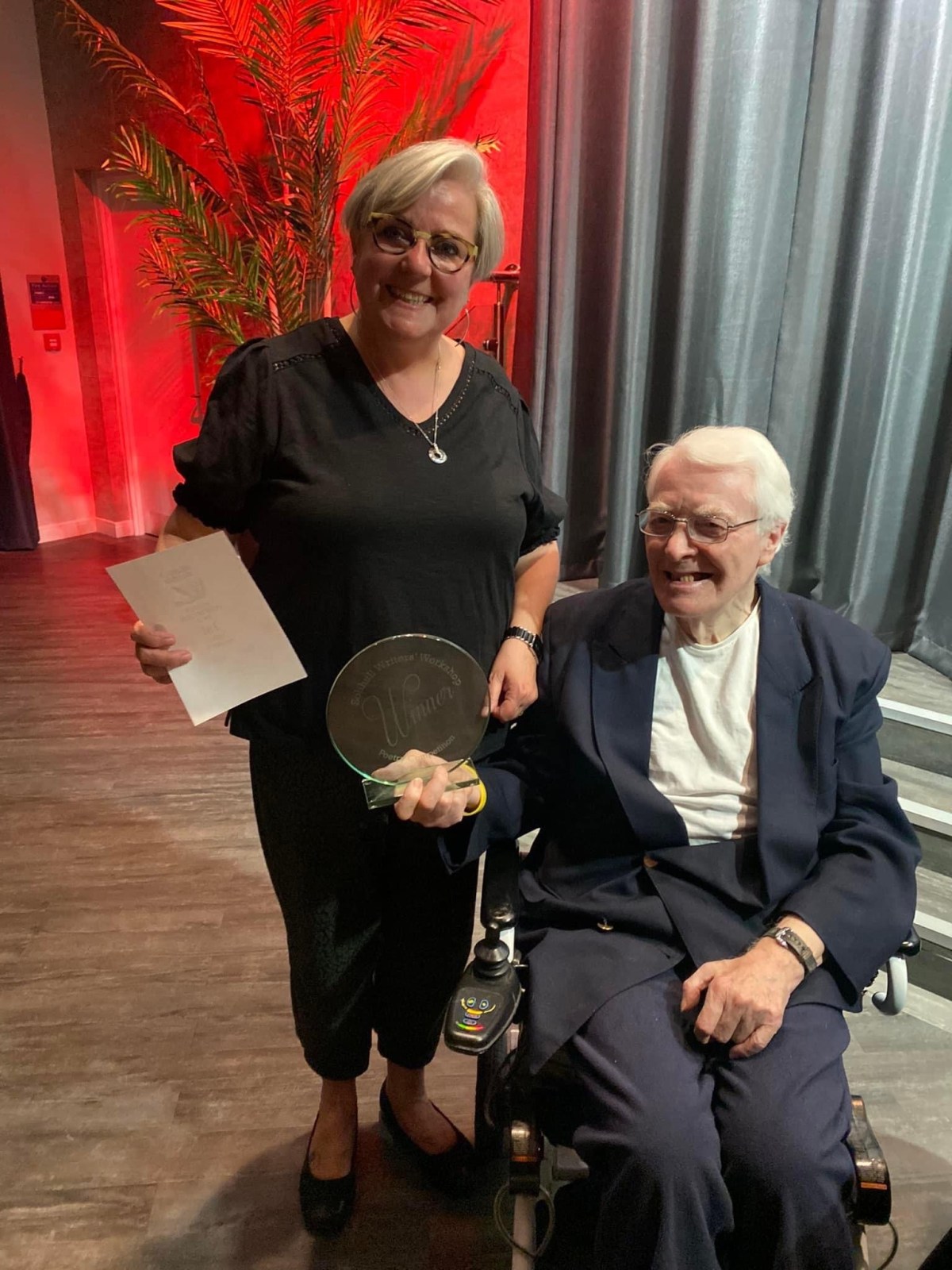
So last night I won the 54th Solihull Writers Workshop Annual Poetry Competition with my poem My Green Jumper. I was both honoured and astonished to be the recipient of the award as the standard of all the entries was so high.

I have been sharing the news of my success on social media and several people have asked if they could read the poem – so here it is!

I’m not a poet. I think this is the second poem I have ever written as an adult. I was inspired by the current humanitarian crisis in Ukraine and by the thousands of people donating their clothing to help people in need.

My Green Jumper

My green jumper

Old and familiar

Soft and soothing

Warm comfort

Scented with love

Threaded with memories

Sofa snuggles

Cosy cuddles

Winter walks

Kitchen talks

Safe and secure

My green jumper

Tossing and turning

Nestling and glowing

In bags and boxes

By road and rail

Over land and sea

To get to you

Explosions and Gunfire

Fire and Flame

Fear and Heartbreak

Blood and Pain

I cannot touch you, but my green jumper can

Put it against your skin

Let it sooth and calm

Let it warm and comfort

Let it talk to you

About my love

My care

My sorrow

Processing…
Success! You're on the list.

All About Audio

Exploring the world of audiobooks.

The first few months of 2022 have been all about audiobooks for me. When I first published Wait for Me just over a year ago, I had a few enquiries as to whether it was available on audio. I’ll be honest, back then I was just delighted just to have finally published the book and hadn’t even thought abut this. More importantly, I didn’t have a clue where to start.

After I published Trident Edge in October I took a break from novel writing and did a little research on how to go about creating an audiobook. I was daunted and almost gave up a few times. It seemed so complicated and, lets face it, expensive.

However, I kept going and spoke to a few other authors about the different options for an independent author like me. This was how I learned about ACX, Amazon’s audio platform. I’m delighted to say that I discovered it was not only affordable but also accessible to a terrified technophobe on a budget.

It’s as simple as creating an account, selecting one of a few different options depending on your budget, choosing a narrator and uploading your book. I went for the Royalty Share option which allowed me to create an audiobook without spending any money at all. The narrator and I receive 20% of the royalties each and Amazon get the rest. I’ve outlined the process in more detail below.

The upshot of it all is that Wait for Me and Trident Edge are now both available in audiobook formats.

If you are not a member of Audible you can join and purchase the book via this link in the US

and this one in the UK

Processing…
Success! You're on the list.

ACX Audiobook Process.

Go to ACX.com and create an account and a profile.

Add your book (this pops up automatically if your book is on Amazon).

You will have to upload a square version of your cover.

Submit a script for auditions and submit then sit back and wait.

When the auditions come in select the one you like and make them an offer.

You can communicate with the narrator about any character voices or pronunciations etc.

There is a 15 minute checkpoint for you to make sure you are happy with how it’s going.

Once the narrator has submitted the full recording you get a chance to request any changes before you accept and the book goes live.

1000 Paper Cranes

Chisako is folding 1000 paper cranes. Tradition dictates that when she is finished, her one true wish will be granted.

Well sadly, 1000 Paper Cranes didn’t get me through to the final round of the 2021 NYC Flash Fiction Challenge, but I did come 6th in my group with an ‘Honourable Mention’ and got some lovely feedback from the judges. By my rough estimate I was in the top 150 of over 4000 writers so I’m feeling pretty proud of that. The upside of it all is that I now have a completely free weekend, as I had planned to do nothing other than write on Saturday and edit on Sunday.

No rest for the wicked though … the following weekend I will find out if I got through to the next round of the 2021 NYC Micro-fiction Challenge with my little ghost story, Until Next Year. More on than that next weekend!

In the meantime, here is 1000 Paper Cranes. I hope you enjoy it! If you do, why not drop me a line and sign up for my Mailing List while you’re at it?

Processing…
Success! You're on the list.

1000 Paper Cranes

Chisako sat cross-legged on the tearoom floor as she watched her onee san, Chikafumi, perform the ancient ceremony with the poise and elegance that defined everything she did. Ever since the san san kudo, when they had been bound as sisters through the sharing of sake, Chisako had been spellbound by her Geisha mentor.

The open windows on two sides gave the room a light and airy feel. The clean lines and neutral tones of the walls, paper screens and bamboo mats contrasted with the lush green disorder of the gardens outside. A fountain gurgled, a wind chime tinkled, and the chirp of cicadas heralded the start of summer. Inside, the grassy scent of green tea mingled with the heady aroma of sandalwood incense, and the only sound was the rustle of silk and the murmured thanks of her clients as Chikafumi prepared and served tea, smiling, and nodding as she moved around the space with effortless grace.

As a maiko in the third stage of her training, Chisako accompanied Chikafumi to the teahouse and around the hanamachi every day, to learn the ways of a Geisha through observation. Some of the other maiko complained about the length of this stage of their training, which could last for many years, but as far as Chisako was concerned, she wouldn’t care if it went on forever. She would happily watch Chikafumi until the end of time.

To Chisako, Chikafumi epitomised not only the perfect Geisha, but the perfect woman. She was tall and slender. Only the smooth folds of her obi interrupted the flowing contours of her frame. Her classic Cupid’s bow lips and almond-shaped eyes were accentuated by the traditional bright red lipstick, black and red eyeliner, and white face powder. Her immaculately sculpted dark hair was sleek and shiny. She might have looked like a porcelain doll but for the tantalising glimpse of soft, pale flesh revealed by the low, dipped neckline of her red and gold kimono. Every inch of her was intoxicating, from the top of her cherry blossom hairpin to the tips of her white-stockinged toes.

Chisako was aware that she was mesmerised by Chikafumi in a way that went far beyond the usual respect and admiration of a maiko for her onee san. She was completely captivated by her. She adored her. Every night she went to bed dreaming of her, and every morning her face was the first thing she saw. She had had crushes before but never anything like this. Indeed, it was the confusing and unwelcome feelings that she often felt for other women that had prompted her to enter the profession. She had hoped that by immersing herself in the most controlled and feminine of environments, such feelings would fade and disappear. In fact, the reverse was true. Being surrounded by a preponderance of exquisite and glamourous young women had made them more difficult to control than ever, and none were stronger than those she felt for Chikafumi.

But her feelings were not reciprocated. Chikafumi barely noticed her, not beyond their professional relationship that was. She was unfailingly polite and personable in all their interactions, and patient and gracious in her instruction, but she remained aloof and guarded. Chisako was amazed that Chikafumi didn’t seem to feel the tingle of electricity that passed between them every time their fingers touched. She couldn’t understand why Chikafumi never held eye contact with her for a second longer than necessary. It was as if she was deliberately preventing the development of a deeper connection between them. At the end of each day when Chikafumi left to return to her private house in the hanamachi, and Chisako to the okiya with the other maiko, Chisako would watch her until she was out of sight, but Chikafumi never looked back.

Alone in her room in the okiya, Chisako was folding origami paper cranes. She had eight to do to reach 1000 and complete the senbazuru. Tradition dictated that the folding of 1,000 paper cranes would grant the person the chance for one special wish to come true. When Chisako had begun, her wish had been that she could be like other girls and no longer be tortured by feelings and desires that she could never realise. Now, as she folded the last tiny figure, she knew that wasn’t what she wanted at all. All she wished for, and would forever wish for, was for Chikafumi to notice her and love her back.

The next morning, they were alone in the teahouse for a shamisen lesson. To help Chisako get her hand position right, Chikafumi sat down behind her and reached around her body. For Chisako, the closeness of their bodies was almost unbearable. Her heart quickened and she couldn’t catch her breath.

“Here. Place your fingers, like this,” said Chikafumi placing her hands over Chisako’s. Chisako could not stop the small moan that escaped from her lips. Chikafumi froze for a moment before sighing and moving her body away. She stood up. Chisako bent her head, deeply ashamed of her momentary loss of control, fearful of how Chikafumi would react.

“Stand up, little sister.” Chikafumi’s voice was gentle. “Look at me.”

Chisako stood and turned towards her. A single tear rolled down her cheek as she raised her head. Expecting admonishment, she gasped when she saw that Chikafumi was smiling.

“Don’t worry, little sister.” Chikafumi nodded. “Don’t be sad. I know how you feel, and it is time for you to know that I feel the same.”

Chisako stepped back in surprise. Her hands flew to her mouth. A thousand emotions flooded through her. Joy. Relief. Hope. Disbelief.

“But … I don’t understand … I thought …” she stammered.

Chikafumi took both her hands in hers and looked into her eyes.

“We must be careful, little sister. Patient. Can you do this? Do you understand?”

“I can,” Chisako whispered. “I do.”

“Then let us resume the lesson for now, little sister.”