The Day That Doesn’t Count.

My entry to the 2024 Solihull Writers Group Creative Fiction Competition on the theme of Leap Year.

2024 is a Leap Year. So, this year the Solihull Writers Group chose Leap Year as the theme for our Creative Fiction competition.

I did a bit of research on the subject as it was too easy to go down the clichéd route of female marriage proposals etc. I read some interesting stuff about the 29th of February sometimes presenting a unique challenge from a legal perspective and it historically being seen as a day when usual conventions do not apply. Hence the idea of women being able to propose to men.

I took this idea a little further and played with the idea of the 29th February being a day that didn’t count. A day when people could do anything they liked and get away with it. A bit like The Purge movies.

I asked a few women friends what they would do with a day that didn’t count. this. One said that she would ‘Get a gun. Rob a bank. Buy a house and hold the solicitor at gunpoint to make him complete all the paperwork that day’.

That was the idea finally inspired my story .

I didn’t win. I was beaten on the day by some other outstanding entries that you will soon be able to read on our web-site.

Here is mine…

(P.S. we had a word limit of 1000)

The Day That Doesn’t Count

Mel yawned as she pressed the Double Expresso button and waited for her coffee. Too late, she realised she hadn’t lined the cup up properly and she swore as scalding liquid hissed and spurted over her fingers when she adjusted its position.

“Bad day?”

Mel jumped and more hot coffee sloshed over the back of her hand. Dione from accounts, of the caterpillar eyebrows and scarlet talons was standing behind her.

“No worse than any other,” Mel grumbled as she took her coffee and stepped aside to let Dione get to the machine, wondering how the woman had managed to creep up like that without her noticing.  The coffee machine was situated at the end of the chrome and glass corridor that looked over parklands surrounding the building. The corridor had been empty when she’d come out and she hadn’t heard the soft swoosh of any office doors opening. 

But Dione was here, smelling faintly of incense and tobacco, long thick hair unnaturally black, fully made-up even at this ungodly hour. Mel was still wearing the remnants of yesterday’s clumpy mascara and hadn’t had time to straighten her auburn curls which were gradually morphing into an explosion of frizz. She already had a ladder in her tights where Zack’s backpack had caught them as she got the kids into the car.

“Oh dear, that sounds bad.” Dione pouted in what Mel could only imagine was her much-practised Instagram sympathy pose.

“Yeah, well two kids under five, an absent jerk of a baby-Daddy, being two months behind with your rent and waking up to a humongous gas and electric bill will do that to you I suppose,” Mel snapped, as she sprinkled sugar into her cup.

Dione’s face darkened. She raised her eyebrows and held Mel’s gaze.

“It doesn’t have to be like that you know,” her tone was molten lava.

“What doesn’t?” Mel was irritated. She needed to get back to her desk. She turned away.

“Your life. It doesn’t have to be like that. You have…options.” Dione raised her voice. Only slightly, but enough to pique Mel’s interest and make her turn back.

“What options?” she said, in spite of herself.

“You do know it’s a leap year, don’t you? That it’s the 29th of February tomorrow.”

“Yeah. So what?”

“You know,” Dione gently tapped the side of her nose with the tip of one long red fingernail. “The day that doesn’t count.”

“No, I don’t know! Honestly, I have absolutely no idea what you are talking about.”

“The 29th of February. It’s the day that doesn’t count. 365 legit days in a year but this one is extra. Like a bonus day. A day when you can break all the rules. Do anything you want. It’s what the whole idea of women proposing to men is based on. Breaking conventions. No regrets. No repercussions.”

Dione was bright now. The darkness of before, melted away. Mel wondered if she had imagined her previous sinister air. The woman was harmless. Bonkers but harmless.

“Don’t be ridiculous,” Mel said.

“I’m not! I’m completely serious! I’ve been celebrating it for a while now. We all have.”

“We?”

“Me and my friends. Other women. Like us.”

“What do you mean, ‘celebrating’?”

“You know. Doing stuff.”

“No, I don’t know! What sort of stuff?”

Dione looked around theatrically before she moved in close to whisper in Mel’s ear.

“Taking what we want. Doing what we want. Righting wrongs. Exacting revenge. Sex. Drugs. Violence…” – she lowered her voice even more – “Murder.”

“Jesus!” Mel gasped.

“Cool huh!” Dione was grinning now and again Mel wondered if she had imagined some of what she’d said. “So, what would you do?”

“Me!” Mel took a step back from the other woman, looking her up and down with unconcealed indignation. “Nothing! Are you insane? I’d never do stuff like that. Whether it counted or not. You’ve got me all wrong.”

“Have I? Are you sure about that? You can’t tell me there’s nothing bad you’d do if you thought you could get away with it. You must have at least thought about it. Fantasised about it. We all have.”

“No. Not me.”

“Ok. So, think about it now. Go on. Just go with me for a minute. For fun. For the hell of it. If you could do anything you wanted, and it wouldn’t count, what would you do. There must be something! Your life can’t be that perfect!”

“It’s not. Of course, it’s not. I think you know that already.”

“So come on then. Let your imagination run riot. Humour me.”

Dione smiled encouragingly but something flicked behind her eyes that made Mel cold for a moment. For the first time in the interaction, she felt fear. She forced her face into a tight smile. Made the decision to humour the woman and get back to work.

“So,” Mel took a deep breath. “I’d get a gun. Rob a bank. Buy a house and hold the solicitor at gunpoint to make him complete all the paperwork that day.”

Dione laughed. “There we have it. That’s more like it. That’s my girl!”

Mel walked back towards her office.

“Is that it? Is that all?” Dione called after her.

“Oh yeah, and I’d murder my jerk of a baby Daddy,” Mel called back over her shoulder.

She went back to her desk with Dione’s laughter ringing in her ears.

She sat down at her desk.

She started to type.

The words in her browser bar read:

How to buy a gun?
Processing…
Success! You're on the list.

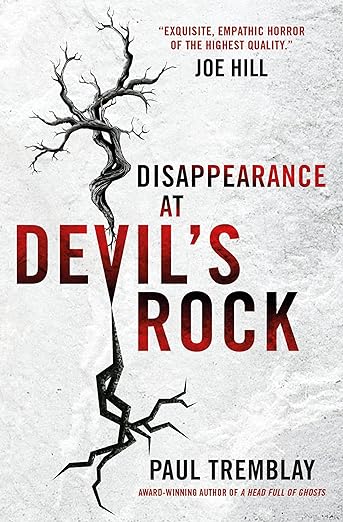
Book Review – Disappearance at Devil’s Rock: A Novel by Paul Tremblay

Brilliantly Creepy

It’s a long time since a book has made my skin crawl and my eyes well with tears of terror, but this one did just that. It totally creeped me out, especially as I couldn’t put it down and ended up reading it in the middle of the night when the house was dark and everyone else was asleep. I found myself peering over my kindle into the darkness looking for unnatural or unfamiliar shadows and edging closer and closer to the comforting warmth of my husband’s sleeping form beside me.

Tommy, a thirteen-year-old boy, disappears in mysterious circumstances that become increasingly disturbing as the story progresses and his mother discovers more and more about her son and the events leading up to his disappearance. The book hints at a number of possible explanations ranging from a tragic accident or suicide to the possible involvement of evil monsters and demons or other sinister and paranormal forces.

For me, the power of the book lies in the economic subtlety of the writing, the wonderfully authentic characterisation, the widely varying and different perspectives, the mix of vehicles the author uses to provide us with insight and information, the disquieting visual images, the slow and terrifying reveal, the shocking climax, and the ambiguity that haunts the reader long after the book is finished.

A brilliant read! I read it in two spine-tingling late-night sessions. I couldn’t recommend it more – unless of course you are of a nervous disposition!

Processing…
Success! You're on the list.

October 2023 and The City Series by Sarah Lyons Fleming

It’s been a strange year and a bit of a “write-off” (pardon the pun) writing wise – blogs, books or anything else for that matter.

My Dad finally passed away in August. In many ways a relief for the whole family but also sad to witness the end of a long and rich life. He was 95 when he passed away peacefully with his family by his bedside.

I’ve also been recovering from my shoulder replacement in May and in September we went on a long driving holiday thorough France, Italy and Belgium. We have the scattering of the ashes and memorial for my Dad still to come in November and we are trying to support my Mum as best as we can albeit from a distance and involving fairly frequent trips up north. Then, before we know it Christmas will be upon us!

As a result of all of that, my head has not been in a great place for writing and I’ve done almost no marketing at all. I had hoped to finish Amenti Rising this year but its looking like this will now become my main writing goal for 2024!

But, I honestly feel as though I have turned a metaphorical corner since we got back from holiday and am ready to get going again. I’ve still been reading of course, and have recently finished The City Series by Sarah Lyons Fleming among other things. You can read my review below.

Book Review – The City Series by Sarah Lyons Fleming.

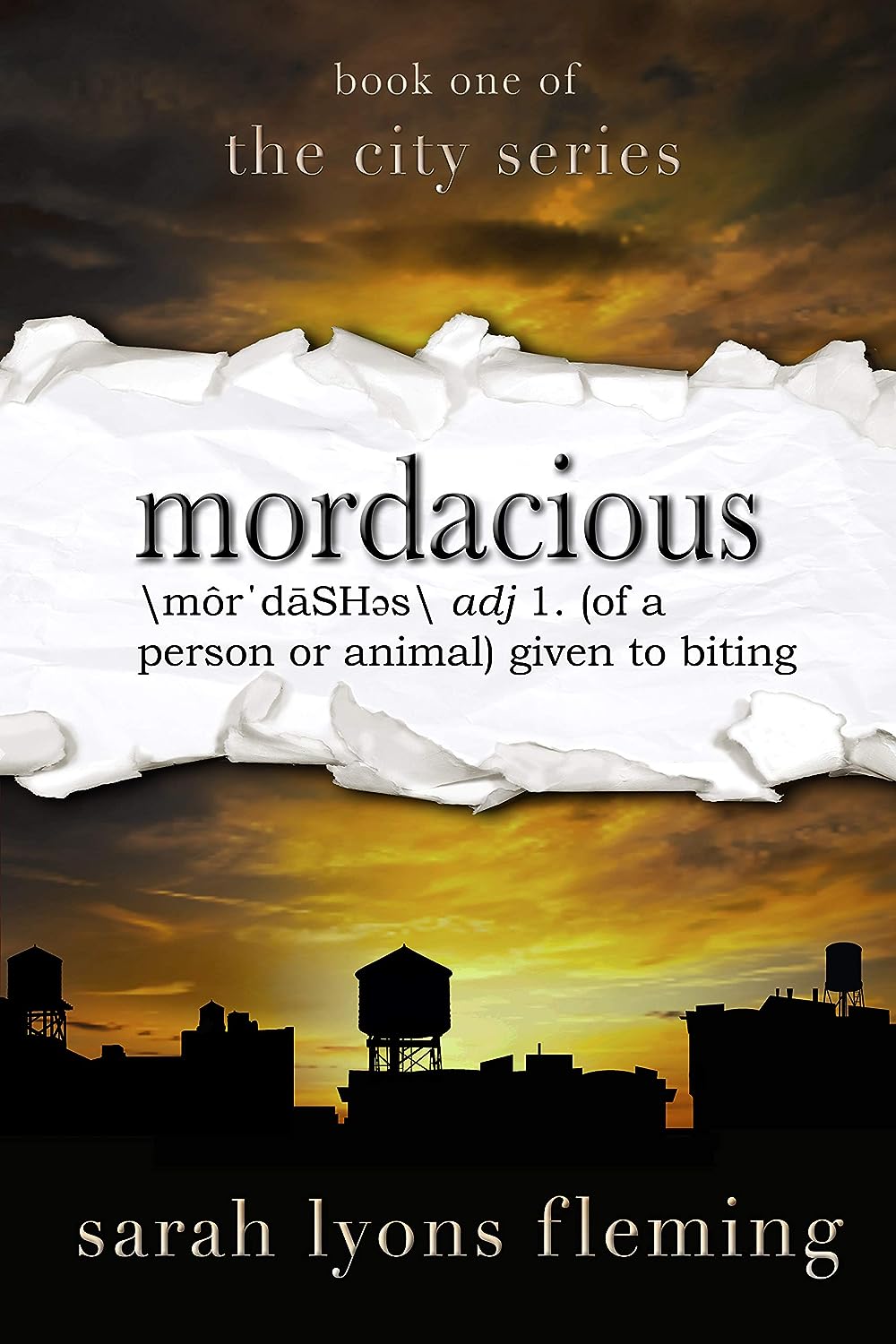
I read The City series after I had read The End of The World Series and the first 2 books in The Cascadia series. So, I suppose you could say that I’m officially a fan of Ms Lyons Fleming. Here, I’ve reviewed Mordacious, Peripeteia and Instauration as a series as it is essentially one long continuation of the same story and a parallel story to The End of the World Series.

The series tell the story from the perspective of Sylvie, a complicated young woman from a difficult background and Eric, the brother of Cassie from The End of the World series. Rather than escaping Brooklyn and New York like Cassie and her friends did, Sylvie remains trapped there and is living in Cassie’s old apartment. Eric, on the other hand, battles his way in to Brooklyn looking for Cassie and this is how the two main characters meet. The rest is history, as they say.

What I like about the books:

I love the ‘epic-ness’ of the story. These are very long books. Ms Lyons Fleming gives us almost 2000 pages of survival horror romance in this series.

I love the connections between the different books and series and the characters and places within them.

I love the use of real locations and how they are transformed in the apocalypse. I even found myself checking them out and tracking journeys on Google Maps.

The characters are what really drives my continued engagement with these books. They are authentic, imperfect and very, very likeable. It’s impossible not to care about what happens to them.

I like the way that the books provide a stream of useful knowledge and information about how to survive in an apocalypse, how to make masonry heaters, where to find water in a city, how to make a solar oven and so on. Very useful both for my own survival when the apocalypse comes and for fact checking my own writing on the subject.

I really like the fact that these books do not focus solely on violence and horror. Of course, this is there. It has to be, by the very nature of the theme. But it is not the main focus, and this is refreshing within the genre.

On top of all the above, the books are well-written and easy to read.

There is not much I don’t like about these books. They are engaging, simple stories that are well told.

If I had single teeny, tiny criticism it might be that sometimes I got a bit bored with some of the mundane conversations and seemingly pointless to the plot, everyday activities, and interactions. However, I suspect that is more about me and my impatience to find out what happens next than a serious criticism of the books. These sections are actually what make the readers care so much about the characters and their fates.

I’m looking forward to reading World Without, the third book in The Cascadia Series.

Processing…
Success! You're on the list.

The Soul Thief

My Dad has end-stage dementia. The man I knew has gone and he kind of slipped away without any of us having the chance to grieve or say goodbye. It’s a cruel disease in so many ways. This year we had to make the difficult decision to place him in a care home.

My category for the NYC 2023 100 Word Competition was Romance involving ‘walking on a red carpet’ and had to include the word ‘faith’.

As my Dad was on my mind so much at the time, I decide to write a piece about dementia, based on my parents 65 year marriage.

For the first time in a while, despite getting positive feedback from the judges, it didn’t progress me to the next round thus ending my journey prematurely in this competition.

The Soul Thief

Seventy years have passed since we walked the red carpet together.

Sparkling smiles.

Laughing eyes.

Aglow with love and faith in our future.

Where have you gone my love?

You are here but you are not present.

An empty shell.

Slack mouth that cannot speak my name.

Vacant eyes that do not know me.

Cold, grey skin.

I see you but can’t find you.

You slipped away when I wasn’t looking.

Taken by the soul thief.

One piece at a time.

Day by day.

Secreted away.

Where are you now?

You left me.

But we never got to say goodbye.

Processing…
Success! You're on the list.

Monkey Memories

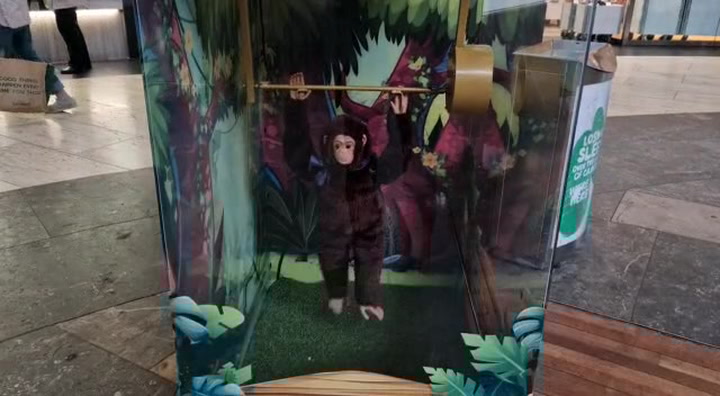
Inspired by memories of watching a mechanical monkey in Solihull town centre, first with my children and now with my granddaughter, I wrote a a little sonnet to celebrate Festival 36 when Shakespeare’s First Folio came to town.

Monkey Memories

The shoe shop window was where you once reigned

Twisting and turning an acrobat show

Keeping my small children so entertained

Watching you spin with their faces aglow

Now I have grown old, and the shoe shop gone

Monkey and memories lost in the past

My children are grown with kids of their own

Now it’s my grandchild who holds my hand fast

And you too have found a new place to stay

Once again, we watch you spin twist and turn

A glass case in Touchwood where you now play

New love, old memories in my heart burn

Time passes quickly and all things must change

But through it all a mother’s love remains

Processing…
Success! You're on the list.

Grandma’s Cabin

A couple of months ago a member of my writing group submitted a piece for our monthly creative writing exercise by a mystery author. He would not say who they were. He asked us to read and critique it in the usual way and to share our thoughts at the meeting.

The task was to write a short story of between 500 and 5000 words that began with the line ‘The snow was falling heavily, making it nearly impossible to see out of the window.’ I wrote a darkly comic tale of a woman alone in a remote cabin in a snowstorm, while her husband goes out for pizza. Let’s just say her imagination runs riot. We had a scary story about an apparently innocent child who turns out to be the spawn of Satan, and a disturbing ghost story about a woman on a lonely writer’s retreat.

We then discussed Grandma’s Cabin, the mystery submission. It was a strange tale about Amanda who is travelling by train to visit her grandmother in her remote mountain cabin. A terrible storm forces the train to stop. After this the story rapidly develops into a crazy nightmare involving an encounter with a creepy man and a random gunfight. Amanda leaves the train to fight her way through the snow to her grandmother’s cabin, which is conveniently located close to where the train has stopped, only to discover that Grandma has had her throat slit. Grandma has left a note revealing that she was murdered by the creepy man who has followed Amanda to the cottage, but a pre-warned Amanda shoots him with Grandma’s shotgun.

We all looked at each other quizzically, unsure what to say about the truly dreadful story. Who had written it? Was it someone we knew? Was the member who submitted it going to be hurt or offended by our comments. We needed to know something about the author. Perhaps they were child or someone with a learning disability, in which case we would be inclined to mitigate our criticisms accordingly.

We started tentatively, but when it was clear that we all felt the same we let rip. Badly written. Unbelievable. Naïve. Childlike. Cliched. Ridiculous plot. Lacked depth. Poor characterisation. No atmosphere. No elegance to the prose. Utter nonsense. And on and on.

When we had vented, we asked our colleague to reveal the identity of the mystery author. With a wide grin he announced that it was an AI engine called ChatGPT. We were stunned initially and then delighted. Writers across the world are currently freaking about the threat of AI. If this was the best that it could do, what was all the fuss about?

But, our colleague insisted, to be fair to AI and, in the context of a bad worker always blames his tools, all the AI had been given was the first line and an average word count. Most examples of AI involve the computer working with more information and alongside a human writer. His words got me thinking. What if, with more information and human support, AI could write a story as good as, or even better than ours? What if we were unknowingly competing with AI in the many writing competitions we regularly entered. ChatGPT had taken only a couple of minutes to write Grandma’s Cabin, while we had spent hours and days perfecting our stories. The NYC Midnight competitions typically allow 24 hours for participants to generate short stories based on a random prompt. It can be a tough challenge. How could we possibly compete with an AI writer that could produce multiple stories in the 24-hour period? What might it mean for the future of writing and people who write for a living?

After the meeting, I did a bit of research on the subject. I came across an article about the author Stephen Marche who co-authored a novella, Death of an Author, with three different AI programmes (ChatGPT, Sudowrite and Cohere) under the penname Aidan Marchine. Marche created the plot and the characters, and the machines wrote the text. It was a trial-and-error process involving a lot of work on his part. His conclusion was that AI could be a useful tool for authors but not something that would ever replace them. The book has only just been released. It will be interesting to see what the reviews are like.

The idea of a human and AI working together then got me reflecting abut a novel I read recently, In the Blink of An Eye, by Jo Callaghan. In this crime novel, as an experiment, a human detective works alongside an AI detective to solve a series of murders. The conclusion here was that both detectives had an important role to play but that one would not have succeeded without the other. While the AI detective is logical and objective, and able to process huge volumes of information in just a few minutes, the human detective picks up on subtle human behaviours and emotions that are pivotal to the case.

Similarly, I can see a place in the future for AI as a support tool for writers, helping with grammar, sentence structure and word choices, as many writing support programmes already do. It could also be useful in terms of creating concise and impactful blurbs and social media posts. More worryingly, it isn’t hard to imagine scenarios where it is the main content creator of business reports, academic papers, marketing copy and even some non-fiction books and articles.

Some of my favourite books contain subtle nuances and observations of the human condition, dry humour, elegant sections of prose that stir the senses and emotions, moving stories of the unfathomable depths of love, loyalty, and friendship. Good writing is art. Yahoo Dictionary defines art as ‘the expression or application of human creative skill and imagination … producing works to be appreciated primarily for their beauty or emotional power.’ Surely an AI writer couldn’t produce art?

Could they?

Processing…
Success! You're on the list.

I’m back with some AI Anxieties and Monkey Memories.

I’ve been out of action for a few months having my second shoulder replacement. I had the right one done eleven years ago and finally gave in and went for a matching pair.

I’m happy to report that all went well and I’m back at my lap-top again typing with both hands. There’s a fair bit to catch up with before I’m back on track with Amenti Rising but I’m up and running.

Before the op I wrote a little ditty on a subject that’s getting a lot of writers in a tizzy right now. Grandma’s Cabin attempts to offer a little bit of reassurance on that front – for now at least.

I also put together a little sonnet, Monkey Memories, as part of the Shakespeare in Solihull Festival 36 and was delighted when it was included in a collection to commemorate the occasion. Rejection can be such a wearing everyday reality in the writing world that any acceptance, however small, is always a joyful occasion.

Processing…
Success! You're on the list.

Shakespeare in Solihull

Shakespeare’s Lost Years

This summer celebrates the 400 year anniversary of the first publication of the plays of William Shakespeare in 1623. The First Folio, as it has come to be known, was published seven years after his death. During the anniversary celebrations, The First Folio will visit Solihull as part of a tour of Birmingham, courtesy of The Everything to Everybody Project at The Library of Birmingham.

https://www.bbc.com/news/uk-england-birmingham-65064648.amp

In anticipation of the visit, Solihull Writers Group chose Shakespeare in Solihull as the theme of their 2023 Creative Fiction Writing Competition. My offering, was awarded third place. You can read it below:

Shakespeare in Solihull – The Lost Years

Scholars often refer to the years between 1585 and 1592 as Shakespeare’s “lost years”. All historical records pertaining to him cease after the birth of his twins in Stratford-on-Avon in 1585, and only resume in 1592 when he reappears in the London theatre community.

There has been much speculation as to where he was and what he was doing during these “lost” years, alongside just as much speculation about his sexuality and the mysterious “Fair Youth” that is the subject of his first 126 sonnets …

Shafts of morning sunlight streamed through the leaded window bathing the naked youth in warm shades of pink and gold. The light down of golden hair that covered his soft, smooth skin sparkled with a cherubic glow. He was stretched out across the bed in the deep, worry-free sleep of youth so envied by the old. He was indeed a beauty. Long athletic limbs, flat belly, rounded buttocks, muscled back and shoulders. But, if his body was a study in perfection, his face was a triumph of grace and beauty. Porcelain, unmarked skin, a strong jaw supporting otherwise fine and delicate features framed by a tangle of yellow curls, long dark lashes that in sleep concealed laughing eyes of the brightest blue.

William stood by the side of the bed. He reached down to touch him then sighed and withdrew his hand. He must learn to deny himself. Last night had been their final one together. By the days end he would be riding south to London, where he could lay low until interest in his transgressions had waned, where he could walk the streets unnoticed and merge into the sea of afflicted and troubled souls seeking to do the same.  

Outside, the solid clang of metal on metal signified the start of the working day for the famed blacksmiths of Solihull. Soon it would be joined by the hiss of steam and the air would be thick with the scent of molten iron and burning charcoal. Within the hour, le Smythstreet would be bustling with people bringing plough blades and weapons to be sharpened and horses to be shod. He moved to the window and looked down at the street below the tavern where he had taken rooms for the summer.

The events of the previous evening weighed heavy on his mind and heavier still on his heart. The youth knew nothing, and so it must remain. He had already retired for the night when William had stepped out to take some air and, as much ale had been consumed over the course of the afternoon, to relieve himself before bed.

If truth be told, he had feared that he was about to be robbed, or worse, when the hooded figure stepped from the shadows and silently approached him.

“Who is thither? What doeth thou want?” He had called with as much bravado as he could muster, all the while regretfully picturing his casually discarded dagger lying on the bedroom mantel.

The figure continued to move towards him, and as it drew closer, he realised it was slight. Almost certainly female. A whore. Why else would a member of the fairer sex be wandering the streets alone at this hour. He raised his hand to dismiss her. She was not to know that his passions lay elsewhere and that a fair youth awaited him in his bedchamber directly above the place where they stood.

But before he could speak, she dropped her hood and he gasped with shocked recognition as her long auburn curls cascaded over her shoulders and her wronged green eyes locked with his.

“Anne! Mine lady wife. What brings thou to the town at this hour. Is something amiss? Are the children well?

Her eyes shimmered with tears.

“The children are well, husband. It is I who am in distress.”

“What ails thee, wife? Are thou ill?”

“Mine heart is in pain, husband, and it is thee who hath delivered the blow.”

“How? What hast I done?”

“Doeth not taketh me for a fool, husband. We both know thou hast betrayed me.” She cast her eyes up to the window above.

“Anne. Anne. What can I say? I am undone. But, wife, doeth not make too much of it. She is but a whore.”

“William, I wilt say again. Doeth not taketh me for a fool. I know it is a youth that thou hast ensconced in thy rooms above the tavern. The rooms thou took for the summer to pursue thy writing ambitions unfettered by the responsibilities of a wife and children.”

“Anne! Dear wife …”

“Nay! William, dear husband! The timeth for sorry is long past. I can ne’r taketh thee back to mine bed. Now it is timeth for the price to art paid. Thou art a sodomite, husband, and by the Queens law must art put to death for thy crimes. By the morrow the Sherriff of Birmingham wilt hast heard tidings of thy foul acts and wilt art on his way to arrest thou.”

A sob escaped her lips as she pulled her hood up, turned and walked away. Before she disappeared into the night, William saw her head bow and her shoulders sag and shake.

Now, he looked again at the sleeping youth on the bed, and it was he who allowed a sob to escape his lips. He must go before he awoke. But before that he must write one last verse for the fair youth who had captured his heart.

William sat down at his desk and lifted his quill from the ink pot.

He began to write …

Shall I compare thee to a summer’s day?

Thou art more lovely and more temperate …

Processing…
Success! You're on the list.

NYC 250 Microfiction Challenge – The Loving Dead

Image by Bertrand Fines from Pixabay

So my attempt at a romantic comedy, involving ‘riding a merry-go-round’ and featuring the word ‘decent’, didn’t get me through to the final round of the 2023 NYC Microfiction Challenge but it did get me an honourable mention in the penultimate round. This is the best I have done to date and I’m very happy with that.

I’m especially happy as, for the first time in the three years I have been participating in this competition, I nearly gave up. I was on holiday with some friends at the time the piece had to be written and the temptation to lie in the sun and drink rum was almost too strong to resist. In fact, I didn’t write anything until the evening and only submitted with an hour left to go.

One of my friends jokingly suggested I write a zombie romance and while I initially dismissed the idea as a silly one that was beyond my writing abilities, I suddenly thought why not? I scurried inside and spent the next hour tapping away on my lap-top. When I emerged later that evening and read it to them and my husband and they all laughed out loud at the end, I did a final edit and went ahead and submitted. Honestly, I was just pleased to have actually produced something.

Image my surprise and delight then when I received an honourable mention for The Loving Dead. Here it is for you pleasure and (I hope) amusement.

The Loving Dead

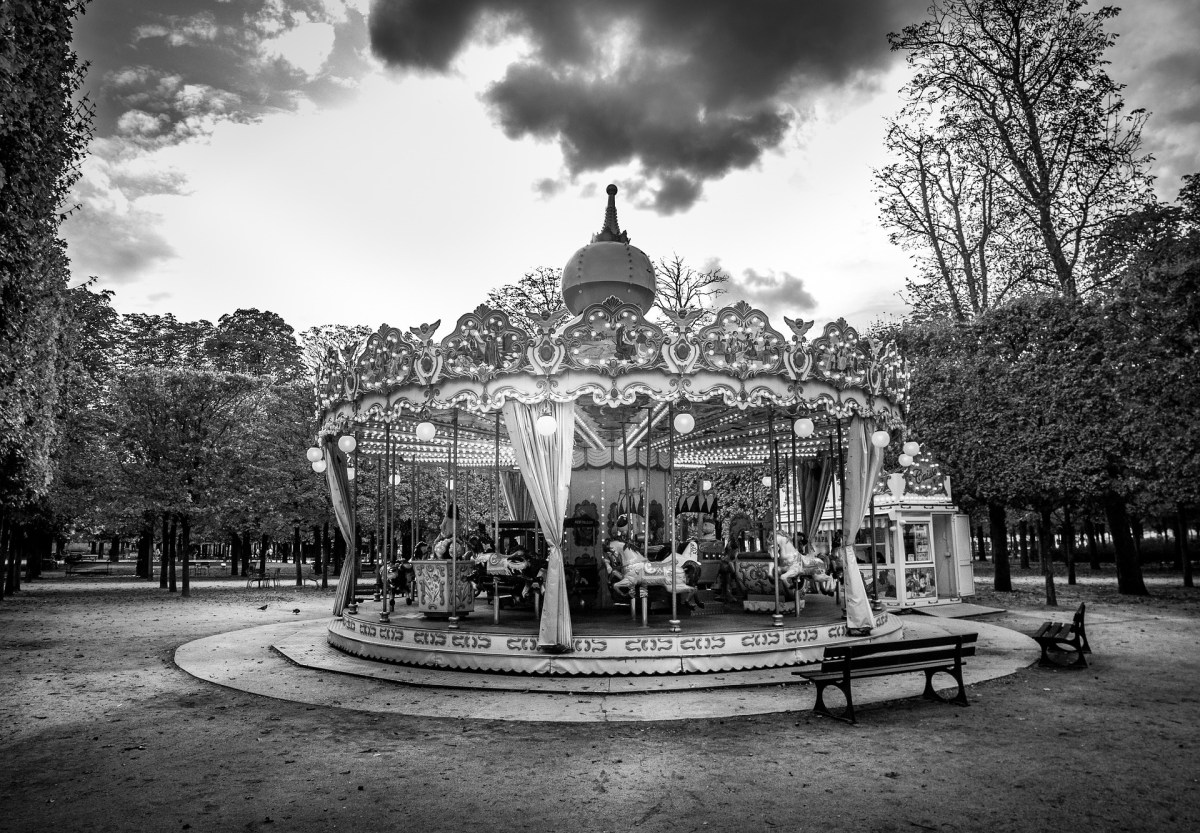
Eliza was riding the merry-go-round the day Jacob caught her eye. As she had for the seven years since the world died. Doomed to wander forever between the prancing carousel horses, hands brushing over faded, peeling manes and rusting carriages.

Her looks had been decent once. But now, soft curves were long withered and leathered. Summer frock, tattered strips of yellow gingham. Once-blue eyes, dirty grey and clouded. Plump, pink cheeks, sunken and brown. But she still had hair! A few surviving auburn wisps clinging precariously to an otherwise bare skull. And teeth too! Albeit a couple of tombstones jutting crookedly from her lower jaw.

Jacob was a carnie. For the same seven years he had circled the carousel, clothes gone to rags, coins rattling in the leather money belt that dangled from his wizened frame. Shuffling around and around, hour after hour, day after day, week after week. If she had been able to recall, Eliza would have remembered his twinkling green eyes, his jaunty smile, the tanned smooth skin of his muscled forearms below the rolled up cuffs of his blue plaid shirt.

The chances of Jacob passing at the exact moment that Eliza stumbled over a broken foot plate causing her right eye to pop from its socket, were next to nothing. But it hit his chest and bounced into the hand he raised reflexively to catch it.  Jacob paused. Looked up. His eyes met her remaining one and the rest, as they say, was history.

Processing…
Success! You're on the list.

NYC 250 Microfiction Challenge – Corn

This year, the only NYC Midnight competition I entered was the 250-word Microfiction Challenge. It kicked off in November 2022, when 5,439 writers submitted their Round 1 assignments in 125 groups containing approximately 44 writers per group.

My challenge was to write a story in the Suspense genre that involved ‘getting lost’ and featured the word ‘sound’.

I wrote a story called Corn (which you can read below) and am delighted to say that it got me through to the next round by the skin of my teeth, coming in at 9th in the top 10 places.

So, my Round 2 challenge, which came through last week, was to write a Romantic Comedy, that involves ‘riding a merry go round’ and features the word ‘decent’. This round places the 1,250 remaining writers in 25 groups of around 50.

Romantic Comedy is possibly my least favourite genre ever. Funnily enough though, I recently had a go at a Romance short story for a JAMS homework prompt, but it’s very much out of my comfort zone.

I spent most of the day getting absolutely nowhere and had almost given up when the seed of an idea formed in my head, and I decided just to have a go. I banged it out in a couple of hours in the evening. I’m not feeling very confident, but we will see … Better to have tried and failed and all that.

Anyway, here is Corn. I Hope you enjoy it.

Corn

The impenetrable forest of corn, taller than a man, loomed all around her. Watching with a thousand unseen eyes. Taunting. Waiting with malevolent patience to draw her into its depths. Envelop her. Suffocate her. Erase her.

Fear and panic jostled for control. Her mouth was dry. Her heart thudded in her chest. Fast, shallow breaths dizzied her. Which way?

The afternoon was hot and still. The cloudless blue sky a relentless dome of heat that raised a film of sweat on her skin. Salt and dust combining to sting her eyes and the bloodied scratches that criss-crossed her bare limbs. She had to keep moving.

Ahead, the narrow uneven path forked in two. Left or right? Right or left? Her mind a confusion of indecision. A dried-out husk of corn and a couple of withered stalks lay on the ground at the entrance to the left fork. Was there something familiar about the irregular shape they formed? Had she passed that way before?

The corn whispered.

Emma went right …

The corn is angry. Tendrils reach for her. Graze her skin. Snag her hair.

And then a voice! The thrill of recognition.

“Emma! Over here.”

She rushes towards the sound. Sobbing and gasping with relief. Throws herself into his arms.

He laughs.

She cries.

As they walk to the car she turns back and reads the sign at the entrance to the cornfield.

A smiling head of corn. Yellow and green and grotesquely cheery.

“Can YOU beat the Maize Maze?”

Processing…
Success! You're on the list.